Best Time to Visit Prague in 2026: Month-by-Month Guide
A month-by-month guide to a city that transforms itself four times a year
Powered by ITINE
Get this guide as a tappable itinerary
Day-by-day plan, audio tours, and one-tap Google Maps — completely free.

Destinations
Your Itinerary
Google Maps
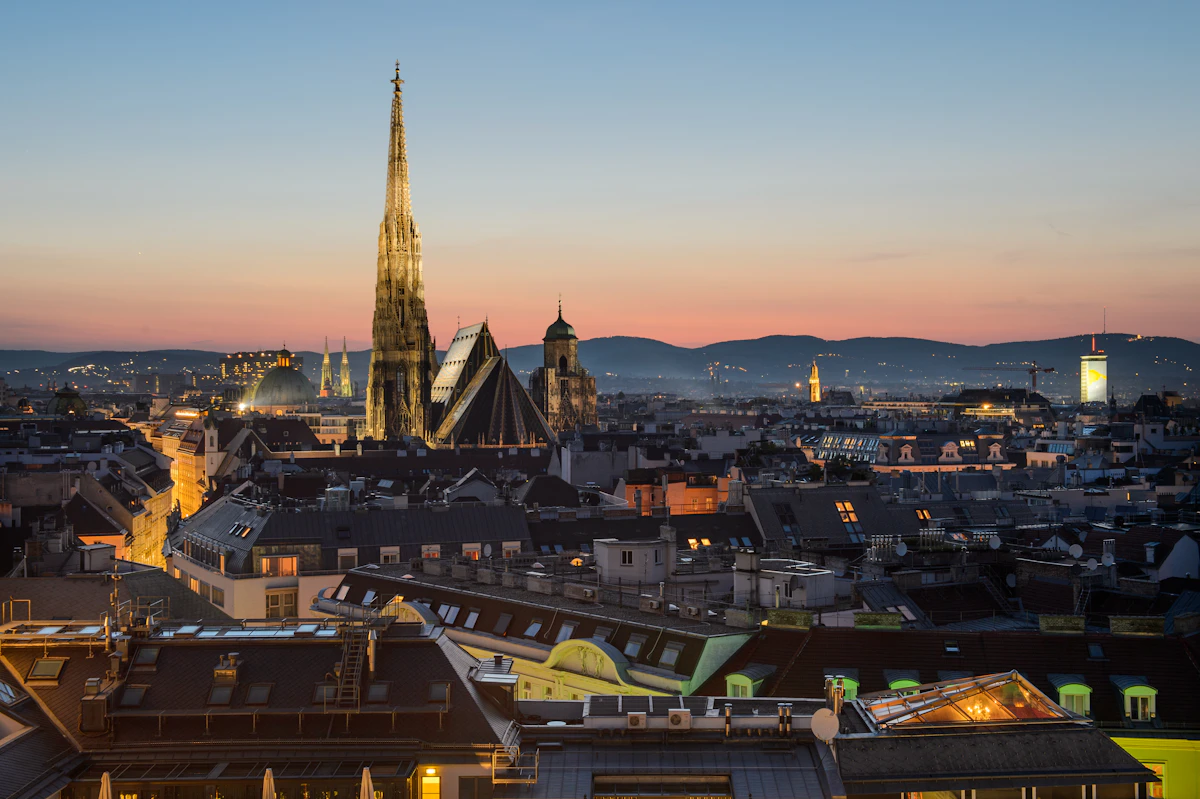
Prague is one of those cities that refuses to be pinned down to a single version of itself. Visit in April and you will find blossoming gardens and near-empty bridges at dawn. Come in August and the beer gardens hum until midnight under chestnut canopies. Arrive in November and the fog wraps the Vltava in a silence that feels centuries old. Step off the plane in December and you walk into a medieval Christmas scene that looks almost unreal. Each season is its own Prague -- and each one is worth the trip.
Month-by-Month at a Glance
Before diving into each season, here is a quick reference for what to expect in any given month. Think of this as the cheat sheet -- the rest of the article fills in the detail.
- January: -3 to 2°C. The quietest month. Near-empty museums, rock-bottom hotel prices, a chance to see Prague as locals live it. Grey skies, icy cobblestones, and magnificent pub culture.
- February: -2 to 4°C. Still deep winter, but days are noticeably longer than December. Masopust (Czech carnival) brings parades and feasting in Žižkov. A budget traveler's dream.
- March: 3 to 10°C. Winter loosens its grip. The first crocuses appear in Petřín, but rain and cold snaps are frequent. Good value, thin crowds, but limited outdoor activities.
- April: 8 to 16°C. The city wakes up. Gardens reopen, Easter markets arrive, cherry blossoms peak mid-month. One of the best months to visit for the balance of weather, price, and atmosphere.
- May: 13 to 22°C. Prague at its most classically beautiful. The Prague Spring music festival, warm sunshine, and long evenings. Crowds pick up but remain manageable.
- June: 16 to 25°C. Summer begins in earnest. The longest days, outdoor cinema, United Islands music festival. Tourist numbers climb but have not yet peaked.
- July: 18 to 28°C. The hottest month. Peak tourist season collides with Czech holiday travel. Beer gardens and river life are at full tilt. Book accommodation well in advance.
- August: 17 to 27°C. Still warm, still busy. Many Praguers leave the city on holiday themselves, giving some neighborhoods a quieter feel. Afternoon thunderstorms are common.
- September: 12 to 20°C. Our favorite month. Summer warmth without summer crowds. The wine harvest festivals begin, cultural programming ramps up, and light turns golden.
- October: 7 to 14°C. Autumn color peaks mid-month. Signal Festival transforms buildings with light installations. Cozy pub season begins.
- November: 2 to 8°C. The grey month. Fog, damp, and early darkness -- but also the quiet before the Christmas storm. Deeply atmospheric, with virtually no queues anywhere.
- December: -1 to 4°C. Christmas market season. The city is mobbed from late November to New Year's, but the festive atmosphere is genuinely magical. Prices rise sharply for the holiday weeks.
Spring: March Through May
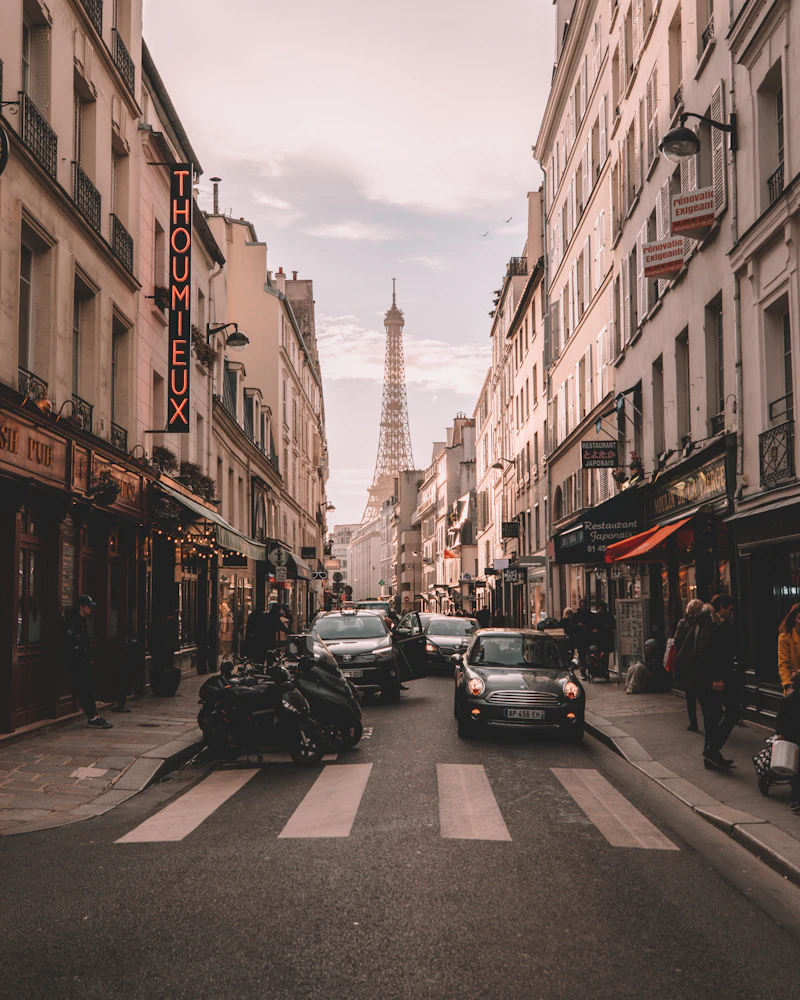
Spring arrives slowly in Prague. March is still cold and grey -- jackets, scarves, and layering are essential. But by mid-April something shifts. The gardens of Malá Strana begin to bloom, the days stretch past 7 PM, and Praguers emerge from their winter cocoons to reclaim the parks, riverbanks, and cafe terraces. By May the city is in full bloom and the weather is genuinely warm, often reaching 20-23°C.
What to Do in Spring
- Walk Petřín Hill during cherry blossom season (typically mid-April to early May) -- the orchard below the lookout tower transforms into a cloud of pink and white
- Visit the Easter markets at Old Town Square (usually two weeks before and after Easter) for hand-painted eggs, trdelník, and folk crafts
- Explore the Royal Garden at Prague Castle, which opens in April after its winter closure, with its Renaissance architecture and manicured lawns
- Catch the Prague Spring International Music Festival (Pražské jaro), which opens on May 12 -- the anniversary of Smetana's death -- with a performance of Má vlast at the Rudolfinum
- Take a boat on the Vltava or rent a paddleboat near Slovanský ostrov (Slavic Island)
- Walk through the Wallenstein Garden in Malá Strana as the peacocks strut among baroque fountains
Spring Weather and Packing
March: 3-10°C, frequent rain, cold winds. Dress for winter with waterproof layers. April: 8-16°C, increasingly sunny but unpredictable. A medium-weight jacket, scarf, and umbrella are essential. May: 13-22°C, the warmest spring month. Light layers, sunglasses, and comfortable walking shoes will see you through most days, but pack a rain jacket -- spring showers are sudden.
Prague is not a city you visit once. It is a city that invites you back in a different season, and each time it shows you something it was keeping hidden.
— Prague Itinerary
Summer: June Through August
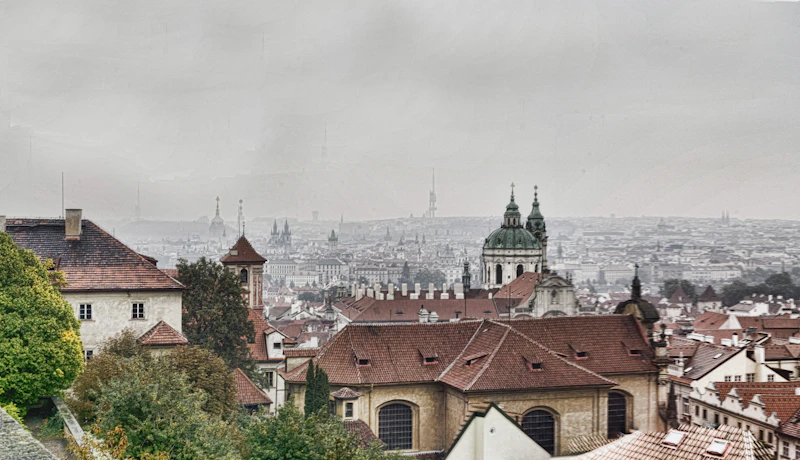
Summer in Prague is long, warm, and social. Days stretch until nearly 9:30 PM in late June, temperatures regularly hit 28-33°C, and the entire city moves outdoors. Beer gardens fill up by 5 PM — our Czech craft beer guide covers the best spots — the Náplavka riverbank market runs every Saturday, and open-air concerts spring up in castle courtyards and monastery gardens. This is peak tourist season, so expect crowds at Charles Bridge, Prague Castle, and Old Town Square -- but also expect the city at its most alive.
What to Do in Summer
- Claim a spot at Letná beer garden for sunset views over seven Vltava bridges
- Swim at Divoká Šárka, a natural gorge and swimming area on Prague's western edge -- a locals-only secret
- Browse the Náplavka farmers' market on Saturday mornings along the riverbank below Palackého náměstí
- Attend the Signal Festival (October, but its summer companion United Islands of Prague in June brings free live music to the river islands)
- Rent a rowboat or paddleboard on the Vltava near Žofín island
- See outdoor cinema screenings at Kasárna Karlín or on the roof of Lucerna Palace
- Take a day trip to Karlštejn Castle and hike through the Bohemian Karst countryside
- Cool off at the Podolí swimming complex -- an Olympic-size outdoor pool with views of Vyšehrad
Summer Weather and Packing
June: 16-25°C, long days, occasional thunderstorms. July: 18-28°C, the hottest month, with periodic afternoon storms. August: 17-27°C, slightly cooling but still warm. Pack light clothing, sunscreen, a sun hat, and a compact rain jacket for the sudden afternoon downpours that roll in from the west. Evenings can cool down to 14-16°C, so a light sweater is wise for outdoor dining.
Autumn: September Through November

Autumn may be Prague's most underrated season. September still carries the warmth of summer but without the crowds. October brings a palette of russet, gold, and amber to the city's parks, and the cultural calendar fills with concerts, exhibitions, and wine festivals. November is darker and cooler, but the city takes on a moody, atmospheric quality that perfectly suits its Gothic bones. For photographers, writers, and anyone who prefers melancholy beauty to postcard perfection, this is the time.
What to Do in Autumn
- Walk through Stromovka park at peak foliage (mid-October) -- the avenue of chestnut trees is staggering
- Attend the Dvořák Prague Festival (September) at the Rudolfinum, celebrating the city's greatest composer
- Visit the vinobraní (wine harvest) festivals at Grébovka park (Havlíčkovy Sady) in Vinohrady -- free wine tastings, food stalls, live folk music
- Explore Vyšehrad cemetery on a misty morning when the colored leaves carpet the graves of Dvořák, Smetana, and Mucha
- See the Designblok festival (October) -- the largest Central European design event, spread across venues citywide
- Wander through the Vrtba Garden before it closes for winter -- the baroque terraces look their most dramatic framed by autumn leaves
- Hike up Vítkov Hill for panoramic views of the city draped in fog
Autumn Weather and Packing
September: 12-20°C, clear skies, warm afternoons. The best shoulder-season month. October: 7-14°C, cool mornings, frequent overcast days, golden light when the sun breaks through. November: 2-8°C, grey, damp, and sometimes foggy. Pack layers: a medium-weight jacket, scarf, and waterproof shoes for October onward. November requires a proper winter coat.
Winter: December Through February
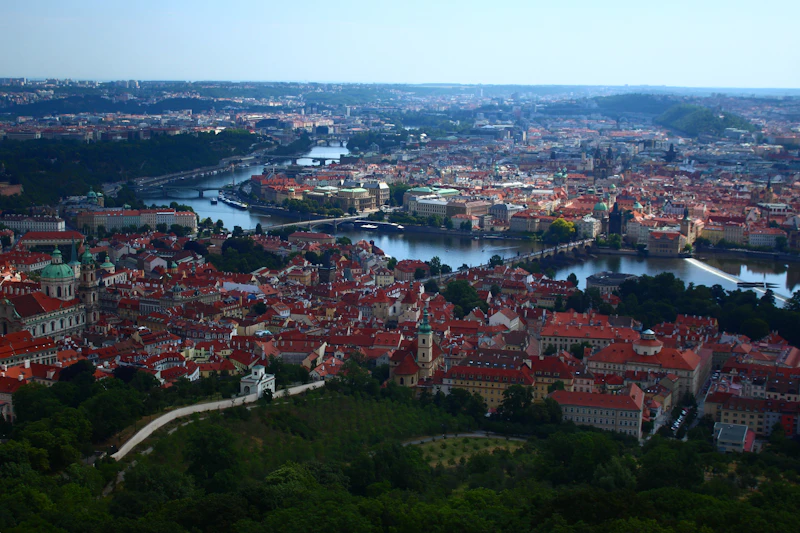
Winter strips Prague down to its essentials: stone, spires, and light against darkness. The days are short -- sunrise after 7:30 AM, sunset by 4:15 PM in December -- but the city compensates with Christmas markets, candlelit interiors, and a warmth that lives in the pubs and cafes rather than the streets. Snowfall is less reliable than it once was, but when it comes, Prague under fresh snow is one of the most beautiful urban sights in Europe.
What to Do in Winter
- Visit the Christmas markets at Old Town Square and Wenceslas Square (late November through early January) -- try svařák (mulled wine), trdelník, and klobása (grilled sausage)
- Attend a Christmas concert in one of Prague's churches -- the Clementinum Mirror Chapel and St. Nicholas in Malá Strana have the finest acoustics
- Ice skate at the outdoor rink on Ovocný trh (Fruit Market) near the Estates Theatre, or at the larger rink at Na Františku
- Warm up in the historic cafes -- Café Savoy, Café Louvre, or Grand Café Orient in the House of the Black Madonna
- Visit the galleries and museums: the National Gallery at Veletržní Palác, the Mucha Museum, or the Kafka Museum near Charles Bridge
- Take a day trip to the thermal baths at Karlovy Vary -- the hot springs feel particularly glorious in freezing weather
- Walk Charles Bridge at dawn (around 8 AM in winter) for an experience that is as close to time travel as you will get -- fog, silence, Gothic saints
Winter Weather and Packing
December: -1 to 4°C, short days, occasional snow. January: -3 to 2°C, the coldest month, ice on sidewalks is common. February: -2 to 4°C, still cold but days start to lengthen. You need a serious winter coat, thermal base layers, a warm hat, gloves, and waterproof boots with good grip. Prague's cobblestones become treacherous when icy. A scarf is not optional -- the wind off the Vltava cuts through everything.
What Is Open and Closed by Season
Not everything in Prague runs year-round. Knowing what closes in winter and what opens in spring will save you from standing in front of a locked gate.
- Prague Castle gardens (Royal Garden, South Gardens) -- open April through October only
- Petřín Lookout Tower and Mirror Maze -- open year-round but with reduced winter hours (10 AM - 6 PM vs. 10 AM - 10 PM in summer)
- Vrtba Garden -- typically open April to October
- Beer gardens (Letná, Riegrovy Sady) -- most open from late March/April through October; some offer limited winter service
- Náplavka farmers' market -- runs every Saturday, year-round, but the winter edition is much smaller
- Boat tours on the Vltava -- most operators run April through October, with limited winter cruises available
- Prague Zoo -- open year-round, but far more pleasant (and populated) from April through September
- Divoká Šárka swimming area -- summer only (June through August)
Shoulder Season Sweet Spots
The shoulder seasons -- roughly April to mid-May and September to mid-October -- are where experienced travelers find the best version of Prague. For exploring beyond the usual tourist trail during quieter months, see our hidden gems and off-the-beaten-path guide. Prices sit between winter lows and summer highs, the weather is pleasant enough for outdoor exploration, and the tourist density at major sights drops dramatically compared to July and August. But not all shoulder weeks are created equal.
The April Window
The sweet spot in spring falls between mid-April and early May, after Easter crowds disperse but before the Prague Spring festival draws its international audience. During this window, you can walk across Charles Bridge at 10 AM and count the other visitors on two hands. The gardens have just reopened, the weather is reliably above 10°C, and restaurant terraces are setting out their chairs for the first time. Hotel prices are typically 30-40% below their July peaks.
The September Window
September is, for our money, the single finest month to be in Prague. The first two weeks carry the warmth and energy of summer -- temperatures regularly reach 20°C, outdoor terraces are still open, the river is still swimmable -- but the charter-tour crowds have returned home and the school-year rhythm has resumed. By mid-September, the vine harvests begin, Stromovka and Letná parks start their slow turn toward gold, and the light takes on that particular Central European quality: low, warm, and soft. Accommodation prices drop by 20-25% from their August highs, and you can often secure last-minute reservations at restaurants that required weeks of advance booking in summer.
Crowd Levels and Hotel Pricing Trends
Prague's tourism follows a predictable arc, but there are nuances within the broad seasonal patterns that can make or break your experience. Understanding when the city is busiest -- and when it empties out -- lets you plan smarter.
Crowd Density by Period
- Very Low (January to mid-March): The city is at its quietest. Museum queues are nonexistent. Charles Bridge is often deserted at midday. The only busy period is around Valentine's Day weekend, which has become popular for city breaks.
- Low to Moderate (late March through mid-April): Crowds build gradually. Easter weekend is a spike -- the Old Town Square markets draw day-trippers from across Central Europe -- but weekdays remain calm.
- Moderate (May and June): Tourist numbers are significant but manageable. Prague Castle and the Astronomical Clock draw queues from 10 AM to 4 PM, but mornings and evenings are relaxed.
- High (July and August): Peak season. Charles Bridge is shoulder-to-shoulder by 9 AM. Old Town Square is a sea of tour groups. The Castle district requires patience. Restaurants in Prague 1 are fully booked by noon. The farther you venture from the center -- to Vinohrady, Holešovice, Karlín, Žižkov -- the more breathing room you find.
- Moderate (September and October): A gradual easing. September still feels lively, October noticeably quieter. Signal Festival in mid-October brings a brief spike.
- Low (November): The quiet interlude before the Christmas markets open. Perhaps the least crowded month of the year.
- Very High (late November through December 26): Christmas market season transforms Prague into one of Europe's busiest holiday destinations. The Old Town Square area is packed from 11 AM until closing. Wenceslas Square is little better. Accommodation prices spike 60-80% above October levels for the two weeks around Christmas.
Hotel Pricing by Season
To give a concrete sense of how prices fluctuate: a well-reviewed 4-star hotel in Prague 1 (Old Town or Malá Strana) typically follows this pattern. In January and February, expect to pay 2,000-3,000 CZK per night. March and April see prices rise to 3,000-4,500 CZK. May and June push into the 4,000-5,500 CZK range. July and August hit the peak at 5,500-7,500 CZK. September and October ease back to 3,500-5,000 CZK. November drops to 2,500-3,500 CZK before the December holiday spike sends rates back to 5,000-8,000 CZK for the Christmas weeks. These are indicative figures -- specific properties vary, and booking well in advance always helps.
Seasonal Festivals and Major Events
Prague's cultural calendar is dense and varied. Here are the events worth planning a trip around, organized by season.
Spring Events
- Easter Markets (Old Town Square and Wenceslas Square): Two weeks before and after Easter. Hand-painted eggs, traditional crafts, folk music, and seasonal food. The Old Town Square market is the larger and more touristic; Wenceslas Square is slightly less crowded.
- Čarodějnice / Witch Burning Night (April 30): Prague's version of Walpurgis Night. Bonfires are lit across the city's parks -- Ladronka, Petřín, Kampa Island -- to symbolically burn the winter witch. Locals gather with sausages, beer, and a festive spirit that feels genuinely ancient.
- Prague Spring International Music Festival (May 12 - June 3): The most prestigious classical music event in Central Europe. It opens on the anniversary of Smetana's death with a performance of Má vlast at the Rudolfinum and continues with three weeks of orchestral, chamber, and solo recitals at venues across the city. Book tickets months in advance for marquee performances.
Summer Events
- United Islands of Prague (mid-June): A free multi-day music festival spread across the Vltava's river islands and parks. Stages feature everything from jazz and world music to electronic and indie rock. Bring a blanket and claim a spot on Střelecký ostrov.
- Letní Letná (August to September): An international circus and theatre festival in Letná park, featuring contemporary circus companies from across Europe. Open-air performances, a festival tent, and the best beer garden views in Prague combine into something truly special.
- Prague Proms (late June through July): Classical crossover concerts at the iconic Smetana Hall in the Municipal House, plus open-air performances on the Castle's third courtyard. Less formal than the Spring festival, with broader programming.
Autumn Events
- Dvořák Prague Festival (September): A concentrated run of orchestral concerts at the Rudolfinum, anchored by Dvořák's works but expanding into the broader Romantic repertoire. World-class ensembles, intimate venues.
- Vinobraní Wine Harvest Festivals (late September): Multiple locations, but the Grébovka festival in Havlíčkovy Sady is the standout. Local vineyards pour their new vintage, food stalls serve traditional Czech fare, and folk bands play on improvised stages.
- Signal Festival (mid-October): Prague's buildings, bridges, and public spaces become canvases for light installations by international artists. The festival runs for four nights and draws huge crowds along curated walking routes. Dress warmly and go on a weeknight to avoid the worst congestion.
- Designblok (October): Central Europe's largest design festival, spread across multiple venues from the Museum of Decorative Arts to pop-up galleries in Holešovice. Furniture, fashion, industrial design, and architecture exhibitions run for a week.
Winter Events
- Christmas Markets (late November through January 6): The main markets at Old Town Square and Wenceslas Square are the most famous, but smaller markets at Náměstí Míru, Anděl, and Prague Castle offer better value and fewer crowds. Svařák (mulled wine), trdelník, and klobása are the essential food trio.
- New Year's Eve Fireworks: The official display is launched from several points around the city, with the best views from Letná park, the Metronome platform, or the east bank of the Vltava near Rašínovo nábřeží. Arrive by 10 PM to secure a good spot.
- Masopust / Czech Carnival (February): A riotous pre-Lenten celebration, strongest in Žižkov but also observed in Vinohrady. Costumed parades, communal feasting, brass bands, and a spirit of anarchic joy.
- Prague International Film Festival -- Febiofest (March): A week-long festival screening international and Czech cinema across multiple venues. A good reason to visit during the otherwise quiet late-winter period.
What to Pack: A Seasonal Checklist
Packing for Prague depends heavily on your travel window. The city's continental climate means genuine extremes -- blazing summer heat and bitter winter cold are both real possibilities. Here is a distilled packing guide for each season.
- Spring (March-May): Layers are your strategy. A packable waterproof jacket, a mid-weight fleece or sweater, comfortable walking shoes with decent grip (cobblestones are slippery when wet), an umbrella, sunglasses for May, and a scarf for chilly March mornings.
- Summer (June-August): Light, breathable clothing. Sunscreen and a hat are essential -- there is less shade than you expect in the Castle district. A compact rain jacket for afternoon thunderstorms. A light sweater or cardigan for evening river walks. Sandals are fine for restaurants but you need proper shoes for cobblestones.
- Autumn (September-November): Start with summer-weight layers in September and progress to a proper coat by November. Waterproof shoes become critical from October onward. A warm scarf, gloves for November, and an umbrella. Dark, muted colors blend in better -- Praguers tend toward understated autumn wardrobes.
- Winter (December-February): A serious insulated coat, thermal base layers, a warm hat that covers your ears, lined gloves, a thick scarf, and waterproof boots with aggressive grip. Prague's cobblestones are lethal when icy. Hand warmers are not overkill for January. If you plan to visit Christmas markets in the evening, dress as though you will be standing still outdoors for two hours -- because you will be.
The Best Time to Visit: Our Honest Take
If pressed, we would say late September to mid-October is the single best window to visit Prague. The summer crowds have thinned, the weather is crisp and golden, the cultural calendar is packed, and the city's parks are at their most photogenic. But the truth is that every season has its argument. May is glorious for gardens and music. December is pure magic for the first-time visitor willing to brave the cold. Even January -- grey, freezing, empty -- has its partisans: the city belongs to you and the locals, and the pub culture hits different when the wind is howling outside.
Choose the Prague that matches your temperament. The sun-drenched extrovert who wants long evenings and outdoor festivals -- come in summer. The contemplative soul who wants fog, candlelight, and Dvořák in a cathedral -- come in late autumn. The romantic who wants snow on spires and mulled wine in gloved hands -- come in December. There is no wrong answer, only the question of which Prague you are ready to meet. Our 3-day Prague itinerary offers a practical framework for any season.
One practical note to close on: Prague is a compact city, and most of its treasures can be reached on foot within a day regardless of season. The real difference between seasons is not what you can see but how the city makes you feel while you see it. The Astronomical Clock is the same mechanism in August and January, but the experience of watching it strike noon in blazing sunshine surrounded by hundreds of tourists is an entirely different thing from watching it in falling snow with a handful of bundled-up onlookers. Neither is better. Both are Prague.
Frequently Asked Questions
Late September to mid-October is the single best window — summer crowds have thinned, the weather is crisp and golden, the cultural calendar is packed, and parks are at their most photogenic. May is glorious for gardens and music. December is pure magic for first-time visitors willing to brave the cold.
Absolutely. Winter strips Prague to its essentials: stone, spires, and light against darkness. The Christmas markets are genuinely magical, candlelit church concerts are transcendent, and hotel prices drop 50-60% below summer peaks. January and February are the quietest months with virtually no queues anywhere.
The main Christmas markets at Old Town Square and Wenceslas Square run from late November through early January. Smaller markets at Náměstí Míru (better food, lower prices, more locals), Anděl, and Prague Castle offer better value. Visit Old Town Square after 8 PM when day-tour crowds have gone.
Layers are essential. March needs waterproof winter layers (3-10°C). April requires a medium-weight jacket, scarf, and umbrella (8-16°C). May is the warmest spring month (13-22°C) — light layers, sunglasses, and comfortable walking shoes, but still pack a rain jacket for sudden showers.
July temperatures regularly hit 28-33°C, and Prague has experienced increasingly intense heatwaves exceeding 35°C. Air conditioning is still not standard in many older buildings. Pack light clothing, sunscreen, a sun hat, and a compact rain jacket for sudden afternoon thunderstorms.
The Prague Spring International Music Festival (May 12 - June 3) is the most prestigious classical music event in Central Europe. Easter markets run at Old Town Square and Wenceslas Square. On April 30, Čarodějnice (Witch Burning Night) brings bonfires across the city's parks.
November is the grey month — fog, damp, and early darkness — but it's deeply atmospheric with virtually no queues anywhere. It's the quiet before the Christmas storm, offering the lowest prices and the moodiest version of Prague. Perfect for those who prefer melancholy beauty to postcard perfection.
January through mid-March offers the absolute best value. Hotels are 50-60% below summer peaks, flights from Western Europe are cheapest in late January and February, and many restaurants run special winter menus at reduced prices. A 4-star hotel in Old Town can drop to 2,000-3,000 CZK per night.
Letná and Riegrovy Sady beer gardens are the most beloved, typically opening from late March/April through October. Letná offers views over seven Vltava bridges; Riegrovy Sady frames Prague Castle perfectly. Both charge around 55-70 CZK for a half-liter of draft beer.
Snowfall is less reliable than it once was, but when it comes (typically December through February), Prague under fresh snow is one of the most beautiful urban sights in Europe. January is the coldest month at -3 to 2°C, with ice on sidewalks common. Waterproof boots with good grip are essential.
Signal Festival (mid-October) transforms Prague's buildings, bridges, and public spaces into canvases for light installations by international artists. It runs for four nights and is free to attend. The installations at the Klementinum library and on Charles Bridge are particularly spectacular. Go on a weeknight to avoid the worst congestion.
Prague Castle's Royal Garden and South Gardens close from November through March. Vrtba Garden typically closes November through March. Most beer gardens close by late October. The Petřín Lookout Tower stays open year-round but with reduced winter hours (10 AM - 6 PM vs. 10 AM - 10 PM in summer).
Book at least 6-8 weeks ahead for peak season (Easter through September) and 2-3 months ahead for Christmas market period (late November through December 23). For the cheapest rates, book January-February stays just 2-3 weeks in advance when hotels are desperate to fill rooms.
September is arguably the finest month — temperatures reach 12-20°C with clear skies and warm afternoons. Outdoor terraces are still open, the river is still swimmable, and the light takes on a warm Central European quality. Accommodation prices drop 20-25% from August highs.
Yes — Masopust in February is the Czech version of Mardi Gras. Žižkov hosts the biggest celebration, with costumed parades, sausage roasting, live brass bands, and copious beer and slivovice. It's chaotic, joyful, and almost entirely tourist-free.
Tereza Nováková
Food & Culture Journalist · Karlín, Prague
Tereza is a Prague-based food and culture journalist whose work has appeared in Czech Hospodářské noviny and The Forkful. She covers the Czech culinary scene from traditional hospoda kitchens to new-wave tasting menus, and organizes seasonal food walks through Prague's markets.
You might also enjoy
Prague in Spring: Cherry Blossoms, Easter Markets, and Perfect Weather (2026)
A month-by-month guide to visiting Prague in spring: March's tentative warmth, April's cherry blossoms and Easter markets, May's Prague Spring festival and perfect golden evenings. Weather, packing, prices, and what makes this the best season for many travelers.
Prague in Fall: Autumn Colors, Fewer Crowds, and the Best Season to Visit (2026)
Why autumn may be Prague's best-kept secret: golden foliage at Stromovka and Petrin, the Signal Festival's light art, wine harvest celebrations, St. Martin's Day feasts, and hotel prices that make summer visitors weep with regret.

Prague in December 2026: Weather, Christmas Markets, and What to Expect
Everything you need to know about visiting Prague in December 2026: daily temperatures, daylight hours, Christmas market dates, NYE plans, hotel prices, and how to make the most of the city in deep winter.