Staré Město: Old Town Beyond the Tourist Traps (2026)
A local's guide to finding authenticity in Prague's most visited quarter
Powered by ITINE
Get this guide as a tappable itinerary
Day-by-day plan, audio tours, and one-tap Google Maps — completely free.

Destinations

Your Itinerary
Google Maps
Why Staré Město Still Matters
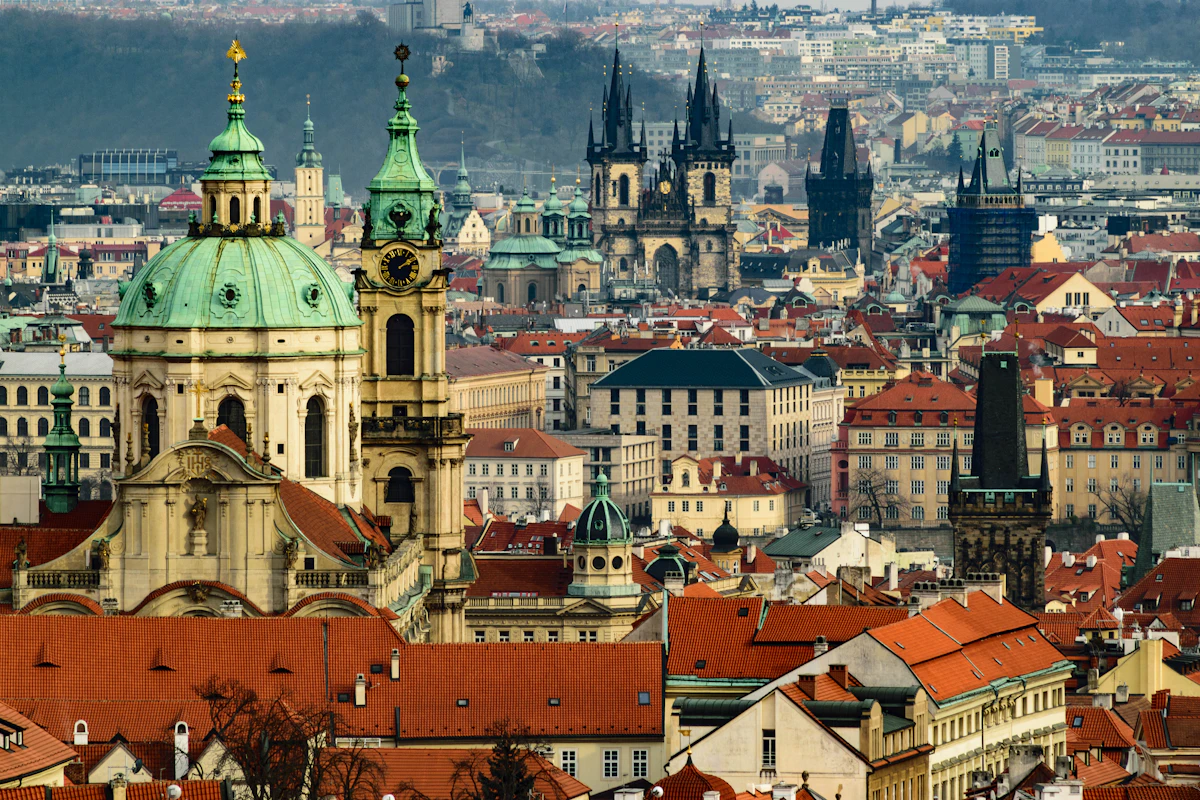
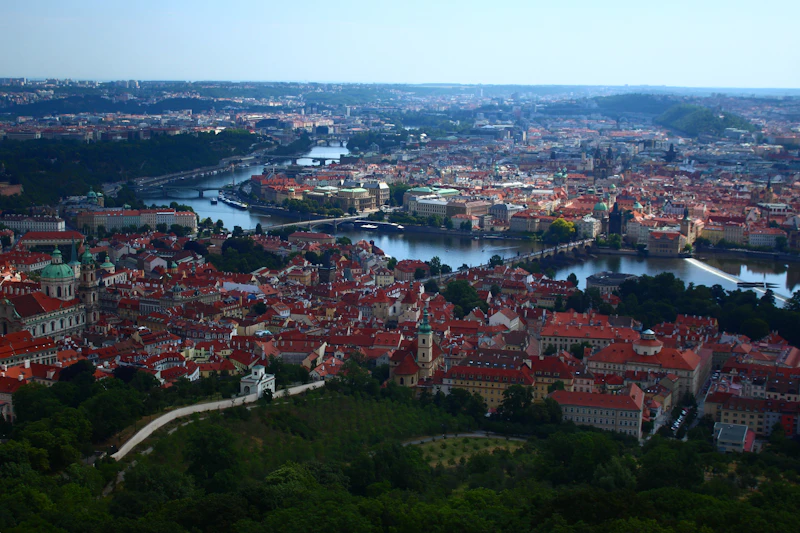
Yes, Old Town Square is overrun with Segway tours and trdelník stands hawking a pastry that isn't even Czech. Yes, the astronomical clock draws a crowd so dense you'll wonder if anyone still has personal space. But Staré Město is not its worst clichés. This is a neighborhood where 12th-century Romanesque basements sit beneath Baroque facades, where jazz clubs hide in medieval cellars, and where a five-minute walk from the tourist epicenter drops you into streets so quiet you can hear your own footsteps on the cobblestones.
Staré Město has been the heart of Prague since the city's founding. The street grid is largely unchanged since the Middle Ages — a labyrinth that was deliberately never rationalized because it suited the merchants who profited from confused visitors even back then. Understanding this district means learning to read its layers: the Gothic bones beneath Baroque skin, the Art Nouveau flourishes on Renaissance structures, the communist-era neglect that paradoxically preserved what modernization would have destroyed.
A Brief History of the Old Town
Staré Město received its town charter in 1231, but settlement here predates that by centuries. Prague's official city website provides historical context on the district's millennium-long development. The original market at what is now Old Town Square was already thriving by the 10th century, positioned at the crossroads of European trade routes. The Jewish Quarter (Josefov), nestled within Staré Město's boundaries, is one of the oldest Jewish settlements in Central Europe, with synagogues dating back centuries and the Old New Synagogue built around 1270.
The neighborhood survived the Hussite Wars, Habsburg counter-reformation, Nazi occupation, and communist rule — each era leaving its mark in stone. The 27 crosses embedded in the pavement before Old Town Hall mark where 27 Czech Protestant leaders were executed in 1621 after the Battle of White Mountain. Most visitors walk right over them. Don't be most visitors.
The Astronomical Clock: What Most Visitors Miss
Every hour, on the hour, from 9 AM to 11 PM, hundreds of tourists crane their necks upward to watch the Prague Orloj perform its mechanical show. The twelve apostles parade past two small windows, Death rings his bell, and after about 45 seconds it is over. Most visitors shrug, take a photo, and move on. They have missed almost everything worth seeing.
The Astronomical Clock is believed to have been first installed in 1410, with clockmaker Mikuláš of Kadaň traditionally credited, and later perfected by master Jan Šindel. It is one of the oldest functioning astronomical clocks in the world. The upper astronomical dial does far more than tell time. It displays Old Czech Time, Babylonian Time, Central European Time, and sidereal time simultaneously. The blue and brown regions show the position of the sun relative to the horizon — blue is sky above the earth, brown is sky below it. The golden sun hand tracks the ecliptic, and the zodiac ring shows which constellation the sun currently occupies. The moon phase is tracked by a small half-silver, half-dark sphere. In other words, this single medieval mechanism tells you where you are in the universe at any given moment.
The lower calendar dial, painted by Josef Mánes in 1866, is actually a reproduction — the original hangs in the Prague City Museum to protect it from the elements. Each medallion around its edge represents a month of the year through scenes of rural Bohemian life: sowing, harvesting, slaughtering pigs in December. The four flanking figures — Vanity (with a mirror), Greed (with a purse), Death (with the bell), and the Turk (shaking his head) — are the ones that move during the hourly show, but most visitors cannot identify them from below.
A persistent legend claims that King Václav IV had the clockmaker blinded so he could never build another. The story is almost certainly apocryphal — it first appeared in a 16th-century chronicle with no earlier corroboration — but it speaks to the awe the clock inspired in its contemporaries. What is historically true is that the clock stopped working multiple times over the centuries and was nearly scrapped in the 18th century when the city council considered it an expensive antique. Thank the restorers who, generation after generation, fought to keep it running. It was severely damaged during the Prague Uprising in May 1945 when the Old Town Hall was set ablaze by retreating German forces. The apostle figures had to be completely recarved by sculptor Vojtěch Sucharda after the war.
Hidden Courtyards and Secret Passages
Prague's passage culture (průchody) is best experienced in Staré Město. Many buildings have courtyards and connecting passages that allow you to walk through entire city blocks without touching a main street. This isn't a tourist gimmick — locals use them daily to shortcut through the neighborhood. The trick is looking for open doorways and not being afraid to walk in. If a door is open during business hours, you're welcome to pass through.
- Ungelt (Týn Court), Týn 2, 110 00 Praha 1-Staré Město — the restored medieval courtyard behind Týn Church, once a customs house for foreign merchants. Enter from Malá Štupartská street.
- The passage from Michalská 12 through to Melantrichova — a quiet escape connecting two busy streets through a gorgeous Renaissance courtyard.
- Platýz courtyard at Národní 37 — a hidden network of courtyards with cafés and small galleries, completely invisible from the street.
- The Clam-Gallas Palace courtyard at Husova 158/20, 110 00 Praha 1-Staré Město — push open the heavy door beneath the Atlas figures and discover a Baroque masterpiece.
Prague never lets you forget that you are walking on bones — the bones of history, of revolutions, of a thousand years of European turbulence compressed into streets barely wide enough for a horse cart.
— Prague Itinerary
Where to Eat: Beyond the Tourist Restaurants
The first rule of eating in Staré Město: if a restaurant has a person standing outside trying to lure you in, keep walking. The second rule: Czech menus printed only in Czech (or at least not in six languages with photos) are almost always a better bet. For a citywide overview of Czech cuisine and where to find it done right, see our complete Prague food guide. Here are places where locals actually eat — yes, even in Old Town.
Lokál Dlouhááá
Czech RestaurantDlouhá 731/33, 110 00 Praha 1-Staré Město
Insider tip: The tank Pilsner here is among the best-poured in Prague. Order the svíčková (beef sirloin in cream sauce) — it's textbook perfect. Arrive before 12:00 or after 14:00 to avoid the lunch crush.
Maitrea
Vegetarian RestaurantTýnská ulička 1064/6, 110 00 Praha 1-Staré Město
Insider tip: A stunning vegetarian restaurant hidden in a passage near Týn Church. The interior is gorgeous — all warm wood and candlelight. Their Buddha bowl and homemade lemonades are excellent. Proof that Czech cuisine can go beyond meat and dumplings.
A specific note on the trdelník phenomenon: these rolled pastries coated in sugar and cinnamon are marketed as a 'traditional Czech delicacy' at stalls throughout Staré Město. They are not Czech at all — they originate from Hungarian-speaking regions of Transylvania and were virtually unknown in Prague before 2010. They are perfectly fine as a warm street snack, especially filled with ice cream in summer, but do not let anyone convince you that you are eating a centuries-old Czech tradition. For actual Czech pastry, find a bakery selling koláče (fruit-filled rounds) or větrník (a choux pastry with caramel cream).
Krčma
Medieval-Style Czech RestaurantKostečná 925/4, 110 00 Praha 1-Staré Město
Insider tip: Yes, it looks touristy with the medieval theme, but the grilled meats are legitimately excellent and the cellar atmosphere is authentic — the building actually dates to the 14th century. Order anything from the grill.
Naše Maso
Butcher Shop & DeliDlouhá 727/39, 110 00 Praha 1-Staré Město
Insider tip: A butcher counter that serves steak burgers, tartare on bread, and hot dogs with proper Czech mustard. Eat standing at the counter like a local. The beef tartare (tatarák) is outstanding — ask them to season it for you if it's your first time.
For a Special Dinner
Divinis
Italian Fine DiningTýnská 21, 110 00 Praha 1-Staré Město
Insider tip: Run by a Sicilian chef who sources ingredients directly from Italy. The truffle pasta and Sicilian wines are world-class. Small space — reserve at least a day ahead. This is where Prague's Italian community eats, which tells you everything.
Tourist Trap Restaurants to Avoid
There are certain reliable warning signs in Staré Město dining. A hawker standing outside beckoning you in is the most obvious, but also watch for: menus with photographs of every dish, menus translated into more than four languages, restaurants directly on Old Town Square or along the Karlova corridor with outdoor seating and heat lamps in winter, and anywhere advertising 'traditional Czech cuisine' alongside pizza and pad thai. These places survive on the volume of visitors who eat once and never return. The food is typically frozen, reheated, and priced at double what locals pay elsewhere. The pedestrian route along Karlova street from Old Town Square to Charles Bridge is the single worst stretch for this — if you are hungry along this route, detour one block south to Husova or Liliová and you will find better food at half the price within a two-minute walk.
The Coffee Scene
Prague's coffee revolution hit Staré Město hard in the best possible way. Forget the overpriced espresso in tourist cafés — these spots take their beans seriously.
EMA Espresso Bar
Specialty CoffeeNa Florenci 3, Praha 1
Insider tip: Minimalist, precise, and consistently excellent. Their flat white is the benchmark in Prague. On the edge of Staré Město near Florenc, so it's almost never crowded with tourists.
Můj šálek kávy
Specialty Coffee & RoasteryKřižíkova 105, Praha 8 (original) / Karlov side location
Insider tip: The name translates to 'My Cup of Coffee' and they mean it personally. Single-origin pour-overs and a genuine passion for the craft. Ask about their current roast — the baristas love talking beans.
Café Letka
Café & BistroLetohradská 44, Praha 7
Insider tip: Just across the river in Letná but beloved by Staré Město workers who escape at lunch. Excellent brunch, great coffee, and a neighborhood feel that Old Town itself can't match.
Nightlife: After Dark in Old Town
Staré Město nightlife has a split personality. The Dlouhá street strip is Prague's most notorious party corridor — loud, messy, and overflowing with stag parties every weekend. But step off the main drag and you'll find cocktail bars, jazz cellars, and hidden speakeasies that reward the curious.
Hemingway Bar
Cocktail BarKarolíny Světlé 26, Praha 1
Insider tip: One of the best cocktail bars in Central Europe, consistently ranked among the world's top 100. Specializes in absinth cocktails and classic drinks made with fanatical precision. Reservations strongly recommended on weekends — this place is small and always full.
AghaRTA Jazz Centrum
Jazz ClubŽelezná 16, Praha 1
Insider tip: Live jazz every night in a proper basement club. The house band is excellent but check the schedule for visiting artists. Buy tickets in advance for weekend shows. Order a Becherovka neat and settle in.
Anonymous Bar
Cocktail BarMichalská 12, Praha 1
Insider tip: Guy Fawkes masks on the walls, creative cocktails, and a crowd that skews young-professional rather than tourist. Their signature smoked cocktails are theatrical and genuinely delicious. Find the unmarked door — it's part of the experience.
Must-See Architecture and Landmarks
Beyond the obvious sights, Staré Město rewards those who look up, look down, and push open heavy doors.
- The Municipal House (Obecní dům) — Prague's most opulent Art Nouveau building. The café inside is worth visiting for the interior alone, and guided tours reveal Alfons Mucha's stunning Smetana Hall decorations.
- Bethlehem Chapel (Betlémská kaple) — where Jan Hus preached his reformist sermons 100 years before Martin Luther. The reconstruction is faithful and the space still resonates with radical energy.
- House of the Black Madonna (Dům U Černé Matky Boží) on Celetná — one of the finest Cubist buildings in the world. Yes, Cubist architecture exists and Prague has most of it. The Grand Café Orient inside serves coffee in a stunning Cubist interior.
- Klementinum — the largest complex of buildings in Prague after the Castle, home to the Baroque Library Hall and the Astronomical Tower. The library alone justifies the tour price.
Reading the Facades: An Architecture Primer
Staré Město is an open-air textbook of European architecture, and knowing what you are looking at transforms a walk through the district from pleasant to extraordinary. The oldest visible layer is Romanesque — look for rounded arches and thick stone walls in basement levels, particularly in the restaurants along Husova and Řetězová streets where you are literally dining in 12th-century foundations. The Gothic period left its most dramatic mark in the Týn Church spires and the Powder Tower, identifiable by pointed arches, ribbed vaults, and an emphasis on vertical thrust that pulls your eye upward.
Renaissance arrived in Prague through Italian architects invited by Habsburg rulers in the 16th century, bringing sgraffito decoration — patterns scratched into layered plaster — that you can spot on several facades along Celetná and Melantrichova streets. Baroque dominates much of what you see at street level: dramatic curves, ornate stucco work, and a theatrical sense of movement frozen in stone. The Church of St. Nicholas on Old Town Square is a Baroque masterpiece by Kilian Ignaz Dientzenhofer, often confused with the more famous St. Nicholas in Malá Strana by the same architect and his father.
Art Nouveau arrived around 1900, and the Municipal House (Obecní dům) at náměstí Republiky is its crown jewel, but look also at the Hotel Paris next door and the facades along Pařížská street. Prague's most unique architectural contribution is Cubism — the application of Cubist painting principles to three-dimensional buildings, a movement that existed essentially nowhere else. The House of the Black Madonna on Celetná 34 is the masterpiece, but walk along Neklanova street in nearby Vyšehrad to see an entire streetscape of Cubist residential buildings. Nothing quite like them exists anywhere else in the world.
Josefov: The Jewish Quarter
Josefov sits within Staré Město and deserves careful, respectful attention. The Old Jewish Cemetery, with its 12,000 visible tombstones layered 12 deep over centuries, is one of the most haunting places in Europe. The Pinkas Synagogue walls are inscribed with the names of 77,297 Czech and Moravian Jews murdered in the Holocaust. This is not sightseeing — it is bearing witness.
Buy the combined ticket for the Jewish Museum sites — it covers the Old Jewish Cemetery, Pinkas Synagogue, Maisel Synagogue, Klausen Synagogue, Ceremonial Hall, and Spanish Synagogue. Purchase online to skip the queue, visit on a weekday morning to avoid crowds, and note that sites are closed on Saturdays and Jewish holidays. Allow at least two to three hours for a thoughtful visit. The Old-New Synagogue (Staronová synagoga), built around 1270, is the oldest active synagogue in Europe and still holds regular services. According to legend, the remains of the Golem of Prague rest in its attic.
The Spanish Synagogue, built in 1868, is the most visually stunning of the group and is often overlooked by visitors who exhaust themselves on the cemetery and Pinkas Synagogue before reaching it. Its interior is a jewel box of Moorish Revival design — every surface covered in elaborate gilded arabesques and geometric patterns. The acoustics are superb, and evening concerts held here are among the most atmospheric musical experiences in Prague.
The transformation of Josefov in the late 19th century is itself a story of loss. Between 1893 and 1913, the city demolished nearly the entire medieval ghetto in a massive urban renewal project modeled on Haussmann's renovation of Paris. Narrow lanes, ancient houses, and entire streets were razed and replaced with the Art Nouveau apartment buildings you see today along Pařížská street — now Prague's most exclusive shopping avenue. Only the synagogues and the cemetery were spared. Pařížská today is lined with Gucci, Prada, and Louis Vuitton, a jarring contrast to the somber history of the ground beneath these luxury flagships.
Shopping: What's Worth Buying in Staré Město
Pařížská street is Prague's luxury mile — Hermès, Dior, Cartier — but unless you are shopping for designer goods at prices comparable to Paris or Milan, it holds little practical interest. The real finds in Staré Město require walking the side streets and knowing what Czech-made goods are actually worth buying.
- Bohemian garnet jewelry (český granát) — the deep crimson garnets mined in northern Bohemia have been prized for centuries. Buy only from certified shops like Granát Turnov (Dlouhá 28) which guarantees authentic Czech stones. If the price seems too low, the garnets are almost certainly Chinese imports.
- Bohemian crystal and glass — another Czech specialty with a genuine pedigree. Moser on Old Town Square sells museum-quality pieces, while smaller studios along Celetná offer more affordable hand-cut glass. Avoid the mass-produced glass in tourist souvenir shops.
- Marionettes and puppets — Czech puppetry is a UNESCO-recognized tradition. Truhláŕ Marionety on Karlova and Loutky on Jilská sell handcrafted puppets that are genuine artisan work, not the factory-stamped versions in souvenir stalls.
- Czech books and prints — Shakespeare and Sons (Krymská, technically Vršovice) and Antikvariát Ztichlá Klika (Betlémské náměstí) sell rare prints, vintage Czech posters, and beautifully illustrated books at very reasonable prices.
- Becherovka and Slivovice — the herbal liqueur from Karlovy Vary and the plum brandy from Moravia make excellent gifts. Buy at a regular supermarket or liquor store rather than tourist shops — the price difference can be 50% or more.
Evening in Old Town: After the Day-Trippers Leave
Staré Město undergoes a transformation after roughly 7 PM from October through April, and after 9 PM in the longer summer evenings. The tour groups vanish. The Segways are parked. The selfie sticks are holstered. What remains is a medieval city illuminated by gas-style lanterns, with shadows pooling in the archways and the sound of church bells rolling across empty squares. This is when Old Town is at its most honest — stripped of commerce and left with stone, light, and silence.
Betlémské náměstí (Bethlehem Square) is particularly magical after dark. The reconstructed chapel is lit from below, and the small restaurants around the square put candles on outdoor tables even in cooler weather. Anenské náměstí, a tiny square near the river, has a cluster of quiet wine bars and the occasional courtyard concert in summer. And the riverfront along Smetanovo nábřeží offers uninterrupted views of the illuminated Castle and the procession of Gothic and Baroque bridges spanning the Vltava.
Practical Tips for Navigating Staré Město
- Metro: Staroměstská (Line A) puts you at the edge of the Jewish Quarter. Můstek (Lines A/B) lands you at the bottom of Wenceslas Square, a short walk to Old Town Square.
- Trams: Lines 2, 17, and 18 run along the river on the western edge. The Staroměstská tram stop is useful for connecting to Malá Strana and beyond.
- On foot: Staré Město is compact and best explored on foot. Wear shoes with solid soles — the cobblestones are beautiful but brutal on thin sneakers.
- Currency: Many tourist-facing places accept euros at terrible rates. Always pay in Czech crowns (CZK). ATMs marked 'Bankomat' attached to actual banks give the best rates. Avoid standalone exchange booths.
- Avoid: Currency exchange booths on Karlova and surrounding streets — they're licensed to operate but their rates are predatory. Use your bank's ATM card instead.
The Best Walks Through Staré Město
Forget the Karlova street march from Old Town Square to Charles Bridge — that's a cattle chute. Instead, try these routes that reveal the real character of the neighborhood.
The Quiet Morning Route
Start at náměstí Republiky and walk through the Powder Tower gate. Take Celetná past the Cubist House of the Black Madonna, but turn left onto Štupartská before you reach Old Town Square. Wind through Ungelt courtyard, emerge on Týnská, and follow the narrow lanes south toward Betlémské náměstí. End with coffee at the Café Orient or continue to the river. This route takes 30-40 minutes with stops and avoids every tourist bottleneck.
The Evening Atmosphere Route
Begin at Charles Bridge at sunset (approach from Křižovnické náměstí, not Karlova). Cross to the middle, take in the view, then return to the Old Town side. Walk along Smetanovo nábřeží (the river embankment) south past the National Theatre, watching the Castle light up across the water. The embankment at night, with the Castle glowing and the river reflecting city lights, is Prague at its most cinematic.
The Architecture Deep Dive Route
Start at the Municipal House on náměstí Republiky to absorb the Art Nouveau excess, then walk through the Powder Tower into Celetná. Stop at the House of the Black Madonna for Czech Cubism, then continue to Old Town Square. Rather than crossing the square, turn south along Železná, noting the mix of Gothic ground floors and Baroque upper stories. Follow Havelská street through the open-air market — one of the last genuine daily markets in the Old Town — and emerge on Uhelný trh. From there, walk along Bethlehem Square to see the reconstructed chapel, then zigzag through Husova to Karlovo náměstí. This route covers Romanesque basements, Gothic churches, Renaissance sgraffito, Baroque facades, Art Nouveau ornament, and Cubist geometry in a single walk of about ninety minutes.
Final Verdict
If you are planning a full day around the Old Town, our one-day Prague itinerary builds an hour-by-hour route through Staré Město, the Jewish Quarter, and beyond. Staré Město is not a neighborhood you write off because of the tourist crowds — it's a neighborhood you learn to read properly. The layers are all there: Romanesque, Gothic, Renaissance, Baroque, Art Nouveau, Cubist, and modern. You just have to know where to look, when to visit, and which doors to push open. Come early, stay late, walk the side streets, and let the Old Town reveal itself on its own terms. It has been doing this for a thousand years. It knows what it's doing.
Frequently Asked Questions
Absolutely worth it. Staré Město is Prague's oldest quarter with layers of Romanesque, Gothic, Renaissance, and Baroque architecture that no other district can match. The key is knowing how to navigate it — visit early morning or late evening, stick to side streets, and avoid the Karlova corridor restaurants.
Before 8 AM or after 10 PM. Early morning gives you the square nearly to yourself with beautiful light for photography. Late evening offers the illuminated Týn Church against a dark sky and a genuinely magical atmosphere without the daytime crowds.
The combined Jewish Museum ticket covering the Old Jewish Cemetery, Pinkas Synagogue, Maisel Synagogue, Klausen Synagogue, Ceremonial Hall, and Spanish Synagogue costs around 500 CZK (approximately 20 EUR). The Old-New Synagogue requires a separate ticket at 200 CZK, or you can buy everything combined for 700 CZK.
Avoid any restaurant with a hawker outside or menus in six languages with photos. Lokál Dlouhááá serves excellent Czech food and tank Pilsner. Naše Maso does outstanding beef tartare at a butcher counter. As a rule, walk at least three blocks from Old Town Square in any direction for honest prices.
Yes, but not just for the hourly show — that lasts only about 45 seconds and is underwhelming for most visitors. What's truly remarkable is the medieval mechanism itself, which tracks Old Czech Time, Babylonian Time, sidereal time, the sun's position on the ecliptic, and moon phases simultaneously. Study the dials before the show for the full experience.
Prague's průchody (passages) cut through entire city blocks via interior courtyards. If a door is open during business hours, you're welcome to pass through. Top picks include the Ungelt courtyard behind Týn Church, the passage from Michalská 12 to Melantrichova, and the Clam-Gallas Palace courtyard at Husova 20.
No. Trdelník originates from Hungarian-speaking regions of Transylvania and was virtually unknown in Prague before 2010. It's fine as a warm street snack, especially filled with ice cream in summer, but it's not a Czech tradition. For authentic Czech pastries, look for koláče (fruit-filled rounds) or větrník (choux pastry with caramel cream).
Never use standalone exchange booths on Karlova or surrounding streets — their rates are predatory. Instead, use ATMs marked Bankomat that are attached to actual banks. Always pay in Czech crowns (CZK), never accept offers to pay in euros, and use your bank's contactless card where possible.
Start at náměstí Republiky, walk through the Powder Tower, take Celetná past the Cubist House of the Black Madonna, turn left onto Štupartská before Old Town Square, wind through Ungelt courtyard, follow narrow lanes south toward Betlémské náměstí, and end with coffee at Café Orient. This 30-40 minute route avoids every tourist bottleneck.
Yes. Walking the streets, courtyards, and passages is completely free. The Havelská street market has operated since 1232 and costs nothing to browse. Many church interiors are free to enter. Budget lunch menus (denní menu) at local restaurants run 150-220 CZK for soup and a main course.
Generally very safe. Prague is one of the safest capitals in Europe. The main nuisances after dark are rowdy stag parties on Dlouhá street on weekends and occasional pickpockets in crowded areas. Avoid the Dlouhá strip on Friday and Saturday nights if you want a quieter evening, and head south toward Karolíny Světlé instead.
EMA Espresso Bar near Florenc is widely considered the benchmark for specialty coffee in Prague, with an outstanding flat white. The Grand Café Orient inside the House of the Black Madonna serves coffee in a stunning Cubist interior — a unique experience you won't find anywhere else in the world.
A minimum of half a day for the highlights, but a full day is ideal if you want to include the Jewish Quarter (2-3 hours alone), the hidden courtyards, architecture walks, and a proper meal. Evening visits are worth adding separately to see the neighborhood's atmospheric transformation after dark.
Authentic Bohemian garnet jewelry from certified shops like Granát Turnov (Dlouhá 28), hand-cut Bohemian crystal from Moser, and handcrafted marionettes from Truhláŕ Marionety. Avoid souvenir shops near Old Town Square — most sell Russian matryoshka dolls and Chinese-made goods marketed as Czech products.
Skip Old Town Square and head to Křižovnické náměstí (the small square at the Old Town end of Charles Bridge) for a view capturing the bridge tower, the bridge, and the Castle beyond. Alternatively, stand on Mánesův most (Mánes Bridge) for a panorama including the river, National Theatre, and Old Town skyline with Týn Church.
Some tourist restaurants in Staré Město add a couvert or bread charge that wasn't on the menu. Always check your bill line by line. If something was added that you didn't order, politely ask for it to be removed — Czech law is on your side. Standard tipping is 5-10%, and 10% is considered generous.
Klára Dvořáková
Prague Historian & Licensed Guide · Prague 1, Czech Republic
Born and raised in Prague's Staré Město, Klára holds a degree in Art History from Charles University and has been a licensed city guide since 2014. She specializes in Gothic and Baroque architecture, and leads walking tours through neighborhoods most tourists never find.
You might also enjoy
Charles Bridge Guide: History, Tips, and Best Times to Visit (2026)
When is the best time to visit Charles Bridge without crowds? Get sunrise tips, statue highlights, tower climb details, and photo spots in this updated 2026 Prague guide.
The Ultimate Prague Food Guide 2026: Czech Cuisine and Beyond
Skip the tourist traps in 2026. Discover where Prague locals actually eat, from budget lunch menus and street food to Michelin-starred Czech tasting menus.