Charles Bridge Guide: History, Tips, and Best Times to Visit (2026)
The 660-year-old stone bridge that defines Prague — and how to experience it without the crowds
Powered by ITINE
Get this guide as a tappable itinerary
Day-by-day plan, audio tours, and one-tap Google Maps — completely free.

Destinations

Your Itinerary
Google Maps
The Bridge That Built Prague
Charles Bridge is a conversation between centuries. The 14th-century stones speak to the 17th-century saints, and both speak to the 21st-century visitor standing between them at dawn, watching the Vltava carry the city's reflection downstream toward a horizon it has been flowing toward for a thousand years.
— Prague Itinerary
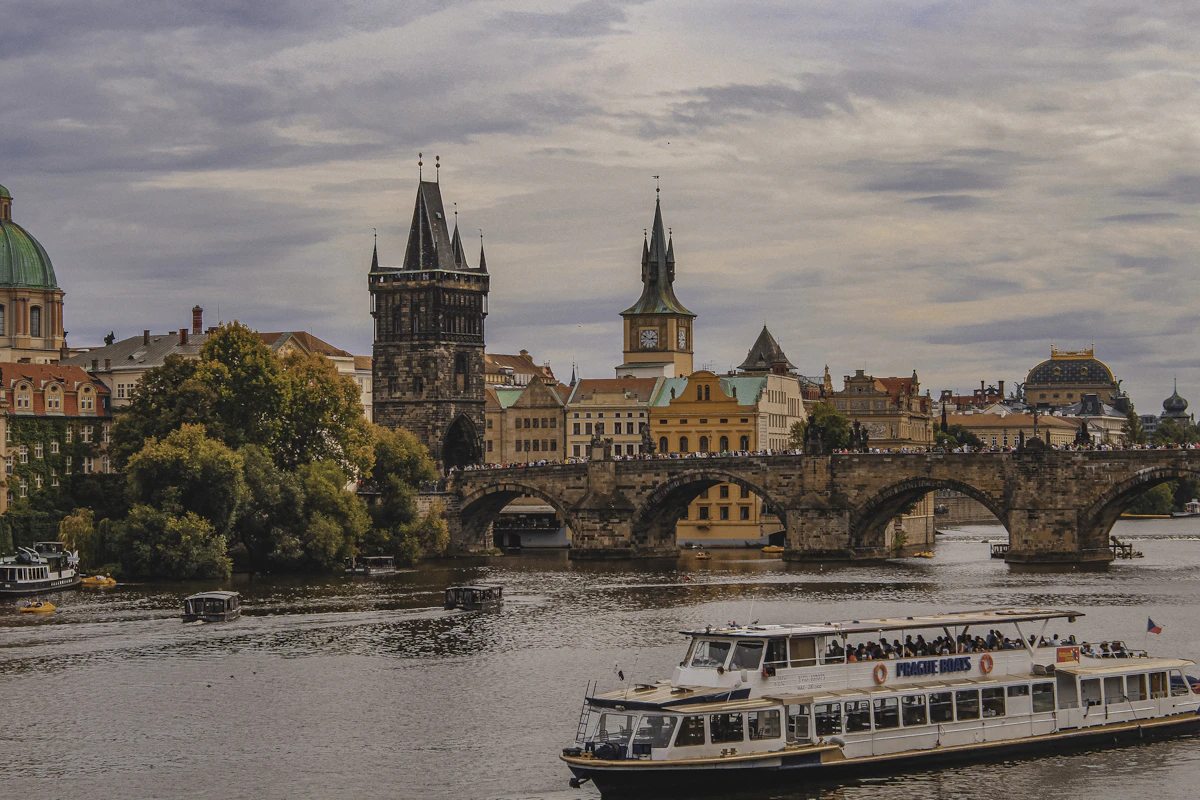
Karlův most (Charles Bridge) is not merely a river crossing — it is the symbolic spine of Prague, connecting the royal Castle district to the merchant Old Town across 16 stone arches. For nearly five centuries it was the only bridge over the Vltava in Prague, and every coronation procession, trade caravan, and invading army crossed it. To walk Charles Bridge is to walk the same stones as Charles IV, the Hussites, Mozart, and the students who faced Soviet tanks in 1968. No other structure in the city carries this weight of history.
History: 1357 and the Magic Numbers
Emperor Charles IV laid the foundation stone on 9 July 1357 at 5:31 AM. The date and time were chosen by court astrologers to form an ascending and descending numerical palindrome: 1-3-5-7-9-7-5-3-1 (the year 1357, the 9th day of the 7th month, at 5:31). Whether this is historical fact or later embellishment, it speaks to how seriously Prague took the mystical significance of this bridge from the very beginning.
The bridge replaced the Judith Bridge, which had been swept away by a flood in 1342. Charles commissioned the 24-year-old architect Peter Parler — the same genius who would design much of St. Vitus Cathedral — to create something indestructible. Parler delivered. The bridge is 516 metres long, nearly 10 metres wide, and rests on 16 arches built from sandstone blocks. Legend claims eggs were mixed into the mortar for strength, and towns across Bohemia were ordered to send their eggs to the construction site. The legend is almost certainly false — but the bridge has survived over 660 years of floods, wars, and the weight of modern tourism, so something worked.
The bridge was completed around 1402 and originally known simply as the Stone Bridge or Prague Bridge. It was renamed for Charles IV only in 1870. For centuries it was a working bridge with toll gates, shops, and even a prison. The bridge towers at each end served defensive purposes — the Old Town Bridge Tower withstood a Swedish siege in 1648, and you can still see damage from the cannonballs on its northern facade.
The 30 Baroque Statues
The statues that line Charles Bridge today — 30 in total, mostly installed between 1683 and 1714 — transformed it from a medieval traffic route into an open-air Baroque gallery. Most of the originals have been moved to the Lapidarium of the National Museum to protect them from pollution and weather; the statues on the bridge are high-quality replicas. But the effect remains overwhelming: a double colonnade of saints, martyrs, and holy figures guarding the crossing.
Key Statues to Find
- St. John of Nepomuk (8th statue on the right from Old Town): The most famous statue on the bridge and the most touched. Nepomuk was thrown from the bridge in 1393 on the orders of Wenceslas IV, allegedly for refusing to reveal the queen's confession. Touch the bronze plaque on the railing beneath the statue — legend says it ensures your return to Prague.
- The Crucifixion (3rd statue group on the right): The oldest sculpture on the bridge, dating to 1629. The gilded Hebrew inscription around the cross — 'Holy, Holy, Holy is the Lord of Hosts' — was paid for by a Jewish man as punishment for allegedly blaspheming the crucifix.
- Ss. Cyril and Methodius (far end, Malá Strana side): The 9th-century missionaries who brought Christianity and literacy to the Slavic peoples. Their statue is the most recent addition, installed in 1938.
- St. Luitgard (6th statue on the left): Widely considered the finest sculpture on the bridge. Carved by Matthias Braun in 1710, it depicts Christ appearing to the blind saint in a moment of ecstatic vision. The composition is genuinely moving.
- Bruncvík (a knight statue on the downstream side of the pillar near the Malá Strana end): Not one of the 30 main statues but often missed. Legend says a magic sword is hidden inside the bridge, and Bruncvík — Prague's own knight — will return with it to defend the city in its darkest hour.
Understanding the Statue Layout
The statues are arranged in groups of three along each side of the bridge, roughly symmetrical, though additions and replacements over the centuries have disrupted perfect order. Walking from the Old Town side toward Malá Strana, the statues are conventionally numbered 1 through 15 on the right (downstream) side and 1 through 15 on the left (upstream). The earliest statue is the Crucifix, which has stood in some form on the bridge since the 14th century; the most recent is the 1938 statue of Saints Cyril and Methodius. Between those dates, the bridge accumulated its full complement over roughly 250 years, with the most prolific period being the decades around 1700 when Jesuit patronage fueled a burst of Counter-Reformation sculpture.
The sculptors who created these works included the leading Baroque artists of the Bohemian lands. Matthias Braun, a Tyrolean who settled in Prague, carved the intensely emotional Saint Luitgard and the dramatic grouping of Saint Ivo. Jan Brokoff and his sons Michael and Ferdinand Maximilian produced the majority of the statues, including the Turk guarding Christian captives beneath the statue of Saint John of Matha — a work so detailed that its composition of kneeling prisoners and the snarling dog beside them remains a highlight of Central European Baroque sculpture. Ferdinand Maximilian Brokoff was only 22 years old when he completed some of his bridge commissions, a prodigy whose career was cut short by tuberculosis at age 42.
The Best Times to Visit
Charles Bridge receives an estimated 30,000 visitors per day in peak summer. Walking it at midday in July is an exercise in crowd management, not sightseeing. Timing is everything — our one-day Prague itinerary schedules the crossing at dawn, when the bridge is nearly empty.
- Sunrise (5:00–6:30 AM in summer, 7:00–8:00 in winter): The definitive Charles Bridge experience. The mist, the light, the near-empty bridge — this is when the bridge reveals what it truly is. You will share it with photographers, joggers, and perhaps a few insomniacs. For the classic photograph with Prague Castle in the background, position yourself on the Old Town half and face west. Arrive 20 minutes before sunrise — the light hits the Castle towers directly, creating a warm golden glow against the cool blue sky.
- Late evening (after 22:00): The bridge empties after dark and the illuminated Castle, towers, and statues create a theatrical atmosphere. Street musicians sometimes play at the Malá Strana end.
- Winter weekday mornings: November through February, the bridge is significantly quieter even at midday. The bare trees and low grey skies give it a melancholy beauty that summer cannot match.
- Avoid: 10:00 AM to 6:00 PM in June, July, and August. The bridge becomes a slow-moving queue of tour groups, selfie sticks, and caricature artists.
Charles Bridge at Night
Charles Bridge after dark is a different structure entirely. The city illuminates the bridge towers, the Castle above, and the facades of churches along both banks, while the statues themselves receive subtle uplighting that throws long shadows across the stone pavement. The crowds thin dramatically after about 21:00 in summer and even earlier in winter, and by 23:00 the bridge often feels genuinely atmospheric — the kind of place where you understand why Prague has inspired so many ghost stories.
The best nighttime approach is from the Old Town side. As you pass through the tower gate, the illuminated length of the bridge opens ahead of you with the Castle lit up on the hill beyond — a composition that looks almost artificially dramatic. The gas lamps along the bridge (replicas of 19th-century originals, converted to electric) cast a warm amber light that softens the stone and creates pools of darkness between the statue groups. If the river is calm, the reflections of the lights in the Vltava double the scene.
The Tower Climbs
Old Town Bridge Tower
The Old Town Bridge Tower (Staroměstská mostecká věž) is considered the finest Gothic gate tower in Europe. Designed by Peter Parler in the late 14th century, its eastern facade is covered with sculptural decoration including figures of Charles IV and Wenceslas IV flanking St. Vitus. The climb (138 steps, 100 CZK) rewards you with a direct view down the full length of the bridge toward the Castle — arguably the single best view in Prague. The interior staircase is narrow and there is no lift, but the platform at the top is relatively spacious.
Malá Strana Bridge Towers
The Malá Strana end has two towers: the shorter Judith Tower (dating from the 12th-century Judith Bridge) and the taller tower built in the mid-15th century to match the Old Town tower. The taller tower is open to climb (100 CZK) and gives a different perspective — you look back across the bridge toward Old Town and the cluster of spires behind it. The shorter tower is not open to the public but forms part of the photogenic gate ensemble.
Old Town Bridge Tower (Staroměstská mostecká věž)
LandmarkKarlův most, Staré Město, Prague 1
Insider tip: Go 30 minutes before closing to avoid queues and catch golden hour light on the Castle.
Legends and Stories
Prague is a city that runs on legends, and Charles Bridge has generated more than its share. The egg mortar story is the most famous — that eggs were mixed into the binding agent to strengthen the stone. When a 2008 chemical analysis actually found traces of egg protein in the mortar, the legend suddenly seemed less absurd. The town of Velvary, according to the story, famously sent hard-boiled eggs because they misunderstood the instructions.
The five stars that appeared on the Vltava's surface when John of Nepomuk's body was thrown from the bridge in 1393 are commemorated by a five-star halo on his statue — the only statue on the bridge with stars rather than a traditional halo. Touching the spot where he went over the railing (marked by a small brass cross with five stars embedded in the stone parapet) is said to bring good luck.
The sword of Bruncvík, hidden inside one of the bridge pillars, will supposedly be revealed to a Czech knight in the nation's hour of greatest need. Variations of the legend place the sword in different pillars, which is convenient for a story that requires the weapon never to be found. The legend was strong enough that during the 19th-century Czech National Revival, the romantic knight Bruncvík became a symbol of Czech identity and self-determination.
Street Musicians and Artists
Charles Bridge has been a stage for street performers for decades, and the city now regulates who can play and when. Performers must hold a permit from the Prague municipal authority, and designated spots on the bridge are allocated on a rotating basis. The quality varies enormously — on any given afternoon you might hear a jazz quartet that would not be out of place in a club, followed by an accordion player grinding through the same three folk songs on repeat.
The best music on the bridge tends to happen in the late afternoon and early evening, roughly between 16:00 and 20:00 in summer. Small jazz ensembles, classical string players, and occasionally a Dixieland band set up near the center of the bridge, where the acoustics — open air bouncing off stone parapets and statue bases — create a surprisingly resonant sound. If a group is genuinely good, linger. Prague has a deep musical tradition, and some of the performers on Charles Bridge are conservatory-trained musicians supplementing modest orchestral salaries.
The visual artists are the bridge's other permanent feature. Caricaturists, watercolorists, and sellers of Prague-themed prints line the parapets between the statue groups. The caricature artists are a Prague institution at this point — some have worked the bridge for 20 or 30 years. Their prices typically start around 500 CZK for a quick sketch and go up from there. The watercolors and prints of Prague landmarks range from mass-produced tourist fare to genuinely accomplished work. If something catches your eye, it is worth asking the artist about their process — the ones painting original work are usually happy to talk. If you enjoy a musician's performance, 50 to 100 CZK in the tip jar is a generous acknowledgment, and many of the better groups sell CDs for 200 to 300 CZK or play evening sets at clubs in Malá Strana and Old Town.
Hawkers, Scams, and What to Watch For
- Pickpockets: The most persistent problem on the bridge. They work in pairs or small groups and target distracted tourists in the most crowded sections. Bags worn on backs are especially vulnerable. Cross-body bags worn in front, or front trouser pockets, are your best defense.
- Friendship bracelets: Someone approaches and starts tying a woven bracelet on your wrist while chatting. Once it is on, they demand payment (typically 200-500 CZK). Do not let anyone tie anything to you. Pull your hand away immediately.
- The shell game: Occasionally set up at the approaches to the bridge rather than on it. The game is rigged, the 'winners' in the crowd are accomplices, and you will lose your money.
- Overpriced souvenirs: The vendors on the bridge charge significant premiums over shops even a few streets away. A fridge magnet that costs 40 CZK in a Malá Strana shop may cost 120 CZK on the bridge. Buy your souvenirs elsewhere.
- Fake petitions: Someone approaches with a clipboard asking you to sign a petition (often for a vaguely charitable cause). After signing, they demand a donation. Simply decline and walk on.
- Bad currency exchange: The exchange booths near both ends of the bridge — particularly on the Old Town side along Karlova street — frequently offer terrible rates and charge hidden commissions. Never exchange money at a booth that does not clearly display both buy and sell rates with zero commission. Use an ATM from a major Czech bank (Česká spořitelna, ČSOB, Komerční banka) and withdraw crowns directly.
Photography Tips
Charles Bridge is one of the most photographed structures in Central Europe, and the challenge is not finding a good shot — it is finding one that feels like yours rather than a repetition of millions of identical images. The key is timing, weather, and knowing the less obvious angles.
- Fog and mist: Prague's river location means morning fog is common in autumn and winter. When the mist rolls across the bridge and obscures the far end, you get images with genuine atmosphere — statue silhouettes emerging from whiteness, the towers fading into haze. Check the forecast for humidity above 90% and temperatures near the dew point.
- Rain reflections: A wet bridge surface reflects the gas lamps and statue uplighting beautifully. After rain, the stone takes on a dark sheen that transforms the entire color palette. Bring a lens cloth and a weather-sealed camera or a plastic bag to protect your gear.
- Telephoto compression: Most visitors shoot wide-angle from one end. A 100-200mm lens from the Old Town tower or from Novotného lávka compresses the statue rows and the Castle into dense, layered compositions that feel completely different from the standard postcard shot.
- Shooting through the statues: Position yourself at bridge level and frame the Castle or a tower through the gap between two statue groups. The dark silhouettes of the stone figures create a natural frame and add depth that a clean, unobstructed view cannot match.
- Blue hour: The 20-30 minutes after sunset (or before sunrise) when the sky turns deep blue produce the most balanced exposures — the artificial lighting on the bridge and Castle is visible but the sky still has color and detail rather than flat black.
Photography Spots Beyond the Bridge
- Novotného lávka: The wooden platform just south of the Old Town Bridge Tower, beside the Smetana Museum. Gives a slightly elevated, angled view of the bridge with the Castle behind.
- Kampa Island waterfront: Walk down the steps on the Malá Strana side of the bridge and along the Čertovka canal for an intimate, low-angle view of the bridge arches reflected in the water.
- Letná Park: From the metronome terrace in Letná, you see the bridge in the broader context of Prague's river panorama — five bridges stretching into the distance.
- A boat on the Vltava: Several companies run non-narrated rowboat and paddleboat rentals from Slovanský ostrov. Rowing under the bridge at sunset is one of Prague's great underrated experiences.
Alternative Bridges for Charles Bridge Views
Some of the finest views of Charles Bridge come not from walking across it but from looking at it from a neighboring bridge. Prague has 18 bridges across the Vltava, and two in particular offer excellent vantage points of Charles Bridge in its full context.
- Mánesův most (Mánes Bridge): One bridge north of Charles Bridge, connecting the Rudolfinum concert hall to the edge of Malá Strana near Klárov. Walk to the center of Mánes Bridge and look south — you get a straight-on view of Charles Bridge with the Lesser Town towers framing the entrance, the statue-lined parapets stretching across the water, and the wooded slopes of Petřín Hill rising behind. This is the best spot for photographing the bridge in its entirety without distortion.
- Legií most (Legion Bridge): One bridge south of Charles Bridge, connecting the National Theatre to Újezd in Malá Strana. From Legion Bridge you see Charles Bridge from the downstream side, with the Old Town Bridge Tower prominent on the left and the Castle on the skyline above. The view is particularly strong at sunset when the bridge is backlit and the Castle catches the last warm light.
Charles Bridge Through the Seasons
The bridge is a different experience in each season, and choosing when to visit is as important as choosing when during the day.
- Spring (March-May): The light returns and the days lengthen, but the tourist crowds have not yet reached summer intensity. Cherry blossoms on Kampa Island and on Petřín Hill provide a backdrop of pink and white when viewed from the bridge. April mornings can deliver spectacular mist conditions as the warming air meets the still-cold river. The bridge is comfortably walkable at most times of day except weekend afternoons.
- Summer (June-August): The bridge is at its most crowded and its most alive. Street musicians play from morning to night, every souvenir stand is occupied, and the statue-lined parapets are lined two-deep with tourists. Sunrise remains the magic window — arrive by 5:00 AM for near-solitude. Late evenings after 21:00 are also manageable. The long daylight hours (sunset after 21:00 in June) extend the golden hour photography window.
- Autumn (September-November): The crowds recede noticeably after mid-September, and by October the bridge is genuinely pleasant even at midday. The autumn foliage on Petřín Hill and along the Vltava banks creates warm copper and gold tones in the background of bridge photographs. November brings the first real fog — dense, atmospheric morning mist that transforms the bridge into something from a Gothic novel. This is many photographers' favorite season.
- Winter (December-February): The quietest season and in many ways the most beautiful. Snow on the statues and the bridge towers is rare but transformative when it happens. The Christmas markets on both sides of the river (especially at Old Town Square) pair naturally with a bridge walk. On clear winter mornings, the low-angle sun creates long dramatic shadows across the stone surface. Dress warmly — the wind funnels down the Vltava valley and the bridge is fully exposed.
Practical Information
- The bridge is always open and free to walk — there are no gates or closing times
- Old Town Bridge Tower: open daily 10:00–18:00 (March), 10:00–22:00 (April–September), 10:00–20:00 (October), 10:00–18:00 (November–February). Admission 100 CZK
- Malá Strana Bridge Tower: same hours and price as Old Town Tower
- Nearest tram stop: Karlovy lázně (Old Town side) or Malostranské náměstí (Malá Strana side)
- Nearest metro: Staroměstská (Line A) on the Old Town side, Malostranská (Line A) on the Malá Strana side
- The bridge surface is uneven stone — wear comfortable, flat shoes
Frequently Asked Questions
Arrive before 6:30 AM in summer (before 8:00 AM in winter) for a nearly empty bridge with mist, soft light, and the Castle glowing above. Alternatively, visit after 10:00 PM when the bridge empties again and the floodlit statues and towers create a theatrical atmosphere. Avoid 10 AM to 6 PM in June–August at all costs.
Yes. Charles Bridge is well lit and Prague is generally very safe at night. Between midnight and 4 AM you may find yourself nearly alone on the bridge. The main risk is pickpockets during crowded daytime hours, not nighttime. Bring a jacket — the river creates a chill even in summer.
Charles Bridge was begun in 1357 and completed around 1402 — making it over 660 years old. Emperor Charles IV laid the foundation stone at 5:31 AM on 9 July 1357, a date and time chosen by court astrologers to form a numerical palindrome: 1-3-5-7-9-7-5-3-1.
Walking across Charles Bridge is completely free, 24 hours a day, 365 days a year. There are no gates or closing times. The Old Town Bridge Tower climb costs 100 CZK for the best view down the bridge toward the Castle.
If you can only climb one, choose the Old Town Bridge Tower (100 CZK, 138 steps). The view down the full length of the bridge toward the Castle is arguably the single best view in Prague. The Malá Strana tower gives a lovely reverse view and is usually less crowded.
The statue of St. John of Nepomuk (8th on the right from Old Town) has a bronze plaque that visitors touch for luck and to ensure their return to Prague. The plaque is polished gold from centuries of contact. There is also a small brass cross with five stars in the parapet where Nepomuk was thrown into the river in 1393.
Most are high-quality replicas. The originals, darkened by centuries of pollution, have been moved to the Lapidarium at the Výstaviště exhibition grounds in Holešovice (50 CZK, closed Mondays). Seeing the originals at eye level indoors reveals details invisible on the bridge. Replicas are lighter and cleaner in appearance.
The bridge is 516 metres long. A straight walk takes about 10 minutes, but you should allow 30–45 minutes to stop at the key statues, enjoy the views, and take photographs. At dawn without crowds, you may want to spend even longer.
The bridge surface is uneven stone but relatively flat, making it passable with a wheelchair or stroller, though bumpy. The bridge towers are only accessible by stairs (138 steps). The approaches on both sides involve cobblestone streets. Flat, sturdy footwear is recommended for everyone.
From the bridge itself, stand between the 8th and 9th statues on the south side for the classic Castle view. From off the bridge, Novotného lávka gives an angled view; Mánes Bridge shows the full span; and Kampa Island offers a low-angle view through the arches. Blue hour (20–30 minutes after sunset) produces the best balanced exposures.
Yes, Charles Bridge is prime pickpocket territory during crowded daytime hours. They work in pairs targeting distracted tourists. Keep your phone and wallet in front pockets or a zipped cross-body bag. Also decline 'friendship bracelets' (someone ties one on and demands payment) and fake petition clipboards.
Autumn (October–November) is many photographers' favourite — fewer crowds, golden foliage on Petřín Hill, and morning fog that transforms the bridge into a Gothic scene. Winter brings snow on the statues (rare but stunning). Spring has cherry blossoms on nearby Kampa Island. Summer has the longest hours but the heaviest crowds.
Yes. Several companies rent non-narrated rowboats and paddleboats from Slovanský ostrov (Slavic Island). Rowing under the bridge at sunset is one of Prague's great underrated experiences. You get a unique view of the 14th-century arches from water level.
Peter Parler, the same architect behind St. Vitus Cathedral, designed Charles Bridge. He was just 24 years old when commissioned by Emperor Charles IV. The bridge rests on 16 arches of sandstone blocks and has survived over 660 years of floods, wars, and the weight of modern tourism.
Quality varies enormously. The best music happens in late afternoon and early evening (16:00–20:00 in summer), when small jazz ensembles and classical string players set up near the centre. Some performers are conservatory-trained musicians. If a group is genuinely good, 50–100 CZK in the tip jar is a generous acknowledgment.
Legend says eggs were mixed into the mortar to strengthen the bridge, and towns across Bohemia were ordered to send their eggs. The town of Velvary famously sent hard-boiled eggs because they misunderstood. A 2008 chemical analysis actually found egg protein traces in the mortar, adding surprising credibility to the story.
Klára Dvořáková
Prague Historian & Licensed Guide · Prague 1, Czech Republic
Born and raised in Prague's Staré Město, Klára holds a degree in Art History from Charles University and has been a licensed city guide since 2014. She specializes in Gothic and Baroque architecture, and leads walking tours through neighborhoods most tourists never find.