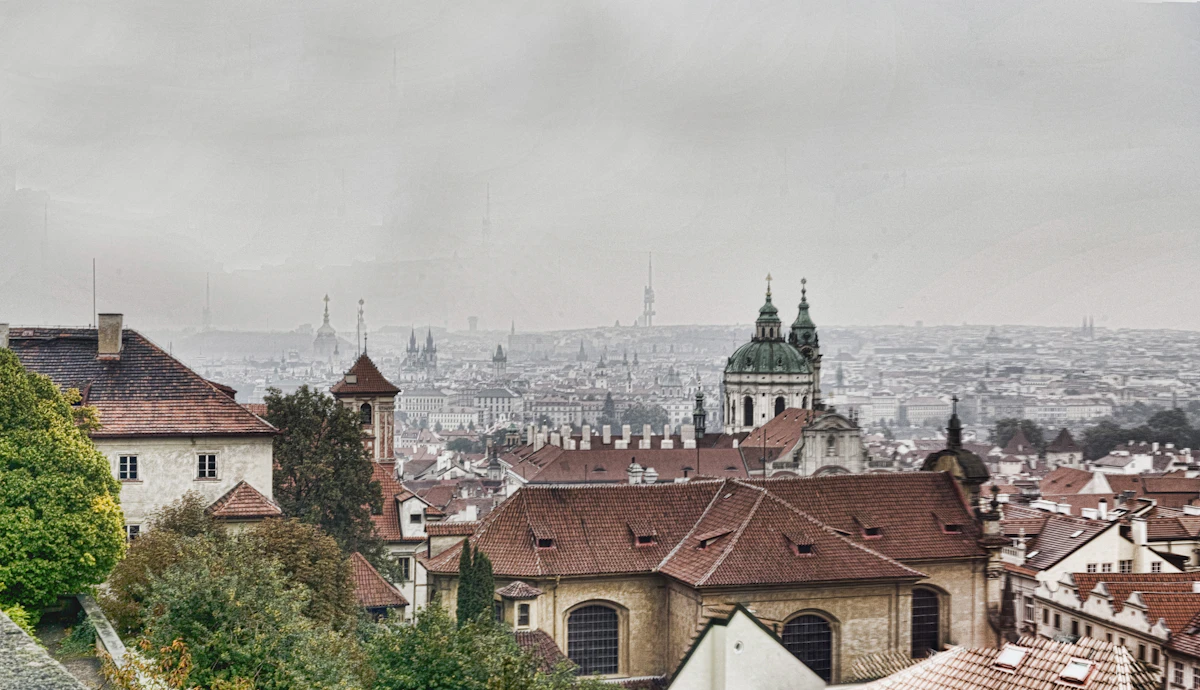
Prague's Hidden Gems: Off the Beaten Path in 2026
Beyond Charles Bridge and Old Town Square -- the Prague that locals keep to themselves
Powered by ITINE
Get this guide as a tappable itinerary
Day-by-day plan, audio tours, and one-tap Google Maps — completely free.

Destinations

Your Itinerary
Google Maps
Every year, millions of tourists walk across Charles Bridge, crane their necks at the Astronomical Clock, and shuffle through the courtyards of Prague Castle. And every year, those same tourists leave without discovering the Prague that exists just a few streets beyond the well-worn path. This is not their fault -- the obvious Prague is extraordinary. But the hidden Prague is where the city truly lives, breathes, and reveals its deeper character.
What follows is a collection of places that most visitors miss entirely. Some are well-known to locals but invisible to guidebooks. Others are hiding in plain sight, a single wrong turn away from a tourist artery. All of them will change the way you think about this city.
Vyšehrad: The Other Castle
While millions crowd Prague Castle on the western bank, the ancient fortress of Vyšehrad sits quietly on a rocky cliff above the Vltava to the south — see our full Vyšehrad guide for the complete story —, receiving a fraction of the visitors and offering views that rival -- some would say surpass -- its more famous counterpart. This is where Czech mythology says Princess Libuše first prophesied the glory of Prague. The reality is just as compelling: a Romanesque rotunda from the 11th century, massive neo-Gothic casemates, and a cemetery where the greatest names in Czech culture rest under Art Nouveau tombstones.
Vyšehrad National Cultural Monument
Fortress & CemeteryV Pevnosti, 128 00 Praha 2-Vyšehrad
Insider tip: Enter through the Táborská Gate from the metro station (Vyšehrad, line C) and walk the full ramparts to the northern lookout for the best river panorama. The cemetery is where you will find the graves of Dvořák, Smetana, Mucha, and Čapek.
Nový Svět: A Village Inside the City
Tucked into a quiet fold of the hillside just northwest of Prague Castle, Nový Svět (New World) is a single short street that feels like it belongs in a different century. Tiny baroque houses in faded pastels, hand-painted signs, cobblestones that have never been touched by renovation, and almost no one around. It was historically the poorest quarter of the Castle district -- home to servants, artists, and alchemists. The astronomer Tycho Brahe was connected to Prague's intellectual circles during his time in the city. Today it is possibly the most photogenic and least visited street in central Prague.
Walk to Nový Svět from the Castle's western exit via Loretánské náměstí. The Loreto chapel and its famous treasury are worth a stop along the way, and the street itself ends at a tiny vineyard and a panoramic overlook that almost nobody knows about. Late afternoon light here is extraordinary.
Vítkov Hill and the National Monument
The massive equestrian statue of Jan Žižka atop Vítkov Hill is the third-largest bronze equestrian statue in the world, yet most tourists have never heard of it. The hill rises sharply above the Žižkov and Karlín neighborhoods, and from its summit you get a 360-degree panorama of Prague that is genuinely staggering -- from the Castle and Petřín in the west to the suburbs stretching east, with the entire Vltava valley spread below.
National Monument at Vítkov
Monument & ViewpointU Památníku 1900, Praha 3 - Žižkov
Insider tip: The functionalist building itself is a masterpiece of 1930s architecture, originally built to honor the Czechoslovak Legions. The free rooftop terrace is the real draw -- arguably the best viewpoint in all of Prague, and rarely crowded.
The park surrounding the monument is a favorite running and dog-walking route for Žižkov locals. On summer evenings, groups gather on the grassy slopes with blankets and beer. The approach from Žižkov through the park takes about fifteen minutes uphill and passes through dense tree cover before the view suddenly opens up at the top.
Stromovka: Prague's Central Park
Originally a royal hunting ground established in 1268, Stromovka is Prague's oldest and largest park -- and it feels nothing like a tourist attraction. Locals come here to run, cycle, push strollers, play frisbee, and disappear under the canopy of ancient oaks and chestnuts. In autumn, the avenues of trees blaze with color. In summer, the long meadows host impromptu picnics and the artificial lake fills with paddleboaters. It connects seamlessly to Výstaviště (the Exhibition Grounds) and the Holešovice neighborhood.
Stromovka Park
Park & Green SpaceKrálovská obora, Praha 7 - Bubeneč
Insider tip: Enter from the Výstaviště tram stop and walk the main avenue deep into the park. The Gothic tunnel in the park's center (Rudolfova štola) once carried water to the royal gardens and is an unexpected curiosity. Bring a picnic from the Holešovice Market nearby.
Letná Beer Garden: The View That Earns Its Drink
Perched on the bluff above the Vltava in Letná Park, this beer garden is one of Prague's great democratic spaces. Students, families, office workers, and tourists who have wandered off-script all share the same rows of communal benches, all facing the same extraordinary view: the curve of the river, five bridges in a line, and the Old Town skyline stacked on the far bank. A half-liter of Gambrinus or Pilsner Urquell costs 65-85 CZK, and the view is free.
Letná Beer Garden (Letenský zámeček)
Beer Garden & ViewpointLetenské sady, 170 00 Praha 7-Holešovice
Insider tip: Arrive by 5 PM on summer weekends to get a bench with the view. The adjacent Hanavský Pavilion restaurant is more upscale if you want a sit-down meal with the same panorama. The giant metronome that replaced the old Stalin statue is a two-minute walk east.
DOX Centre for Contemporary Art
In the industrial backstreets of Holešovice, a converted factory houses one of Central Europe's most important contemporary art spaces. The DOX Centre stages rotating exhibitions that tackle politics, identity, architecture, and society with an ambition that far exceeds its relatively modest profile among tourists. The building itself is a draw -- a brutalist shell reimagined with soaring white galleries, a rooftop terrace, and the Gulliver airship, a massive inflatable structure perched on the roof that serves as a literary space.
DOX Centre for Contemporary Art
Gallery & Cultural SpacePoupětova 1, Praha 7 - Holešovice
Insider tip: Visit on a Wednesday evening when the gallery stays open late and hosts occasional talks and openings. Combine with dinner in nearby Holešovice -- the neighborhood has some of Prague's best new restaurants.
Prague never tells you everything at once. It is a city of hidden courtyards and locked gardens. But it always leaves a door ajar for those patient enough to look for it.
— Prague Itinerary
Žižkov TV Tower: Love It or Loathe It
The Žižkov Television Tower is the most polarizing structure in Prague. Built between 1985 and 1992, with construction beginning under the Communist government, this 216-meter concrete stalk looms over the residential rooftops of Žižkov like something from a dystopian film set. Praguers spent decades hating it. Then, in 2000, sculptor David Černý attached ten giant fiberglass babies crawling up and down its pillars, and the tower became -- somehow -- beloved. Today its observation deck at 93 meters offers the only truly aerial view of Prague accessible without a helicopter.
Žižkov Television Tower
Observation Deck & LandmarkMahlerovy sady 1, Praha 3 - Žižkov
Insider tip: The observation deck is good, but the real experience is the one-room hotel suite built inside the tower at 70 meters. It is bookable for overnight stays and is one of the most surreal hotel rooms in Europe. For drinks only, the tower bar is open to all and serves excellent cocktails.
Náplavka Riverbank: Prague's Living Room
The stretch of Vltava embankment below Palackého náměstí known as Náplavka has become the social heart of modern Prague. On Saturday mornings from spring through autumn, the farmers' market fills the stone quayside with stalls selling fresh bread, aged cheese, craft beer, Vietnamese food, smoked meats, and seasonal produce. On summer evenings, the houseboats moored along the wall transform into floating bars and music venues. In winter, a scaled-down market still operates, and the boat-bars glow with candlelight.
But Náplavka is not just about markets. On any warm evening, hundreds of people simply sit on the stone embankment with their feet dangling toward the water, drinking beer from bottles, watching the swans, and talking until dark. It is Prague at its most relaxed and genuinely communal -- a world away from the tourist-facing performances of the Old Town.
Vrtba Garden: Baroque Perfection in Miniature
Hidden behind an unremarkable door on Karmelitská street in Malá Strana, the Vrtba Garden (Vrtbovská zahrada) is one of the finest baroque gardens in Central Europe and a UNESCO World Heritage Site. Built in 1720, its terraces climb the hillside in a series of ornamental staircases decorated with mythological statues, urns, and frescoed loggias. From the top terrace, you look out over the rooftops of Malá Strana to the river and Old Town beyond. It is impossibly beautiful, and because of the modest entrance fee and hidden location, you may have it almost to yourself.
Vrtba Garden (Vrtbovská zahrada)
Historic GardenKarmelitská 25, Praha 1 - Malá Strana
Insider tip: The garden is small -- you can see everything in 20-30 minutes -- but spend time on the upper terrace. The view of Prague Castle from here, framed by baroque sculptures and climbing roses, is one of the most photographed scenes in architectural history. Come in late May when the garden peaks.
Riegrovy Sady: Vinohrady's Hilltop Retreat
This sprawling park in the heart of Vinohrady is where the neighborhood comes to breathe. The western edge has a massive beer garden with direct views of Prague Castle across the valley -- it is one of the few beer gardens where the Castle appears perfectly framed by trees, as if the park were designed as a viewing platform (it arguably was). Children play in the large playground, runners loop the perimeter paths, and on summer evenings the beer garden's outdoor screen shows football matches and films.
Riegrovy Sady Beer Garden
Park & Beer GardenRiegrovy sady, Praha 2 - Vinohrady
Insider tip: The beer garden is on the western slope. For a quieter experience, walk to the eastern side of the park where there is a smaller, less-known garden area. The main beer garden screens Czech national football and ice hockey matches on a big screen -- the atmosphere during a big game is electric.
More Hidden Corners Worth Seeking Out
Prague's hidden layers run deeper than any single article can cover. Here are a few more places that reward the curious traveler who is willing to wander beyond the obvious.
- Kampa Island -- walk through the narrow channel called Čertovka (Devil's Channel) to find a watermill, a John Lennon-decorated wall, and the Kampa Museum of modern art, all steps from Charles Bridge yet worlds away
- Olšany Cemetery -- Prague's largest cemetery, a maze of overgrown Art Nouveau tombs, crumbling angels, and ivy-choked paths that feels like a Gothic novel come to life
- Kasárna Karlín -- a former military barracks turned cultural hub with galleries, cafes, a cinema, a coworking space, and a community garden in the courtyard
- Franciscan Garden (Františkánská zahrada) -- a hidden walled garden steps from Wenceslas Square, accessible through an archway off Jungmannovo náměstí; an oasis of silence in the busiest part of the city
- Havlíčkovy Sady (Grébovka) -- a Vinohrady park with an actual working vineyard, a grotto with a waterfall, and panoramic views from the hilltop villa
Underground Prague: What Lies Beneath
Prague's hidden world extends downward as well as outward. Beneath the tourist-clogged streets of the Old Town lies a network of Romanesque cellars, medieval passages, and forgotten chambers that date back to the city's 12th-century founding. Before the great flood defenses raised the street level by several meters in the 13th century, these cellars were ground-floor rooms -- entire floors of buildings swallowed by history and buried under centuries of accumulated earth.
The Prague Underground tour beneath the Old Town Hall offers a glimpse into this subterranean world, but the more atmospheric experience is found in the cellars of individual buildings. Several wine bars and restaurants in the Old Town and Malá Strana occupy these vaulted Romanesque spaces, their stone walls sweating with age. Vinograf Wine Bar on Senovážné náměstí operates from one such cellar -- you descend a narrow staircase and find yourself drinking Moravian wine in a space that predates the Charles Bridge by two centuries.
Hidden Cafés and Quiet Retreats
Prague's café culture runs deep -- this was the city of Kafka, after all, a man who wrote much of his greatest work at small marble-topped tables in smoke-filled coffeehouses. While the famous establishments like Café Slavia and Café Louvre are worth visiting for their history, the most rewarding café experiences hide in neighborhoods the tour buses never reach. In Vinohrady, Kavárna Čekárna occupies what was once a dentist's waiting room, its mismatched furniture and shelf of dog-eared Czech novels creating the atmosphere of a well-loved living room. In Karlín, Můj šálek kávy is a micro-roastery where the baristas treat every pour-over as a small ceremony. And in Žižkov, the eccentric Bukowski's Bar -- more literary dive than café -- channels the spirit of its namesake with battered typewriters on the tables and cheap, excellent beer.
Unusual Photo Spots Most Visitors Miss
The most photographed angles of Prague -- the Castle from Charles Bridge, the rooftops from the Old Town Hall tower -- produce beautiful images that look exactly like everyone else's. The city's most striking photographs come from positions that require a little more effort to reach. The spiral staircase inside the Old Town Bridge Tower offers a vertiginous downward view of the bridge that almost nobody captures. The courtyard of the Clam-Gallas Palace on Husova street -- open during occasional exhibitions -- contains a baroque doorway so sculptural it looks digitally rendered. And the view from the upper terrace of the Strahov Monastery gardens, looking east across Petřín Hill toward the Old Town, compresses the entire city into a single layered panorama of spires, rooftops, and river bends.
Tips for Going Off the Beaten Path
- Get lost on purpose. Prague's center is compact enough that you are never more than a twenty-minute walk from a metro station. Turn down the side streets, enter the courtyards, follow the tram tracks into neighborhoods you have never heard of.
- Visit the major sights at the wrong hours. Charles Bridge at 6 AM is a different universe from Charles Bridge at noon. Prague Castle at 4 PM on a Tuesday in November belongs to you alone.
- Cross the river. Most tourists stay on the east bank (Old Town, New Town). Malá Strana and beyond -- Smíchov, Břevnov, Dejvice -- are full of places the guidebooks ignore.
- Ride the tram to the end of the line. Pick a random tram, stay on until the terminus, and explore. Some of Prague's most interesting neighborhoods -- Barrandov, Modřany, Ďáblice -- are the ones where tourists never go.
- Talk to locals. Czechs can seem reserved at first, but mention beer, hockey, or mushroom foraging and you will unlock conversations that lead to the best restaurants, the secret viewpoints, and the Prague that no travel website can capture.
The hidden Prague is not a separate city from the famous one. It is the same city, seen from a different angle -- from the ramparts of Vyšehrad instead of the Castle walls, from a Žižkov beer hall instead of an Old Town restaurant, from a park bench in Stromovka instead of a queue at the Astronomical Clock. The magic of Prague has never been confined to its postcard views. It lives in the spaces between them, waiting for the traveler who is willing to step a few streets beyond the obvious and discover what the crowds leave behind.
Frequently Asked Questions
Vyšehrad fortress with its cemetery and river views, Vítkov Hill with its free rooftop terrace panorama, Nový Svět lane near the Castle, the Vrtba Garden in Malá Strana, and the Náplavka riverbank on Saturday mornings. All are within easy reach of the center but receive a fraction of the visitors.
Visit both, but Vyšehrad offers something Prague Castle cannot — near-solitude. The views from the ramparts rival the Castle's, the cemetery holds the graves of Dvořák, Smetana, and Mucha, and admission to the grounds is free. It receives a fraction of Prague Castle's visitors. The combined casemates ticket is just 150 CZK.
The free rooftop terrace at the National Monument on Vítkov Hill in Žižkov is arguably the best viewpoint in all of Prague — a 360-degree panorama that is rarely crowded. The Letná Beer Garden offers stunning views over five bridges for the price of a 65-85 CZK beer.
Nový Svět (New World) is a single short street of tiny Baroque houses in faded pastels, tucked northwest of Prague Castle. Historically the poorest quarter of the Castle district, home to servants and alchemists, it's now possibly the most photogenic and least visited street in central Prague. Late afternoon light here is extraordinary.
The Náplavka farmers' market on the riverbank below Palackého náměstí runs every Saturday from about 8 AM to 2 PM. Go early for the best selection — you'll find fresh bread, aged cheese, craft beer, Vietnamese food, smoked meats, and seasonal produce. On summer evenings, the houseboats become floating bars.
Stromovka is Prague's oldest and largest park, originally a royal hunting ground from 1268. Enter from the Výstaviště tram stop and walk the main avenue deep into the park. It connects to the Holešovice neighborhood and feels nothing like a tourist attraction — locals run, cycle, and picnic here. Free entry, open 24 hours.
Yes. Beneath the Old Town lies a network of Romanesque cellars and medieval passages — the original street level was 2-3 meters lower before 13th-century flood defenses raised it. The Prague Underground tour beneath the Old Town Hall offers access. Several wine bars and restaurants also occupy these vaulted spaces, including Vinograf on Senovážné náměstí.
The Františkánská zahrada is tucked behind Jungmannovo náměstí, steps from Wenceslas Square. Enter through the archway beside the Church of Our Lady of the Snows. Inside you'll find benches, rose bushes, birdsong, and near-total quiet — an oasis of silence that thousands of tourists walk past daily without noticing.
Sitting on the Náplavka riverbank on a warm evening with a bottle of Czech beer, watching swans and the sunset — it costs almost nothing and is Prague at its most genuinely communal. Other free highlights include walking Vyšehrad's ramparts, the Wallenstein Garden, Stromovka Park, and the Vítkov Hill terrace.
The most famous are the ten giant crawling babies on the Žižkov TV Tower. A single baby sculpture sits at ground level in the tower's park. Černý's 'Babies' also appear on Kampa Island. His other Prague works include the upside-down Wenceslas horse in the Lucerna Passage and the rotating Kafka head near Národní třída.
Yes. The 10-Z Nuclear Fallout Shelter beneath the New Town was built in the 1950s to shelter up to 5,000 people. It's now open for guided tours revealing Cold War-era Czechoslovakia — complete with original air filtration systems, decontamination chambers, and propaganda posters still on the walls.
Stromovka in mid-October is staggering — the avenue of chestnut trees blazes with color. Havlíčkovy Sady (Grébovka) in Vinohrady combines autumn color with a working vineyard. Vyšehrad cemetery on a misty morning with colored leaves carpeting the graves is hauntingly beautiful.
The spiral staircase inside the Old Town Bridge Tower offers a vertiginous downward view. The Clam-Gallas Palace courtyard on Husova has a baroque doorway so sculptural it looks digitally rendered. The upper terrace of the Strahov Monastery gardens compresses the entire city into a single layered panorama.
Get lost on purpose — Prague's center is compact enough that you're never more than 20 minutes from a metro station. Visit major sights at dawn or dusk. Cross the river to Smíchov or Břevnov. Ride a random tram to its terminus and explore. Talk to locals about beer, hockey, or mushroom foraging — it unlocks the real Prague.
One of Prague's best experiences. Perched on the bluff above the Vltava, it offers views of five bridges in a line and the Old Town skyline — all for the price of a 65-85 CZK half-liter. Students, families, and office workers share communal benches. Arrive by 5 PM on summer weekends to get a seat with the view.
A cappuccino in Old Town Square costs 120-160 CZK. The same quality coffee in Vinohrady, Karlín, or Žižkov runs 60-85 CZK. The quality is often better in neighborhood spots — they source from Czech specialty roasters like Doubleshot or EMA rather than commercial suppliers.
Klára Dvořáková
Prague Historian & Licensed Guide · Prague 1, Czech Republic
Born and raised in Prague's Staré Město, Klára holds a degree in Art History from Charles University and has been a licensed city guide since 2014. She specializes in Gothic and Baroque architecture, and leads walking tours through neighborhoods most tourists never find.
You might also enjoy
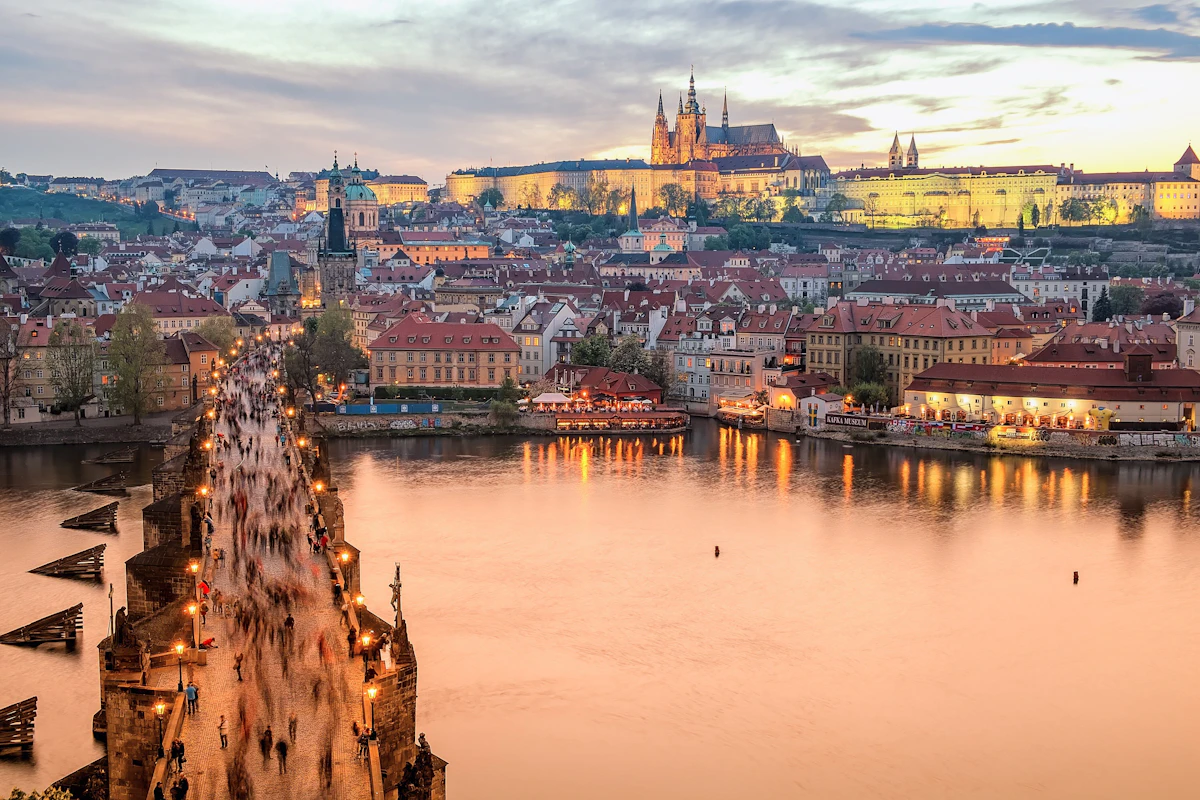
Vyšehrad: Prague's Ancient Fortress Guide (2026)
Vyšehrad fortress: Prague's overlooked clifftop gem with river views, a national cemetery, underground casemates, and centuries of legend. Updated for 2026.
Žižkov: Prague's Rebel District (2026 Guide)
Discover Žižkov, Prague's grittiest neighborhood in 2026. Cheap pubs, the iconic TV Tower, Vítkov Hill views, street art, and a rebel spirit you won't find elsewhere.