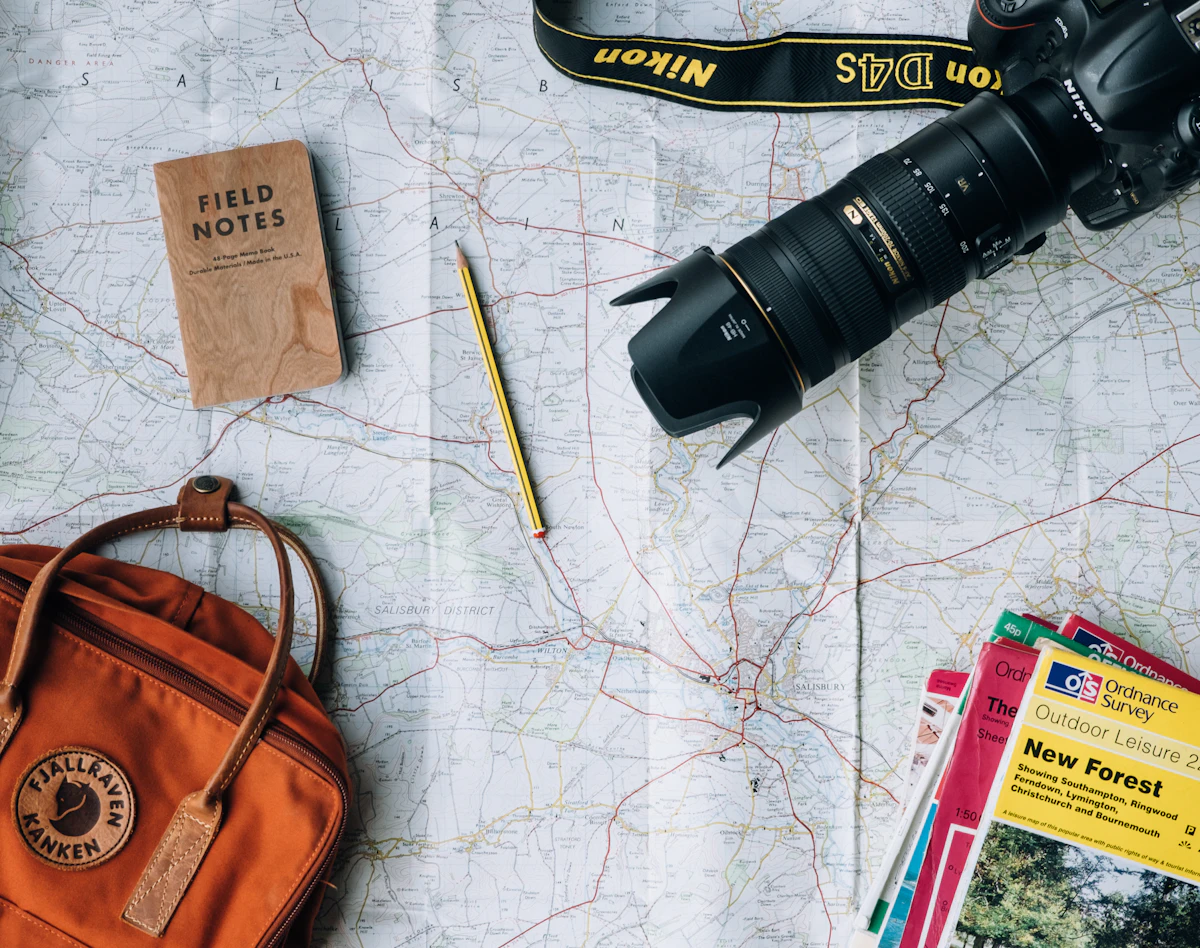
Plan Your Prague Trip: The Complete Planning Guide
Every decision you need to make, in the order you need to make them
You have decided to visit Prague. Excellent choice. Now comes the part that can feel like a second job — sifting through flights, accommodation options, visa requirements, packing lists, and conflicting advice from travel blogs that were last updated in 2019. This guide exists to simplify that process. It walks through every major decision in the order you need to make it, gives you the key facts, and points you to our detailed guides for the deep dives. Think of this as your planning hub — start here, branch out as needed, come back when you need the next step.
Step 1: When to Go
Prague is a year-round destination, but each season offers a radically different experience. The Czech Tourism Board website has useful seasonal planning resources, and our seasonal guide breaks down each month in detail. Your choice of timing affects crowds, prices, weather, and the overall character of the trip.
- Spring (April-May): Mild weather, cherry blossoms, Easter markets, the Prague Spring music festival. Crowds are moderate. Arguably the best overall time to visit
- Summer (June-August): Warm and long days, beer gardens, outdoor events. Peak tourist season — crowds and prices are at their highest
- Autumn (September-October): Golden light, wine harvest, thinning crowds. Temperatures cool but remain pleasant. Excellent for photography and relaxed exploration
- Winter (November-March): Cold and atmospheric. Christmas markets in December are magical. January-February are the quietest months, with the lowest prices
Step 2: How Long to Stay
This depends on your travel style, but here is an honest assessment based on years of watching visitors discover this city.
- 1 day: Possible but brutal. You will see the highlights at a sprint. Only recommended if Prague is a stop on a longer European trip
- 2-3 days: The minimum for a satisfying visit. Covers Old Town, Charles Bridge, Prague Castle, a few meals, and one neighborhood beyond the center
- 4-5 days: The ideal duration. Enough time to see the major sights at a relaxed pace, explore 2-3 neighborhoods, take a day trip, and eat your way through the food scene
- 6-7 days: Luxurious. You can add day trips to Kutná Hora, Český Krumlov, or Karlštejn Castle, dive deep into neighborhoods, and still have time for spontaneous discovery
- 1-2 weeks: You stop being a tourist and start living in the city. Highly recommended for anyone who wants to truly understand Prague
My standard recommendation for first-time visitors is 4 full days (5 nights). This gives you three days for Prague proper and one day for a day trip or deeper neighborhood exploration.
Step 3: Getting There
By Air
Václav Havel Airport Prague (PRG) receives direct flights from most European capitals and seasonal routes from North America, the Middle East, and Asia. Our transport guide covers getting from the airport to your hotel in detail. From the UK, Ryanair, easyJet, Wizz Air, and British Airways all fly to Prague. From the US, direct flights operate from New York (JFK) on Czech Airlines/Delta and from several other cities with one-stop connections. Low-cost carriers make Prague exceptionally accessible from European hubs — flights from London, Berlin, or Barcelona can cost as little as 30-80 EUR if booked 4-8 weeks ahead.
By Train
Prague is well-connected by rail to the rest of Europe. Direct trains run to Vienna (4 hours), Berlin (4.5 hours), Munich (5.5 hours), Budapest (7 hours), and Warsaw (8 hours). The Czech railway operator is České dráhy (ČD), but private operators RegioJet and Leo Express also run popular routes with modern trains and competitive prices. Praha hlavní nádraží (Prague Main Station) is centrally located on Metro Line C.
By Bus
FlixBus and RegioJet operate comfortable long-distance buses connecting Prague to major European cities at prices that often undercut trains by 30-50%. The main bus terminal is Florenc (Metro B/C), centrally located. Vienna to Prague by bus takes about 4 hours and costs as little as 15-20 EUR if booked in advance.
Step 4: Visa and Entry Requirements
The Czech Republic is part of the Schengen Area, which means entry rules are standardized across 27 European countries.
- EU/EEA citizens: No visa required. Enter freely with a valid ID card or passport
- US, Canadian, UK, Australian, and Japanese citizens: No visa required for stays up to 90 days within any 180-day period. You need a valid passport (valid for at least 3 months beyond your planned departure from the Schengen Area)
- ETIAS (European Travel Information and Authorisation System): Expected to become mandatory for visa-exempt travelers (US, UK, etc.) in the near future. Check the latest status before booking — if active, you will need to apply online and pay a small fee before travel
- Other nationalities: Check whether you need a Schengen visa at the Czech Ministry of Foreign Affairs website or your nearest Czech embassy
Step 5: Travel Insurance
Travel insurance is not legally required for most visitors, but it is strongly recommended. The Czech Republic has excellent healthcare, but without insurance, a hospital visit can cost hundreds to thousands of euros for non-EU citizens. EU citizens should carry their European Health Insurance Card (EHIC) or Global Health Insurance Card (GHIC), which covers emergency medical treatment. Beyond medical coverage, good travel insurance also covers trip cancellation, lost luggage, theft, and emergency evacuation.
- Budget option: Basic travel insurance from providers like World Nomads or SafetyWing costs 3-8 EUR per day
- Credit card coverage: Some premium credit cards include travel insurance — check your card benefits before buying a separate policy
- Annual policies: If you travel frequently, an annual multi-trip policy (100-200 EUR/year) is far better value than per-trip coverage
Step 6: SIM Cards and Internet
Staying connected in Prague is straightforward, but the approach depends on where you are traveling from and how long you are staying.
EU Travelers
If you have a mobile plan from any EU country, your existing data, calls, and texts work in the Czech Republic at no extra charge under EU roaming regulations. Simply turn off airplane mode when you land and everything works as it does at home. This is the easiest option if it applies to you.
Non-EU Travelers
You have three solid options. First, buy a local prepaid SIM card at the airport or any of the major carrier shops in the city — T-Mobile, O2, and Vodafone all offer tourist SIM packages with generous data allowances (5-20 GB) for 300-500 CZK. You will need your passport. Second, purchase an international eSIM before departure through providers like Airalo, Holafly, or Nomad. These are purely data SIMs (no local phone number), install directly onto compatible phones, and cost roughly 5-15 EUR for a week of data. Third, if you carry a Wise or Revolut account, check whether they offer virtual SIM services that bundle with your travel card.
Step 7: Budget Planning
Prague is significantly cheaper than Western European capitals but not the bargain basement it was a decade ago. Here are realistic daily costs per person, excluding flights and accommodation.
Budget Tier: 600-1,200 CZK/day (24-48 EUR)
- Eating: Bakery breakfasts, polední menu lunches, Vietnamese dinners
- Drinking: Pub beers in Žižkov, supermarket beer in parks
- Transport: Walking + 24-hour pass (120 CZK)
- Activities: Free attractions, free walking tours, parks, churches
Mid-Range Tier: 1,500-3,000 CZK/day (60-120 EUR)
- Eating: Café breakfasts, proper restaurant lunches, quality dinners
- Drinking: Cocktail bars, wine bars, good pubs
- Transport: Day passes + occasional Bolt rides
- Activities: Paid attractions, guided tours, day trips
Luxury Tier: 5,000+ CZK/day (200+ EUR)
- Eating: Tasting menus, brunch at top cafés, fine dining
- Drinking: Premium cocktail bars, wine tasting experiences
- Transport: Private transfers, taxis on demand
- Activities: Private guided tours, spa experiences, concerts
Step 8: What to Pack
Packing for Prague depends heavily on the season, but some items are universal.
- Comfortable walking shoes with grip: Non-negotiable. Cobblestones will destroy anything flimsy. Break them in before you go
- Layers: Prague weather changes fast. A morning can start at 12°C and reach 24°C by afternoon in spring/autumn. Layers let you adapt
- Rain jacket or compact umbrella: Rain is possible in every season. A packable waterproof layer is essential
- Winter (November-March): Warm coat, thermal layers, waterproof boots, hat, gloves, scarf. Temperatures drop to -5°C or lower
- Summer (June-August): Light clothing, sunscreen, sunglasses. Evenings can be cool — bring a light jacket
- Reusable water bottle: Tap water is excellent and free
- Power adapter: Czech Republic uses Type E plugs (two round pins, same as France). A universal European adapter covers it
- Day bag with zip closures: Pickpocket-resistant for crowded tourist areas
Step 9: Language Basics
Czech is a Slavic language with a reputation for being difficult, and that reputation is deserved. The good news: you do not need to learn Czech to visit Prague. English is widely spoken in hotels, restaurants, and tourist areas, especially by younger Czechs. However, making even a basic effort with Czech phrases earns enormous goodwill. Czechs deeply appreciate it when visitors try, even badly.
Essential Phrases
- Dobrý den (DOB-ree den) — Good day / Hello (formal, use with strangers and in shops)
- Ahoj (AH-hoy) — Hi / Bye (informal, use with friends)
- Děkuji (DYEH-koo-yee) — Thank you
- Prosím (PRO-seem) — Please / You're welcome / Here you go (the Swiss Army knife of Czech words)
- Ano (AH-no) — Yes
- Ne (neh) — No
- Promiňte (PRO-min-teh) — Excuse me / Sorry
- Pivo prosím (PIH-vo PRO-seem) — Beer please (arguably the most useful phrase in Prague)
- Účet prosím (OO-chet PRO-seem) — Check/bill please
- Nemluvím česky (NEH-mloo-veem CHESS-key) — I don't speak Czech
- Mluvíte anglicky? (MLOO-vee-teh ANG-lits-key) — Do you speak English?
Step 10: Safety and Health
Prague is one of the safest major cities in Europe. Violent crime against tourists is extremely rare. That said, petty crime exists, and some tourist-area scams persist because they keep working on unprepared visitors. Our 25 essential Prague travel tips cover scams and safety in more depth. A bit of awareness goes a long way.
Pickpockets and Petty Theft
The primary safety concern for visitors. Pickpockets operate on the Charles Bridge, in Old Town Square, on crowded trams (especially the 22), and at major metro stations like Můstek and Muzeum. They often work in teams — one distracts while another lifts your wallet or phone. Keep valuables in front pockets or a crossbody bag with zippers. Never leave bags on the back of chairs in restaurants. Be especially alert in crowds and on public transport.
Common Scams to Avoid
- Overcharging in taxis: Always use Bolt or Liftago apps instead of hailing cabs on the street. Street taxis near tourist areas routinely charge 3-5x the real fare
- Rigged exchange offices: The ones on Wenceslas Square and Old Town advertising '0% commission' bury their profit in the exchange rate. You will get 20-30% less than the real rate. Use ATMs from major banks or a Wise/Revolut card
- Restaurant bill padding: Some tourist-trap restaurants add items you did not order or charge inflated prices not listed on the menu. Always check the bill line by line. Avoid restaurants with touts standing outside
- The 'friendly local' scam: Someone approaches, starts a friendly conversation, and eventually steers you to a specific bar or club where you get hit with outrageous charges. If a stranger is unusually eager to take you somewhere, decline politely
Health and Medical
Tap water is safe and good quality throughout Prague — you can drink from any tap. No special vaccinations are required. Pharmacies (lékárna) are well-stocked and pharmacists are knowledgeable. For minor ailments, a pharmacy visit is usually sufficient. For emergencies, call 155 for an ambulance or 112 for the Europe-wide emergency number. The main central hospital is Nemocnice Na Františku in Old Town. English-speaking medical care is available at Canadian Medical Care and UniClinic, both of which cater to international visitors.
Step 11: Tipping Etiquette
Tipping in the Czech Republic follows its own conventions, distinct from both the American and Western European approaches. Understanding the local norms saves you from both under-tipping (uncomfortable) and over-tipping (unnecessary).
- Restaurants: 10% for good service is standard, 15% for exceptional service. The key protocol — tell the waiter the total amount you want to pay when they present the bill. If your bill is 470 CZK, say 'pět set' (500). Do not leave coins on the table; Czechs consider this impolite
- Cafés and bars: Round up to the nearest 10 or 20 CZK. If your coffee is 85 CZK, paying 100 CZK is appropriate
- Taxis/Bolt: Round up to the nearest 10-20 CZK. Not mandatory for app-based rides
- Hotels: 50-100 CZK per bag for porters, 50-100 CZK per day for housekeeping at upscale hotels. Not expected at budget accommodations
- Free walking tours: 200-300 CZK per person is standard. These guides work entirely on tips — 100 CZK or less is considered cheap
- Spas and wellness: 10% of the service price is appropriate
Step 12: Booking Your Accommodation
Where you stay shapes your entire trip. The short version: Old Town for first-timers, Vinohrady for the local experience, Žižkov for budget, Malá Strana for romance, Karlín for foodies, Holešovice for culture. Book 4-8 weeks ahead for the best selection, or 2-3 months ahead for peak season (June-August, December). Always check the hotel's direct website — many Prague hotels offer better rates, free breakfast, or upgrades for direct bookings.
Step 13: Planning Your Days
The temptation is to pack every day with sights and activities. Resist it. Prague rewards slow exploration — the unexpected courtyard, the unplanned café stop, the side street that opens onto a view you did not know existed. Build your itinerary with a loose framework and leave room for discovery.
Suggested Frameworks
- 1 Day: Old Town, Charles Bridge, Prague Castle, dinner in Malá Strana. A sprint, but it covers the essentials
- 3 Days: Day 1 — Old Town and Jewish Quarter. Day 2 — Malá Strana, Castle, Petřín Hill. Day 3 — Vyšehrad, Vinohrady, and a neighborhood deep-dive
- 5 Days: The 3-day framework plus Day 4 — Day trip (Kutná Hora or Český Krumlov) and Day 5 — Žižkov, Holešovice, or Karlín exploration with a tasting-menu dinner
- 7 Days: The 5-day framework plus Day 6 — Second day trip or deeper culture (museums, concerts, galleries) and Day 7 — Slow morning, Náplavka farmers' market, farewell river walk
Step 14: Pre-Trip Checklist
A final checklist of everything to sort before you leave for Prague.
- Passport valid for at least 3 months beyond your return date (non-EU visitors)
- Visa or ETIAS authorization if required for your nationality
- Travel insurance purchased and documents accessible on your phone
- Accommodation booked and confirmation saved offline
- Flights booked with seat selection (if applicable)
- Airport-to-hotel transport planned (Bus 119, Bolt, or pre-booked transfer)
- PID Lítačka app downloaded for public transport tickets
- Bolt app downloaded for taxi service
- Travel-friendly bank card ready (Wise or Revolut for best exchange rates)
- Restaurant reservations made for must-visit spots
- Walking shoes broken in and packed
- Power adapter for Type E plugs
- Offline map downloaded (Google Maps or maps.me)
- Emergency contacts noted: 112 (Europe-wide), 158 (Czech police), 155 (ambulance)
- Basic Czech phrases practiced: dobrý den, děkuji, prosím, pivo prosím
Further Reading
This guide is your starting point. For the deep dives, explore our detailed articles on every aspect of a Prague trip. Each one is written from firsthand, local knowledge and updated regularly.
- Getting to and from the airport: Prague Airport Guide
- Navigating the city: Getting Around Prague — Transport Guide
- Choosing your base: Where to Stay in Prague — Best Neighborhoods and Hotels
- Saving money: Prague on a Budget
- Eating and drinking: The Ultimate Prague Food Guide / Czech Craft Beer Guide
- Day-by-day plans: 1-Day, 3-Day, and 5-Day Prague Itineraries
- Seasonal timing: Prague Through the Seasons / Prague Christmas Markets
- Practical details: Prague Travel Tips — 25 Things to Know
- Nightlife: Prague Nightlife Guide
- Beyond the tourist trail: Hidden Gems and Off-the-Beaten-Path Prague
James Whitfield
Travel Writer & Prague Resident · Vinohrady, Prague
James moved to Prague in 2017 after a decade of travel writing across Central Europe. A former editor at Wanderlust Magazine, he now writes practical travel guides drawn from eight years of navigating the city's tram network, budget pubs, and bureaucratic quirks.
You might also enjoy
Prague Travel Tips: 25 Things to Know Before You Go
25 essential Prague travel tips: currency, tipping, scams to avoid, useful Czech phrases, and transport hacks every first-time visitor needs to know.
Prague Airport Guide: Arrivals, Transport, and Tips
Navigate Prague Airport like a pro. Compare bus, taxi, and rideshare options to the city center, plus tips on SIM cards, currency exchange, and scam avoidance.
Where to Stay in Prague: Best Neighborhoods and Hotels
Where should you stay in Prague? Compare 6 neighborhoods by price, vibe, and access to attractions. Updated for 2026 with hotel picks for every budget.