Prague Airport Guide: Arrivals, Transport, and Tips
Everything you need to know between landing and reaching your hotel
Powered by ITINE
Get this guide as a tappable itinerary
Day-by-day plan, audio tours, and one-tap Google Maps — completely free.
Destinations
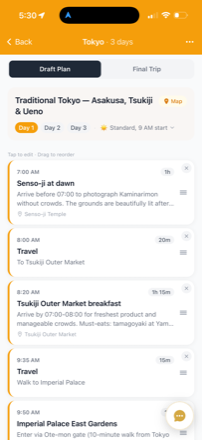
Your Itinerary
Google Maps
Terminal Overview
Václav Havel Airport Prague (PRG) — named after the playwright, dissident, and first president of the Czech Republic — handles roughly 18 million passengers a year and is the only commercial airport serving the city. It sits about 17 kilometers west of the center, in the Ruzyně district. The good news is that it is a compact, well-organized airport with short walking distances and fast immigration processing. The less good news is that the stretch between the arrivals hall and your hotel contains several well-practiced opportunities for visitors to lose money unnecessarily. This guide will help you avoid all of them.
The airport — one of Central Europe's important aviation hubs, as detailed on its Wikipedia page — has two main terminals. Terminal 1 handles flights outside the Schengen Area — if you are arriving from the UK, US, Canada, or anywhere outside Europe's border-free zone, this is where you land. Terminal 2 handles Schengen flights — arrivals from Germany, Italy, Spain, and most other EU countries. The terminals are connected by a covered walkway (about a 5-minute walk) so if you need to move between them, it is straightforward. There is a smaller Terminal 3 for private aviation that most travelers will never see.
Both terminals have ATMs, currency exchange desks, information counters, and car rental offices in the arrivals halls. Immigration at Terminal 1 is usually fast — expect 10-20 minutes on a normal day, occasionally longer during peak summer arrivals. EU/EEA citizens with biometric passports can use the e-gates.
Terminal 1 in Detail
Terminal 1 is the larger and busier of the two, handling all non-Schengen flights. This is where you will arrive if you are coming from the United Kingdom, the United States, Canada, Turkey, the Middle East, or Asia. The terminal was extensively renovated in the early 2010s and has a reasonably modern feel. After clearing passport control, you descend to the baggage claim hall — there are usually 4-5 carousels operating, and bags from long-haul flights typically appear within 20-30 minutes. The arrivals hall beyond customs has two exit doors: one leads directly to the bus stops and taxi pickup zone, and the other to the short-term parking garage where pre-booked transfers typically wait. The Prague Airport Information Center desk is on the left as you exit — staffed by English-speaking agents who can help with transport questions, hotel directions, and general city advice.
Terminal 2 in Detail
Terminal 2 serves Schengen-zone flights, which means no passport control on arrival — you simply walk off the plane, collect your luggage, and proceed to the arrivals hall. This makes the process significantly faster. Most budget airlines operating European routes (Ryanair, easyJet, Wizz Air) use Terminal 2, as do legacy carriers on intra-EU routes like Lufthansa and KLM. The terminal is slightly smaller than Terminal 1, but it has all the same facilities: ATMs, exchange desks, a small pharmacy, car rental counters, and tourist information. The bus stops for the 119 and AE lines are a short walk outside the arrivals exit — follow the clearly marked signs.
Getting to the City Center
This is the decision that matters most. There are four realistic ways to get from the airport to central Prague, and they vary wildly in cost, speed, and comfort. Our full Prague transport guide covers the city's entire transit system, but here are the airport-specific options, ranked from cheapest to most expensive.
Option 1: Bus 119 + Metro (The Local Way)
Bus 119, operated by Prague Public Transit (DPP), runs from both terminals to Nádraží Veleslavín metro station (Line A, green), where you transfer to the metro to reach the center. The bus runs every 5-15 minutes from roughly 4:15 AM to 11:30 PM. The entire journey from airport to Old Town takes about 45-50 minutes. A standard 40 CZK ticket (valid 90 minutes) covers both the bus and the metro transfer. Buy it from the yellow ticket machines at the bus stop — they accept coins and contactless cards. You can also buy tickets via the PID Lítačka app, which is the smartest option because the ticket activates automatically when you board.
Option 2: Airport Express Bus (AE)
The Airport Express (AE) bus runs directly from both terminals to Praha hlavní nádraží (Prague Main Railway Station) in the city center. The journey takes about 35 minutes and costs 150 CZK. It runs every 15-30 minutes from 5:30 AM to 10:00 PM. The AE bus is not part of the regular public transport system, so standard PID tickets are not valid — you need to buy a separate AE ticket from the driver or the ticket machines. It is a good option if your hotel is near the main train station or Wenceslas Square, but for Old Town or Malá Strana, the 119 + metro combination is usually faster.
Option 3: Bolt or Uber (The Comfortable Middle Ground)
Both Bolt and Uber operate in Prague and are the best option if you want door-to-door service without the risk of a predatory taxi fare. The ride from the airport to central Prague typically costs 450-650 CZK depending on traffic and your exact destination. The journey takes 25-40 minutes. Download the app before you land, connect a payment method, and request the ride from the arrivals pickup zone. Bolt tends to be slightly cheaper than Uber in Prague. Both are significantly cheaper than the airport taxi rank.
One practical note about ride-hailing pickup: both Bolt and Uber drivers are required to pick up passengers from the designated ride-hail zones, which are in the short-term parking areas just outside each terminal. After requesting your ride, follow the signs toward the parking garage — your driver will send a pin or message with the exact location. It can take 5-10 minutes for a driver to reach the airport during busy periods, so request the ride while you are still inside the terminal collecting your luggage.
Option 4: Private Airport Transfer (Pre-Booked)
Several companies offer pre-booked private transfers with a driver who meets you in the arrivals hall holding a sign with your name. Companies like Prague Airport Transfers and CzechTransport charge 600-800 CZK for a sedan (up to 4 passengers) and are reliable. This is a good option if you are arriving late at night, traveling with heavy luggage, or simply want zero decisions after a long flight. Book at least 24 hours in advance and provide your flight number so the driver can track delays.
Late Night Arrivals
If your flight lands after midnight, your options narrow. Our transport guide covers the full night network, but here is the airport-specific summary. The metro closes around 12:00 AM and the 119 bus stops running around 11:30 PM. Night buses (line 910) connect the airport to the city, running roughly every 30 minutes through the night, but the route is slow and confusing if you don't know the system. For late arrivals, Bolt/Uber or a pre-booked transfer are your best bets. Prices are similar to daytime — Prague's ride-hail services do not surge the way they do in some cities.
The night bus 910 runs from the airport to I. P. Pavlova and Na Knížecí stations, with stops at Divoká Šárka and Petřiny along the way. From those points, you can connect to other night tram lines (numbered 91-99) that crisscross the city center all night. If your accommodation is near Wenceslas Square or the National Museum area, the 910 bus actually works reasonably well — the ride takes about 45 minutes. But if your hotel is in Malá Strana, Josefov, or the Letná district, the required transfers can add another 20-30 minutes and demand a level of familiarity with the system that most first-time visitors do not have at 1:00 AM after a transatlantic flight.
The airport is not the destination. It is the threshold. Cross it quickly, cross it cheaply, and save your wonder for the first glimpse of Prague Castle across the Vltava.
Early Morning Departures
Prague is a hub for budget airlines, and budget airlines love early morning departure slots. If your flight is at 6:00 or 7:00 AM, you need to be at the airport by 4:30-5:00 AM at the latest. The first Bus 119 leaves Nádraží Veleslavín at roughly 4:15 AM, and the metro starts running at approximately 4:30 AM — which means the earliest you can realistically reach the airport by public transport is around 5:00 AM. That cuts it very close for a 6:00 AM flight.
For genuinely early departures, pre-book a transfer or plan on a Bolt ride from the city. Bolt drivers are available 24 hours, and the roads are empty at 3:30-4:00 AM, so the ride from the center takes only 20-25 minutes. Budget roughly 400-550 CZK for the fare at that hour. Another option — and a surprisingly common one — is to spend the night at the airport itself.
Sleeping at the Airport
Whether you have a brutally early departure, an overnight layover, or a cancelled flight, sleeping at Prague Airport is possible — but not luxurious. The landside (public) areas of both terminals remain open 24 hours, and you will not be asked to leave. However, the seating is not designed for sleeping: most benches have armrests that prevent lying down, and the lighting stays on all night. The departures level tends to be quieter than arrivals after midnight, and the area near the gates in Terminal 2 has some slightly more comfortable seating clusters.
For a more civilized option, the Holiday Inn Prague Airport is connected to Terminal 1 by a covered walkway — a 3-minute walk from the arrivals hall. Rooms can be booked for just a few hours at a time through the hotel's day-use option, which is ideal for long layovers or pre-dawn departures. Expect to pay roughly 2,500-4,000 CZK for a night or day-use block. The Courtyard by Marriott Prague Airport is a short free shuttle ride away and offers a similar arrangement. Both hotels have restaurants that serve late, which matters when you discover that most airport restaurants close by 10:00 PM.
Holiday Inn Prague Airport
Airport HotelK Letišti 1074/32, Prague 6 (connected to Terminal 1)
Insider tip: Book a day-use room if you have a very early departure — the walkway to Terminal 1 takes 3 minutes.
SIM Cards and Connectivity
If you need a local SIM card, you have two options: buy one at the airport or wait until you reach the city. The airport has Vodafone and T-Mobile kiosks in the arrivals halls of both terminals. Tourist SIM packages with data typically cost 300-500 CZK for 7-30 days. They work, but prices are marginally higher than what you will find at the operators' city-center shops on streets like Na Příkopě.
If you choose to buy at the airport, Vodafone's tourist SIM is the more popular option — it typically includes 5-10 GB of data for 7-30 days, depending on the package. Ask the staff to activate the SIM in your phone before you leave the kiosk, as the activation process requires registering your passport number and can take 10-15 minutes. T-Mobile offers similar packages. Both operators have decent coverage across the Czech Republic, including in the metro system, though underground signal can be patchy on some metro stretches between stations.
Money Exchange: The Airport Trap
This is the single biggest financial mistake tourists make in Prague, and it starts at the airport. The currency exchange desks in the arrivals hall — and especially the ones run by Interchange or similar companies — offer exchange rates that are 10-15% worse than what you will find in the city. That means on a 200 EUR exchange, you could lose 20-30 EUR purely to a bad rate. They also frequently charge commissions on top of the already terrible rate.
Once in the city, if you need to exchange cash, use a reputable exchange office. Our Prague budget guide covers currency exchange traps in full detail. Exchange on Kaprova street near Old Town Square consistently offers rates within 1% of the interbank rate with zero commission. Avoid any exchange office that advertises '0% commission' — it means the commission is hidden in the terrible rate.
The Dynamic Currency Conversion Trap
When you use an ATM at the airport — or anywhere in the Czech Republic — the machine will ask whether you want to be charged in Czech Koruna (CZK) or in your home currency (EUR, GBP, USD, etc.). Always choose CZK. If you choose your home currency, the ATM operator applies their own exchange rate, which is invariably 3-7% worse than what your bank would give you. This is called Dynamic Currency Conversion, and it is a legal but deeply unfair practice designed to profit from confused tourists. The same applies when paying by card in shops and restaurants — if the terminal asks you to choose a currency, always pick CZK.
Exchange – Kaprova
Currency ExchangeKaprova 14/13, Prague 1 (near Old Town Square)
Insider tip: The best exchange rate in central Prague. Worth the walk if you need to convert a significant amount of cash.
Luggage Storage
Both terminals have left-luggage offices in the arrivals area, open daily from roughly 6:00 AM to 10:00 PM. Rates are approximately 150-200 CZK per bag per day. This is useful if you have a long layover or an early arrival and cannot check into your hotel yet. In the city center, Hlavní nádraží (main train station) also has luggage lockers, and services like Luggage Storage Prague on Husova street offer storage from 100 CZK per bag per day.
Duty Free and Lounges
Duty-Free Shopping
Prague's duty-free shopping is decent but not spectacular. The departure areas of both terminals have a standard selection of alcohol, chocolate, cosmetics, and souvenirs. Prices are typical for airport retail — not cheap, but competitive within Europe. The duty-free shops are airside (past security), so you will browse them after clearing the departure checks.
The most worthwhile purchases are Czech specialties that make good gifts or souvenirs. Becherovka, the herbal bitters liqueur from Karlovy Vary, is the quintessential Czech spirit — a 0.5L bottle costs around 250-350 CZK duty-free, which is comparable to city supermarket prices. Slivovice (plum brandy) is another traditional choice, especially from the Moravian brands like Rudolf Jelínek. For non-alcoholic options, look for Manufaktura brand cosmetics (Czech-made beer shampoo and spa products), Marlenka honey cake, and traditional Karlsbad wafers. Czech garnets (Bohemian garnets) are sold at the jewelry shops in both terminals, but prices are significantly higher than at city-center shops like Granát Turnov — buy garnets in town if you want them.
Airport Lounges
For lounges, Terminal 1 has the Erste Premier Lounge and the MasterCard Lounge, both accessible with Priority Pass or for a walk-in fee of around 900 CZK. Terminal 2 has the Raiffeisenbank Lounge. The lounges offer hot and cold food, drinks (including Czech beer, naturally), Wi-Fi, and quiet seating. If you have a long departure wait, they are worth considering — especially since the gate areas can be cramped during peak hours.
The Erste Premier Lounge in Terminal 1 is the best of the three. It has a hot food buffet (Czech dishes like svíčková occasionally make an appearance), a full bar with Pilsner Urquell on tap, shower facilities, and comfortable seating with power outlets. The MasterCard Lounge is smaller and simpler — expect cold sandwiches, coffee, soft drinks, and beer. The Raiffeisenbank Lounge in Terminal 2 falls somewhere between the two in quality. All three lounges open around 5:00 AM and close at approximately 9:00-10:00 PM, so they are not available for very late departures.
Practical Airport Details at a Glance
- Airport code: PRG (Václav Havel Airport Prague)
- Distance to center: 17 km west
- Wi-Fi: Free, unlimited, no registration required
- Charging stations: Available throughout both terminals
- ATMs: Multiple in arrivals (Komerční banka and Česká spořitelna offer the best rates)
- Pharmacy: Small pharmacy in Terminal 2, departures level
- Smoking: Designated smoking areas outside terminal buildings only
- Children: Play areas available in both departure halls
Airport Food and Drink
The dining options at Prague Airport are adequate without being exceptional. Both terminals have a mix of fast-food chains and sit-down restaurants. On the landside (before security), you will find a Burger King, Subway, and a few Czech-style cafés. Airside, the selection improves slightly. Terminal 1 has Pilsner Urquell Original Restaurant, which serves proper Czech food — roast pork, dumplings, goulash — at prices that are high for Prague but reasonable by airport standards (main dishes 280-400 CZK). The beer, naturally, is excellent. Terminal 2 has Bohemia Bagel and a Costa Coffee, along with a few grab-and-go sandwich counters.
One thing worth knowing: most airport restaurants and cafés close by 9:00-10:00 PM. If your flight departs late in the evening or you are arriving on a late-night flight, food options will be extremely limited. The vending machines scattered through both terminals become your best friends after 10:00 PM — stock up before your late departure, or eat in the city before heading to the airport. The Costa Coffee near the Terminal 2 gates tends to be one of the last places to close, usually around 9:30 PM.
Transit and Layovers in Prague
Prague Airport is not a major international transit hub on the scale of Frankfurt or Istanbul, but it does serve as a connecting point for flights within Europe and to some Middle Eastern and Asian destinations. If you are transiting through Prague — changing planes without leaving the airport — your experience depends on whether both flights are within the Schengen Area or not.
For Schengen-to-Schengen connections (e.g., Rome to Warsaw via Prague), you stay airside in Terminal 2 the entire time. There is no passport control and no need to re-clear security if you are already past the checkpoint. Minimum connection time is approximately 25 minutes, though the airport recommends 35-45 minutes to be safe. For connections involving a non-Schengen flight (e.g., arriving from London, connecting to a Schengen destination), you will need to clear immigration at Terminal 1, walk to Terminal 2, and go through security again. Budget at least 60-75 minutes for this kind of connection.
Traveling with Children
Prague Airport is reasonably accommodating for families. Both departure halls have small play areas for children, and family restrooms with changing facilities are available in all terminal sections. If you are traveling with a stroller, all paths through the airport are step-free — lifts connect all levels, and the bus to the city (119 and AE) can accommodate strollers in the designated area near the rear doors. Priority boarding is not consistently offered at Prague, so if you need extra time to settle children, ask at the gate.
For families arriving with young children after a long flight, skip the bus and use Bolt or a pre-booked transfer. Wrangling luggage, a stroller, and tired children onto Bus 119, then transferring to the metro, then walking to your hotel is a recipe for a difficult first hour in Prague. The extra cost of a car (500-700 CZK) buys you door-to-door service and the ability to install a car seat — request one through the Bolt app or confirm availability with your transfer company when booking. If you have not yet booked accommodation, our guide to Prague neighborhoods and hotels can help you choose the right area.
Departure Tips: Getting Back to the Airport
Everything that works in one direction works in reverse, but there are a few departure-specific things worth knowing. Bus 119 from Nádraží Veleslavín to the airport is the cheapest option (same 40 CZK ticket). The Airport Express (AE) departs from Praha hlavní nádraží. Bolt and Uber work just as well for departures — order from your hotel address. Factor in 25-40 minutes for the car journey depending on the time of day. Prague rush hours (roughly 7:00-9:00 AM and 4:00-6:30 PM) can add 10-20 minutes to the drive, particularly on the D7 highway approach to the airport.
Arrive at the airport at least 2 hours before a non-Schengen departure and 90 minutes before a Schengen flight. Security lines are generally efficient — 10-20 minutes is typical — but the check-in desks for budget airlines can have longer queues, especially for early morning departures when multiple Ryanair and Wizz Air flights are clustered. If you have checked in online and have only carry-on luggage, you can proceed directly to security and bypass the queues entirely.
The Step-by-Step Arrival Playbook
Here is exactly what to do, in order, when you land at Prague Airport. Print this or screenshot it for offline reference.
- Clear immigration (Terminal 1) or walk to arrivals (Terminal 2, Schengen)
- Skip the currency exchange desks — walk past them
- Use the ATM to withdraw 2,000-3,000 CZK for immediate expenses (choose CZK, not your home currency)
- If needed, pick up a SIM card at the Vodafone or T-Mobile kiosk
- Connect to the free airport Wi-Fi and download the PID Lítačka app (for public transport) and Bolt (for taxis)
- If taking Bus 119: buy a ticket via the Lítačka app or at the yellow machine outside, find the bus stop (follow signs), ride to Nádraží Veleslavín, transfer to Metro A
- If taking a car: open Bolt, set your hotel as the destination, and request a ride from the pickup zone
- Arrive at your hotel. Begin exploring. Prague is waiting.
Prague Airport is not glamorous, but it is honest and efficient — a small airport that does its job without pretension, much like the city it serves. The worst mistakes visitors make here are not about navigation or logistics. They are about money: exchanging cash at the terminal desks, accepting dynamic currency conversion at the ATM, and stepping into an overpriced taxi. Avoid those three things, and the 17-kilometer journey from runway to cobblestone will be smooth, affordable, and — if you take the bus — a quiet introduction to how the city actually works. For more practical advice on currency, safety, and etiquette, see our 25 essential Prague travel tips.
Frequently Asked Questions
The cheapest option is Bus 119 to Nádraží Veleslavín metro station, then Metro Line A to the center — about 45-50 minutes total for 40 CZK. Bolt or Uber cost 450-650 CZK and take 25-40 minutes door-to-door. Pre-booked private transfers run 600-800 CZK for a sedan.
A Bolt or Uber ride from the airport to Old Town typically costs 450-650 CZK (18-26 EUR) depending on traffic. Avoid the airport taxi rank, where fixed-rate fares start at 700-900 CZK and drivers may attempt to charge more.
No. The airport exchange desks offer rates 10-15% worse than what you will find in the city. Use an ATM in the arrivals hall to withdraw CZK directly, and always choose to be charged in CZK — not your home currency — to avoid dynamic currency conversion fees.
Yes, Prague Airport offers free, unlimited Wi-Fi with no registration required throughout both terminals. Connect to the airport network as soon as you land to download apps like PID Lítačka (for transport tickets) and Bolt (for rides).
Yes. Vodafone and T-Mobile kiosks in both arrivals halls sell tourist SIM packages for 300-500 CZK with 5-10 GB of data for 7-30 days. EU travelers do not need a local SIM — EU roaming regulations mean your home plan works at no extra charge.
Bus 119 runs until approximately 11:30 PM and the metro closes around midnight. After that, night bus 910 runs every 30 minutes to the city, but the route is slow. For late arrivals, Bolt or a pre-booked transfer are your best options.
The Airport Express (AE) bus runs directly from both terminals to Praha hlavní nádraží (main train station) in about 35 minutes for 150 CZK. It runs every 15-30 minutes from 5:30 AM to 10:00 PM. Note that standard PID tickets are not valid on the AE bus.
Arrive at least 2 hours before a non-Schengen departure and 90 minutes before a Schengen flight. Security lines typically take 10-20 minutes, but budget airlines can have longer check-in queues during early morning departures.
The public areas of both terminals remain open 24 hours, but seating is not designed for sleeping. For a better option, the Holiday Inn Prague Airport is connected to Terminal 1 by a covered walkway and offers day-use rooms from roughly 2,500 CZK.
Terminal 1 handles non-Schengen flights (UK, US, Canada, Middle East, Asia). Terminal 2 handles Schengen flights (most EU countries). The terminals are connected by a 5-minute covered walkway.
Prague Airport is compact and well-organized. Immigration at Terminal 1 usually takes 10-20 minutes. Schengen arrivals at Terminal 2 have no passport control at all. From landing to the arrivals hall, budget 30-45 minutes for non-Schengen and 15-20 minutes for Schengen flights.
Download the PID Lítačka app before you land. It lets you buy and activate tickets instantly in English, and the ticket activates automatically when you board — no need to validate a paper ticket. A single 90-minute ticket costs 40 CZK.
If you are arriving in the morning and plan to use public transport throughout the day, the 24-hour pass (120 CZK) is better value than individual tickets (40 CZK each). You will easily take 3+ rides on your first day of sightseeing.
Yes. Non-EU residents who spent more than 2,001 CZK at a single store can claim a VAT refund. The customs stamp desk is located before security — get your forms stamped before checking luggage. The refund counter is past security. Allow an extra 20-30 minutes.
Yes. Terminal 1 has the Erste Premier Lounge and MasterCard Lounge. Terminal 2 has the Raiffeisenbank Lounge. All are accessible with Priority Pass or for a walk-in fee of approximately 900-1,100 CZK. They offer food, drinks, Wi-Fi, and comfortable seating.
If you have 5+ hours, you can visit central Prague. Take Bus 119 + Metro to Old Town in about 45 minutes, spend 2-3 hours exploring Charles Bridge and Old Town Square, then head back. Factor in time for security and immigration on your return.
Three rules: never exchange cash at the airport desks (use ATMs instead), always choose CZK when an ATM offers your home currency, and use Bolt or Uber instead of the airport taxi rank. These three habits alone can save you hundreds of CZK.
Bolt tends to be slightly cheaper than Uber in Prague, though both are significantly cheaper than the official airport taxi rank. Expect 450-650 CZK to central Prague. Both pick up from designated ride-hail zones in the short-term parking areas.
James Whitfield
Travel Writer & Prague Resident · Vinohrady, Prague
James moved to Prague in 2017 after a decade of travel writing across Central Europe. A former editor at Wanderlust Magazine, he now writes practical travel guides drawn from eight years of navigating the city's tram network, budget pubs, and bureaucratic quirks.
You might also enjoy
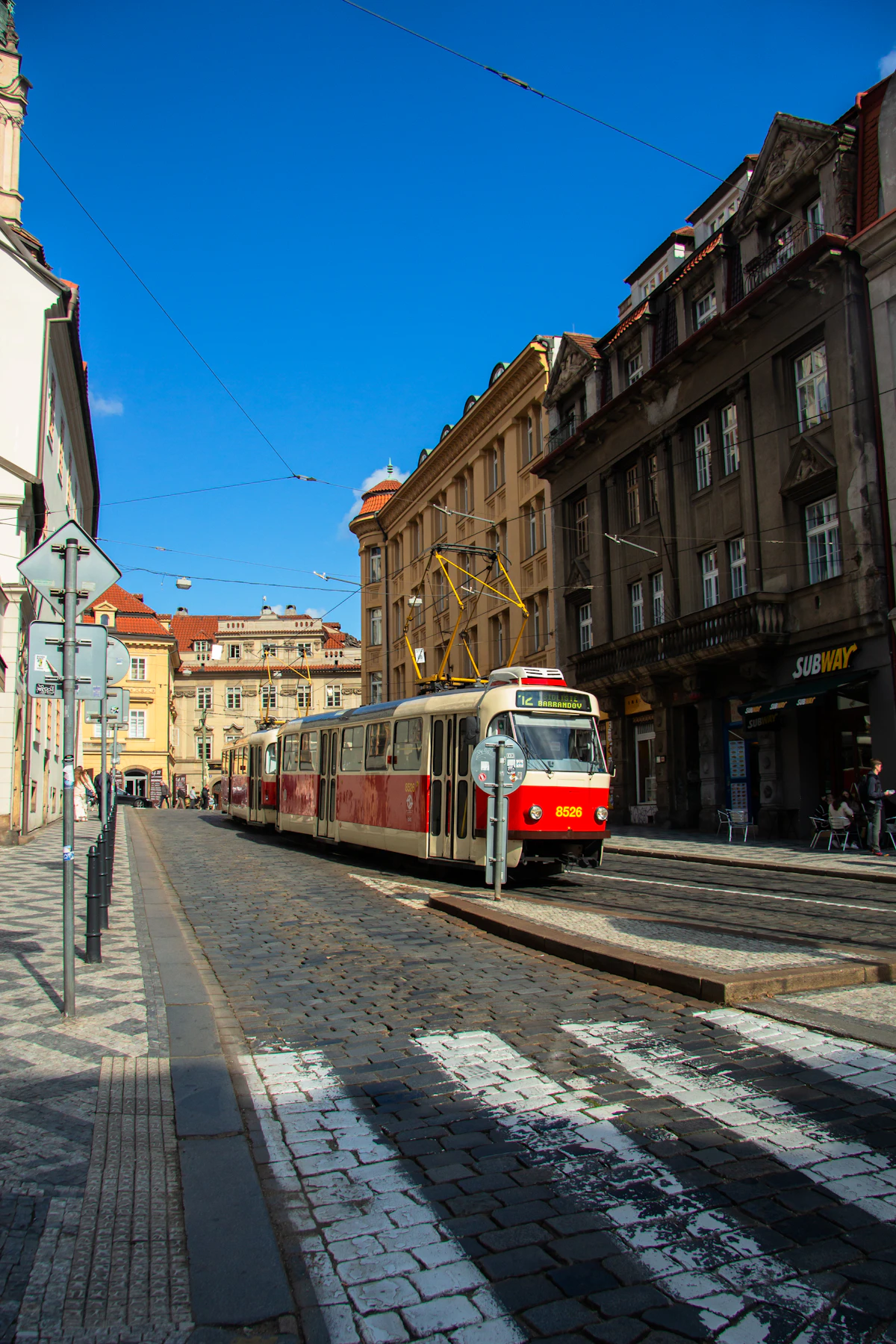
Getting Around Prague in 2026: Transport Guide for Travelers
How to use Prague's metro, trams, and buses as a tourist in 2026. Covers ticket prices, the Litacka app, taxi scam warnings, and getting to the airport.

Prague Travel Tips: 25 Things to Know Before You Go in 2026
25 essential Prague travel tips for 2026: currency, tipping, scams to avoid, useful Czech phrases, and transport hacks every first-time visitor needs to know.

Where to Stay in Prague in 2026: Best Neighborhoods and Hotels
Where should you stay in Prague? Compare 6 neighborhoods by price, vibe, and access to attractions. Updated for 2026 with hotel picks for every budget.