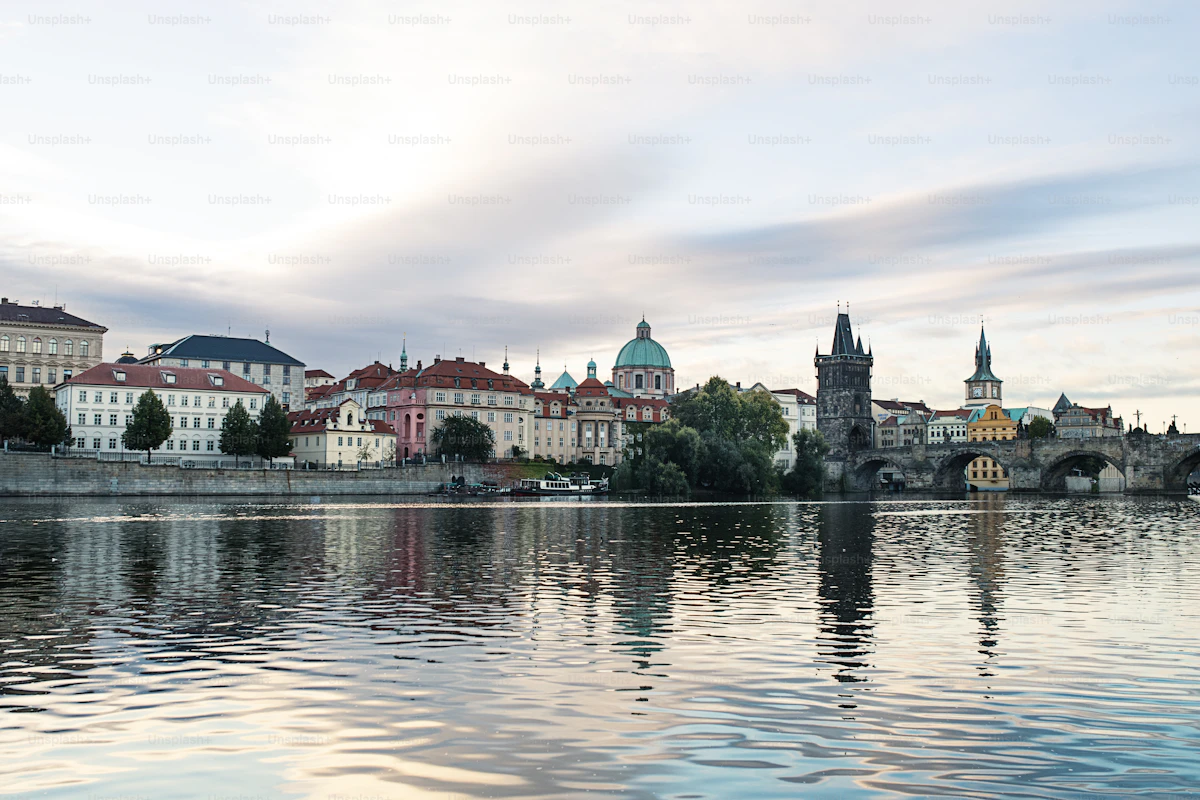
Prague on a Budget: Save Money Without Missing Out
How to experience one of Europe's most beautiful cities for less than you think
Powered by ITINE
Get this guide as a tappable itinerary
Day-by-day plan, audio tours, and one-tap Google Maps — completely free.
Destinations
Your Itinerary
Google Maps
Let me say this clearly: Prague is not the ultra-cheap backpacker paradise it was in 2005. Prices have risen, the Czech crown has strengthened, and the tourist center charges tourist-center prices. But here is the thing — Prague remains dramatically cheaper than Paris, London, Amsterdam, or Vienna, and unlike those cities, Prague's budget options do not feel like compromises. A 130 CZK lunch menu in Žižkov is not a sad sandwich eaten on a bench. It is a full hot meal — soup, main course, and sometimes a drink — served in a proper restaurant. A 50 CZK beer is not some discount swill; it is a world-class Czech lager pulled fresh from the tap. The secret is knowing where to look and understanding the systems that locals use every day.
Free Attractions That Are Actually Worth It
Prague's greatest attraction is Prague itself — the architecture, the bridges, the skyline, the riverside, the parks. Most of what makes this city extraordinary is free to experience. Here are the highlights that cost nothing.
Charles Bridge
Charles Bridge is the most photographed structure in the Czech Republic, and it is completely free to walk across at any hour. The catch — and this is crucial — is timing. Between 10 AM and sunset, Charles Bridge is a shoulder-to-shoulder scrum of tourists, selfie sticks, and portrait artists. Come at 6:30 AM and you will share it with photographers, joggers, and maybe a dozen other people. The dawn light on the bridge towers and the mist rising off the Vltava is one of the great free experiences in European travel.
Prague is a city where being cheap and being smart are the same thing. The tourist premium buys you worse food, worse beer, and worse atmosphere. Save your money and have a better time.
Vyšehrad
The ancient fortress south of the center that most tourists never reach. The grounds are free to enter and offer panoramic views of the Vltava, the city skyline, and the surrounding hills. The cemetery contains the graves of Dvořák, Smetana, and other Czech legends. The Romanesque Rotunda of St. Martin dates to the 11th century. You could spend two hours here without spending a single crown, and the experience is arguably more powerful than the overcrowded Prague Castle complex.
Parks and Gardens
- Petřín Hill: A forested hill with winding paths, orchards, and a panoramic viewpoint. The climb is free; only the lookout tower charges admission (150 CZK, skippable — the views from the hillside are nearly as good)
- Letná Park: Beer garden with the best city panorama in Prague. Bring your own food and buy a 50 CZK beer at the stand
- Riegrovy sady: Vinohrady's neighborhood park with a beer garden and a view of Prague Castle across the valley. Locals come here at sunset
- Stromovka: Prague's largest park, a former royal hunting ground. Perfect for a slow afternoon walk
- Kampa Island: A small island between Charles Bridge and the Vltava with the Lennon Wall, a watermill, and quiet gardens
- Wallenstein Garden: A baroque garden in Malá Strana with peacocks, fountains, and a grotesque wall — open April to October, free entry
Churches and Architecture
Many of Prague's churches are free to enter, though some charge for access to specific areas. The Church of Our Lady before Týn on Old Town Square is free. The Church of St. Nicholas in Old Town Square (the smaller one, not the Malá Strana landmark) is free. The exterior architecture — Gothic, baroque, art nouveau, cubist — is its own museum and costs nothing to admire. Walk down Pařížská street, through Josefov, along Národní třída, and up to Vyšehrad, and you have experienced more architectural history than most cities charge admission for.
Prague Castle Grounds
Here is something most guidebooks undersell: you can enter the Prague Castle complex for free. The castle grounds, courtyards, and gardens are open to the public without a ticket. What you pay for is entry into specific buildings — St. Vitus Cathedral nave, the Old Royal Palace, Golden Lane. But the exterior of St. Vitus Cathedral alone is worth the walk up, and you can enter the front portion of the cathedral for free. The changing of the guard at noon is a popular free spectacle, but even the quiet courtyards at off-peak hours have a gravity that justifies the uphill trek.
The Astronomical Clock
The hourly show of the Apostles at the top of the Astronomical Clock on Old Town Square is free to watch. Crowds gather on the hour every hour between 9 AM and 11 PM. Is it underwhelming compared to the hype? Honestly, a little — the mechanical figures are small and the show lasts about 45 seconds. But the clock face itself, dating to 1410, is a genuine medieval marvel, and standing in Old Town Square costs nothing. Arrive five minutes before the hour to secure a spot where you can actually see the figures above the crowd.
Eating Cheaply (and Well) in Prague
Food is where Prague's budget friendliness truly shines, but only if you know the local systems. Our Prague food guide covers the full culinary landscape, but here we focus on value. Eating at tourist-targeted restaurants on Old Town Square will cost you 400-600 CZK for a mediocre main course. Eating the way locals eat — using the polední menu system, visiting Vietnamese restaurants, and buying from bakeries — will feed you well for a fraction of that.
The Polední Menu System
This is the single most important budget hack for eating in Prague. Polední menu (literally 'noon menu') is the Czech lunch special system. Monday through Friday, from approximately 11 AM to 2 PM, nearly every non-tourist restaurant in Prague offers a set lunch menu of 2-5 options at deeply discounted prices. A typical polední menu costs 130-180 CZK and includes a soup and a main course. Some include a drink. The food is freshly cooked, generous in portion, and exactly what the office workers and tradespeople in the neighborhood eat.
Vietnamese Restaurants
The Czech Republic has one of the largest Vietnamese communities in Europe, a legacy of labor agreements between Communist Czechoslovakia and Vietnam. The result is that Vietnamese food is effectively Czech comfort food. Every neighborhood has Vietnamese restaurants (often called 'bistra') serving phở, bún bò, rice dishes, and spring rolls at prices that undercut even the polední menu — typically 100-150 CZK for a large, filling meal. Phở for 120 CZK at a nondescript Vietnamese place in Žižkov can be genuinely excellent.
Pho Vietnam Tuan & Lan
Vietnamese RestaurantAnglická 15, Prague 2
Insider tip: Cash only. The phở bò (beef noodle soup) is outstanding and costs less than a drink at most Old Town restaurants.
Bakeries and Quick Bites
Czech bakeries (pekárna) are everywhere and are genuinely cheap. A rohlík (the ubiquitous Czech bread roll) costs 3-5 CZK. A chlebíček (open-faced sandwich) costs 25-45 CZK and makes a perfectly adequate breakfast or snack. For something more substantial, look for a lahůdky (delicatessen) — these are takeaway counters serving hot and cold dishes, sandwiches, and salads, typically for 60-120 CZK per portion.
- Breakfast: Coffee and a pastry from a bakery — 60-90 CZK
- Lunch: Polední menu at a local restaurant — 130-180 CZK
- Dinner: Vietnamese restaurant or a pub meal — 120-200 CZK
- Total food budget: 350-500 CZK per day (roughly 14-20 EUR)
Tourist Food Traps to Avoid
Trdelník — the chimney cake you will see at every third stall in the Old Town — is marketed as a 'traditional Czech pastry.' It is not. It is a Hungarian-Slovak import that was virtually unknown in Prague before 2010. It is fine if you want one, but at 100-150 CZK for a sugar-coated tube of dough, it is poor value compared to authentic Czech pastries like koláče (fruit-filled rounds) or větrník (a choux pastry with caramel cream) that cost 30-50 CZK at any bakery. Similarly, the massive ham legs roasting on spits in Old Town Square look spectacular but cost 200+ CZK for a portion and are mediocre at best. Walk ten minutes in any direction and your money goes three times further.
Supermarket Shopping Tips
If you are staying in an apartment or hostel with kitchen access, Czech supermarkets are a goldmine for budget travelers. Albert, Billa, and Lidl are the most common chains in central Prague. Lidl consistently offers the lowest prices, while Albert has the widest selection of Czech products. For a true budget breakfast, buy bread (chléb, around 30-40 CZK for a loaf), butter (máslo, 40-50 CZK), local cheese (eidam or hermelín, 25-50 CZK), and ham (šunka, 30-60 CZK per 100g). A full week of self-catered breakfasts can cost less than two hotel breakfasts. Local yogurts, especially the Hollandia brand, are excellent and cost 15-25 CZK. Czech fruits and vegetables are seasonal and cheap — look for Czech-grown produce marked 'CZ' on the origin label.
Drinking Cheaply in Prague
In most European capitals, budget drinking means giving up quality. Not in Prague. Czech beer is among the best in the world, and its best examples are also among its cheapest. The trick is drinking where locals drink, not where tourists are herded.
Žižkov and Vinohrady Pubs
A half-litre of Pilsner Urquell at a tourist restaurant on Old Town Square costs 89-120 CZK. The same beer at a pub in Žižkov costs 45-55 CZK. The same beer, from the same keg, pulled by someone who cares more about the pour. Žižkov alone has dozens of pubs within a few square blocks, many of them unchanged for decades. Vinohrady's pubs are slightly more polished but still dramatically cheaper than the center.
U Sadu
Traditional PubŠkroupovo náměstí 5, Prague 3
Insider tip: A Žižkov institution. No-frills pub with excellent Pilsner Urquell and cheap pub food. This is where you come to understand Czech pub culture.
Supermarket Beer
If you really want to stretch your budget, know that supermarket beer in the Czech Republic is absurdly cheap and surprisingly good. A half-litre can of Kozel, Staropramen, or Budvar costs 15-25 CZK at Albert, Billa, or Lidl. A bottle of Únětický ležák — a craft-quality lager — costs about 35 CZK. Buy a few bottles and drink them on the Náplavka riverfront at sunset. This is not sad budget drinking; this is a legitimate Prague experience.
Free Walking Tours
Several companies offer 'free' walking tours of Prague — they are tip-based, meaning you pay what you feel the tour was worth at the end. The quality varies, but the best ones are genuinely excellent introductions to the city. They typically cover Old Town, Jewish Quarter, Charles Bridge, and the Castle district over 2-3 hours.
- Free Prague Walking Tour (meeting point at Old Town Square Astronomical Clock) — runs multiple times daily, well-organized, covers the Old Town and Jewish Quarter history
- Sandeman's New Europe Prague — one of the original free tour companies, consistent quality, offers a general city tour and a separate Communist history tour
- Wiseman Free Tour — smaller groups, more off-beat routes, includes Malá Strana neighborhoods that larger tours skip
Self-Guided Alternatives
If you prefer exploring at your own pace, Prague is exceptionally well-suited to self-guided walking. Download an offline map via Google Maps or Maps.me before you arrive. A rewarding free route: start at Náměstí Míru in Vinohrady, walk through the art nouveau residential streets to the main train station (an art nouveau masterpiece in itself), continue through Wenceslas Square, down Na Příkopě, through the Powder Tower to Old Town Square, then weave through the Jewish Quarter to the river. Cross at Mánesův most, climb to Prague Castle, descend through Nerudova street to Malá Strana, and finish with a beer at a riverside pub. This route takes 3-4 hours at a leisurely pace and covers more architectural ground than most paid tours.
Transport Savings
Prague's public transport is already cheap by Western European standards, but there are ways to optimize further. Our full getting around Prague guide covers the system in detail.
Lítačka Passes
Individual 40 CZK tickets add up fast. If you are in Prague for more than a day, a time-based pass is almost certainly better value. A 24-hour pass costs 120 CZK and a 72-hour pass costs 330 CZK. These cover unlimited travel on all metro, tram, and bus lines, operated by Prague Public Transit (DPP). Buy them through the PID Lítačka app — it is available in English and lets you activate passes instantly. For stays of 5+ days, a monthly pass (550 CZK) is extraordinary value.
Walk More Than You Think You Need To
Prague's historic center is remarkably compact. Old Town Square to Charles Bridge is an 8-minute walk. Charles Bridge to Prague Castle is 20 minutes (uphill, but worth it). Old Town to Vinohrady is 15-20 minutes. If the weather cooperates, you can cover most of the central sights on foot and save transport money for reaching the outer neighborhoods.
Currency Exchange Traps
This section could save you more money than everything else in this guide combined. Prague's currency exchange industry is riddled with predatory operators, particularly in the tourist center. The basic scam works like this: a bureau de change advertises an attractive rate on a large sign outside, but the rate shown applies only to transactions above a certain threshold (often 10,000 EUR), or there is a hidden commission, or the 'sell' rate displayed is actually the rate at which they buy currency from you. The result is that tourists regularly lose 10-15% of their money in a single exchange transaction.
The safest approach is simple: use your debit card at ATMs and pay by card whenever possible. Czech businesses widely accept cards, even for small amounts. If you must exchange cash, use only reputable exchange offices. Exchange at Bohemia Exchange on Kaprova street or at the Czech National Bank-certified offices. Avoid any exchange office on Karlova street, in the Old Town Square vicinity, or inside the main train station. The difference can be staggering: exchanging 200 EUR at a tourist trap exchange can cost you 500-700 CZK more than exchanging at a fair-rate office.
Student and Youth Discounts
If you are under 26 or hold a valid ISIC student card, Prague offers meaningful discounts across transport, attractions, and culture. The Prague public transport system offers a discounted fare for passengers aged 15-26 — the 24-hour pass drops from 120 CZK to 60 CZK, and the monthly pass from 550 CZK to 130 CZK. Most museums and galleries offer student admission at 50-70% of the adult price. The National Museum charges 150 CZK instead of 250 CZK for students. Prague Castle's Circuit B ticket drops from 250 CZK to 125 CZK with a valid student ID.
- ISIC card holders get discounts at most major museums, galleries, and the Prague Zoo
- The Czech Philharmonic and National Theatre offer heavily discounted student standing tickets — sometimes as low as 50-100 CZK for performances that cost 500+ CZK at full price
- Some hostels offer ISIC discounts of 5-10% on dorm beds
- The DOX Centre for Contemporary Art offers free entry for students on Mondays
- Prague Castle and most church towers honor the ISIC card for 50% reduced entry
Money-Saving Hacks for Prague
- Always pay in CZK. If a card terminal asks whether to charge in your home currency or CZK, always choose CZK. The 'convenience' of charging in your currency comes with a 3-7% markup called dynamic currency conversion
- Skip the hotel breakfast. Czech hotel breakfasts cost 150-300 CZK per person and are rarely remarkable. A coffee and pastry from a bakery costs a third of that and is often better
- Use menicka.cz to find daily lunch specials near you. Make lunch your main meal — the polední menu system means lunch is dramatically cheaper than dinner
- Drink tap water. Prague's tap water is excellent and perfectly safe. Many restaurants will try to sell you bottled water — politely ask for kohoutkova voda (tap water). Some will bring it free; others charge a small fee
- Visit the Náplavka farmers' market (Saturday mornings along the Vltava riverfront) for cheap local produce, pastries, and street food
- Use the Restu or Google Maps apps to find local restaurants instead of eating wherever is closest to the attraction you just visited
- Book Prague Castle tickets online to avoid the 50 CZK 'at the door' premium and the long queues
- Check for free entry days at museums — the National Gallery's first-Wednesday deal alone can save you 500+ CZK
- Carry a refillable water bottle — there are public drinking fountains scattered through the center, and all tap water is potable
- Avoid Karlova street (between Old Town Square and Charles Bridge) for shopping or dining — it is the single most overpriced corridor in the city
Best Neighborhoods for Budget Accommodation
Where you sleep has the single biggest impact on your daily budget. Our accommodation guide covers each neighborhood in detail, but here is the budget perspective. Staying in Prague 1 (Old Town, Malá Strana, Josefov) is convenient but expensive — expect to pay 30-50% more for equivalent accommodation compared to neighborhoods that are just 10-15 minutes away by tram.
- Žižkov (Prague 3): The best value neighborhood in Prague. Dozens of hostels, budget hotels, and Airbnb apartments at significantly lower prices than the center. Excellent pub scene, authentic neighborhood feel, and a 10-minute tram ride to Old Town Square. Hostel dorms from 300 CZK, private rooms from 800 CZK
- Vinohrady (Prague 2): Slightly more upscale than Žižkov but still cheaper than Prague 1. Beautiful residential streets, great restaurants, and Náměstí Míru is just two metro stops from Můstek in the city center. Budget hotel doubles from 1,200 CZK
- Karlín (Prague 8): A former industrial district transformed into one of Prague's most pleasant neighborhoods. Modern apartments, excellent cafés, and walkable to Old Town in 15 minutes. Airbnb apartments from 1,000 CZK per night
- Smíchov (Prague 5): Just across the river from the center, well-connected by metro and tram. More local, less tourist-facing. Budget accommodation from 800 CZK for a private room
- Holešovice (Prague 7): Prague's emerging creative district with galleries, markets, and the enormous Stromovka park. The Vltavská metro stop is four minutes from the center. An increasingly popular hostel and budget hotel zone
Sample Daily Budget
Here is what a realistic budget day in Prague looks like, broken into three tiers.
Shoestring: 800-1,200 CZK per day (32-48 EUR)
- Hostel dorm: 400-600 CZK
- Bakery breakfast: 60 CZK
- Polední menu lunch: 140 CZK
- Vietnamese dinner: 130 CZK
- 2 pub beers: 100 CZK
- Transport (walking + 1-2 rides): 80 CZK
Comfortable Budget: 1,500-2,500 CZK per day (60-100 EUR)
- Budget hotel/private Airbnb room: 1,000-1,500 CZK
- Café breakfast: 120 CZK
- Restaurant lunch (polední menu): 160 CZK
- Restaurant dinner: 250 CZK
- 3 beers or 2 cocktails: 200 CZK
- Day transport pass: 120 CZK
- One paid attraction: 200 CZK
Mid-Range: 3,000-5,000 CZK per day (120-200 EUR)
- Mid-range hotel: 2,000-3,000 CZK
- Brunch at a good café: 250 CZK
- Nice lunch: 300 CZK
- Dinner at a quality restaurant: 500 CZK
- Drinks and nightlife: 400 CZK
- Transport + occasional taxi: 200 CZK
- Attractions and tours: 350 CZK
Final Thoughts: The Prague Budget Mindset
The fundamental principle of budget travel in Prague is not deprivation — it is alignment. The cheapest way to experience Prague happens to also be the most authentic way. The 50 CZK beer in a Žižkov pub is better than the 100 CZK beer on Old Town Square because the pub has regulars who would riot over a bad pour. The 140 CZK polední menu is better than the 400 CZK tourist dinner because the lunch crowd is composed of locals who eat there every working day and would stop coming if the quality slipped. The free walk across Charles Bridge at dawn is better than any paid tour because you experience the bridge as a bridge — stone and statues and river and light — rather than as a crowded attraction.
Prague has not been 'ruined by tourism,' despite what some nostalgic travelers claim. The tourist center is crowded and overpriced, yes. But the tourist center is a thin crust over a deep, thriving, affordable city. Step ten minutes in any direction — toward Žižkov's pubs, Karlín's cafés, Vinohrady's residential streets, Smíchov's Vietnamese restaurants, Holešovice's galleries — and you find a Prague that is both genuinely cheap and genuinely excellent. That is the real budget secret: the best version of Prague is also the most affordable one.
Frequently Asked Questions
A comfortable budget for a couple is roughly 3,000-4,000 CZK per day combined (120-160 EUR) including accommodation, food, drink, transport, and sightseeing. A solo backpacker can manage on 800-1,200 CZK per day using hostel dorms, lunch menus, and free attractions.
Yes. Prague is significantly cheaper than Paris, London, Amsterdam, or Vienna. A half-litre of world-class Czech lager costs 45-55 CZK in a local pub, and a full restaurant lunch with soup costs 130-180 CZK. Accommodation and transport are similarly affordable compared to Western European capitals.
Polední menu is the Czech lunch special system. Monday through Friday, 11 AM to 2 PM, most non-tourist restaurants offer set lunch menus of 2-5 options for 130-180 CZK including soup and a main course. Use menicka.cz to find daily lunch menus near you.
Head to neighborhoods like Žižkov or Vinohrady where a half-litre of Pilsner Urquell costs 45-55 CZK. The same beer costs 89-120 CZK at tourist restaurants on Old Town Square. Supermarket beer is even cheaper — 15-25 CZK per can at Albert, Billa, or Lidl.
Many of Prague's best experiences are free: walking Charles Bridge at dawn, exploring Prague Castle's courtyards and gardens, visiting Vyšehrad fortress, strolling through Petřín Hill and Letná Park, and admiring the Astronomical Clock. The National Gallery also offers free admission on the first Wednesday of each month.
If you take 3+ rides in a day, the 24-hour pass (120 CZK) is cheaper than individual tickets (40 CZK each). For a 3-day trip, the 72-hour pass (330 CZK) is almost always worth it. Buy passes through the PID Lítačka app.
Avoid any exchange office in the Old Town or near Wenceslas Square — they hide terrible rates behind '0% commission' signs. Use ATMs from major Czech banks (Česká spořitelna, ČSOB, Komerční banka) or pay by card with a travel-friendly card like Wise or Revolut. If exchanging cash, use Exchange on Kaprova street.
Restaurants on Old Town Square charge 2-4 times normal Prague prices. A svíčková that costs 170 CZK in Žižkov will be 380-450 CZK on Old Town Square. Walk five minutes in any direction — toward Dlouhá street, Vinohrady, Karlín, or Žižkov — for better food at much lower prices.
Bus 119 to Nádraží Veleslavín metro station costs just 40 CZK with a standard ticket and takes about 45-50 minutes total to Old Town. See our Prague Airport guide for all transport options.
Trdelník (chimney cake) costs 100-150 CZK and is not actually a traditional Czech pastry — it is a Hungarian-Slovak import. If you want authentic Czech pastries, try koláče (fruit-filled rounds) or větrník (choux pastry with caramel cream) at any bakery for 30-50 CZK.
Žižkov (Prague 3) offers the best budget accommodation — hostel dorms from 300 CZK, private rooms from 800 CZK — with an excellent pub scene and just a 10-minute tram ride to Old Town. Karlín and Smíchov are also affordable alternatives with good transport links.
Yes. Prague's tap water is excellent and perfectly safe. Carry a reusable bottle and ask for kohoutkova voda (tap water) in restaurants. Some bring it free; others charge a small fee. There is no need to buy bottled water.
Czech bakeries sell rohlíky (bread rolls) for 3-5 CZK and chlebíčky (open-faced sandwiches) for 25-45 CZK. Vietnamese restaurants serve large phở or rice dishes for 100-150 CZK. Supermarket delis at Albert and Billa sell hot meals for 50-100 CZK per portion.
Most museums charge 150-300 CZK for adult admission. The National Gallery collections are free on the first Wednesday of every month, and the City Gallery Prague is free on the first Thursday. Student discounts of 50-70% are widely available with a valid ISIC card.
The best value windows are early spring (March-April) and late autumn (October-November), when accommodation prices drop 20-40% compared to peak summer or December Christmas market season. January-February are the absolute cheapest months.
When paying by card or using an ATM, you may be asked to pay in your home currency instead of CZK. Always decline and choose CZK. Accepting your home currency triggers a 3-7% markup that goes straight to the terminal operator. This applies everywhere in the Czech Republic.
For most budget travelers, no. The Prague Card bundles attraction entries at a flat rate, but many of Prague's best experiences are free. You save more by using the polední menu system, buying a transport pass separately, and visiting free-entry attractions. Only consider it if you plan to visit many paid museums.
In restaurants, round up or add 10% for good service. If your bill is 470 CZK, saying '500' when you pay is appropriate. In pubs, round up to the nearest 10 CZK. For free walking tours, 200-300 CZK per person is standard.
James Whitfield
Travel Writer & Prague Resident · Vinohrady, Prague
James moved to Prague in 2017 after a decade of travel writing across Central Europe. A former editor at Wanderlust Magazine, he now writes practical travel guides drawn from eight years of navigating the city's tram network, budget pubs, and bureaucratic quirks.
You might also enjoy
The Ultimate Prague Food Guide 2026: Czech Cuisine and Beyond
Skip the tourist traps in 2026. Discover where Prague locals actually eat, from budget lunch menus and street food to Michelin-starred Czech tasting menus.
Getting Around Prague in 2026: Transport Guide for Travelers
How to use Prague's metro, trams, and buses as a tourist in 2026. Covers ticket prices, the Litacka app, taxi scam warnings, and getting to the airport.