Prague in Fall: Autumn Colors, Fewer Crowds, and the Best Season to Visit (2026)
September through November in a city that saves its most atmospheric season for those willing to bring a jacket
Powered by ITINE
Get this guide as a tappable itinerary
Day-by-day plan, audio tours, and one-tap Google Maps — completely free.

Destinations
Your Itinerary
Google Maps
There is a version of Prague that only exists between September and November -- a city wrapped in amber light and woodsmoke, where the leaves on Petrin Hill turn the hillside into a painting, the beer gardens serve their final rounds under chestnut canopies, and the cobblestone lanes of Mala Strana feel like they belong to you alone. Summer's tour groups have departed. Winter's Christmas crowds have not yet arrived. What remains is Prague at its most honest, most atmospheric, and most undervalued.
Fall is the season that locals will tell you -- quietly, almost reluctantly, as if sharing a secret they would rather keep -- is their favorite time in the city. September still feels like summer. October delivers the most spectacular foliage and the most extraordinary light. November wraps everything in fog and melancholy that somehow makes the city more beautiful, not less. Each month is distinct, and each rewards a different kind of traveler. This guide breaks them down individually, because visiting Prague in September and visiting Prague in November are essentially two different trips.
What Is Prague Like in September?
September is Prague's secret best month. Ask any local when to visit and most will say September without hesitation. The weather is warm -- average highs of 18-20°C (64-68°F) in early September, cooling to 14-16°C (57-61°F) by month's end -- with clear skies, gentle breezes, and a golden quality to the light that June and July cannot match. The summer heat has broken, but the warmth remains. You can sit outside at a beer garden until 9:00 PM without needing a jacket (at least in the first half of the month).
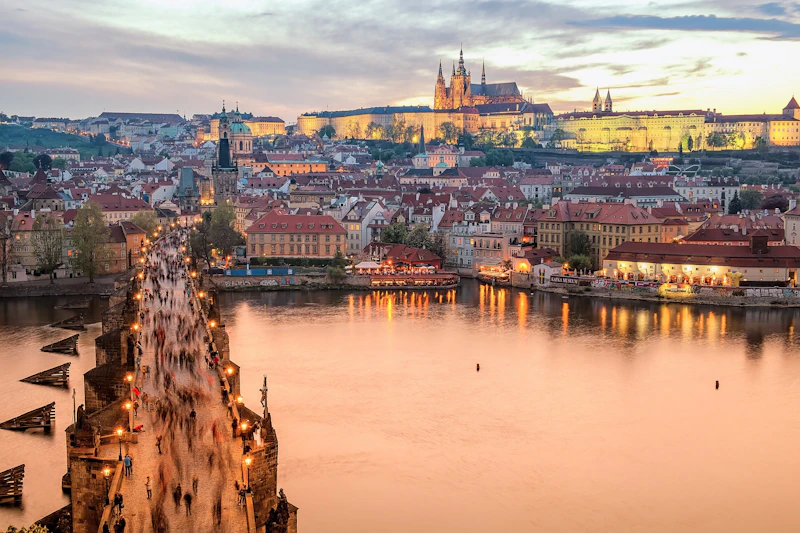
The crowds thin dramatically after the first week of September. Summer's peak tourist season ends when European school holidays finish (typically the first week of September), and the difference is immediate. Charles Bridge at 10:00 AM in July has hundreds of people; Charles Bridge at 10:00 AM on September 15 has dozens. Prague Castle queues drop from 30-45 minutes to near zero. Restaurant reservations that were impossible in August become walk-in easy. The city exhales.
Daylight remains generous: September 1 gives you about 14 hours of light (sunrise 6:15 AM, sunset 7:45 PM), and even by September 30 you still have 11.5 hours (sunrise 7:00 AM, sunset 6:40 PM). The golden hour stretches luxuriously in September, especially in the second half of the month when the sun angles lower and bathes the city in that unmistakable Central European autumn light that makes every building facade look like it was carved from honey.
What Happens in Prague in September?
- Vinobraní (Wine Harvest Festivals): Czech wine country celebrates the grape harvest in September, and several festivals happen within Prague itself. The biggest is the Grebovka Wine Festival at Havlickovy sady park in Vinohrady (usually mid-September) -- Moravian winemakers set up stalls, live music plays, and you can sample dozens of wines for 20-40 CZK (EUR 0.80-1.60) per glass
- Dvorak Prague Festival: a classical music festival dedicated to Antonin Dvorak, held at the Rudolfinum and other venues in early September. Smaller and more intimate than Prague Spring, with excellent programming
- Prague Farmers Markets: the Saturday Naplavka market and the Wednesday/Friday Jirího z Poděbrad market are at their peak in September, overflowing with Czech produce -- fresh plums, pears, mushrooms, new-season honey, and Moravian wine
- Open House Prague (late September): architectural landmark buildings that are normally closed to the public open their doors for one weekend. A chance to see Art Nouveau apartments, modernist villas, brutalist structures, and private courtyards
- Strings of Autumn Festival: an international music festival spanning classical, jazz, and world music at venues across the city, typically starting in late September and running through October
What Is Prague Like in October?

October is when Prague transforms. The average temperature drops to 7-14°C (45-57°F), mornings carry a distinct chill (4-7°C at dawn), and the first fog appears on the Vltava. But the compensation is extraordinary: the city's parks and hillsides erupt in color. Stromovka, Petrin, Vysehrad, Letna, Riegrovy sady -- every green space turns gold, amber, rust, and crimson in a display that rivals New England and receives a fraction of the attention.
The foliage peak typically arrives in the second and third weeks of October, though it varies by species and location. The chestnuts in Letna turn first (early October), followed by the maples and lindens in Stromovka (mid-October), and finally the oaks at Vysehrad and the beeches on Petrin (late October). By November 1, most trees are bare. The window is narrow -- roughly three weeks of full color -- but the impact on the city's appearance is transformative.
October's daylight shrinks noticeably: 11.5 hours on October 1 down to 9.5 hours by October 31. The clocks fall back on the last Sunday of October (to Central European Time), which means an extra hour of morning light but sunset arriving at 4:30 PM by month's end. The compressed daylight creates urgency -- you need to be outside during the light hours and plan indoor activities for the growing dark evenings.
Where Are the Best Autumn Foliage Spots in Prague?
Prague's autumn color is distributed across the city's many parks and green spaces. Unlike cities where you need to drive to the countryside for fall foliage, Prague delivers it within walking distance of the center.
- Stromovka: Prague's largest central park and the best single location for autumn color. The combination of chestnut avenues, mixed deciduous forest, a lake, and winding paths creates scenes that look like Impressionist paintings in mid-October. Enter from Výstaviště in Holešovice or from the Troja bridge side
- Petrin Hill: the hillside above Mala Strana turns a patchwork of gold and green in October. Climb via the funicular and descend on foot through the changing trees. The views from the lookout tower are especially striking when the canopy below is in full color
- Vysehrad: the fortress ramparts are lined with mature trees that turn spectacular amber and gold. The Vysehrad cemetery -- with its Art Nouveau graves surrounded by turning maples -- is hauntingly beautiful. The view from the ramparts over the golden Vltava valley is an October masterpiece
- Riegrovy sady: the hilltop park in Vinohrady with its beer garden and views toward Prague Castle. In October, the mature horse chestnuts create a golden canopy over the park paths. The combination of castle views, autumn light, and falling leaves makes this a quintessential Prague autumn spot
- Letna Park: the chestnut alley that runs east-west through the park turns golden in early October. Combine with the terrace viewpoint for a classic Prague panorama framed by autumn leaves
- Kampa Island: the ancient plane trees along the Certovka canal turn late (late October) and drop enormous golden leaves that carpet the ground around the Lennon Wall. Smaller scale but extremely photogenic
- Wallenstein Garden: open through October, the garden takes on a different character as the trees turn and the peacocks strut through fallen leaves. The reflecting pool with autumn foliage is extraordinary
What Is the Signal Festival?
The Signal Festival is Prague's annual light art festival, held over four days in mid-October (typically the second or third weekend). International and Czech artists transform buildings, squares, and public spaces across the city with large-scale video projections, interactive light installations, and illuminated sculptures. The result is Prague as you have never seen it: familiar facades turned into canvases for moving images, bridges wrapped in colored light, and alleyways transformed by laser geometry.
The festival is free and open-air, running from dusk (around 6:00 PM) until midnight. Multiple routes connect the installations, typically in the Old Town, Karlin, and Mala Strana districts. The most impressive installations usually appear on the facade of the Klementinum, the walls of Prague Castle, and the Church of St. Ludmila in Vinohrady. The festival draws large crowds -- hundreds of thousands attend over the four days -- but the outdoor format and multiple routes spread people across the city.
What Other Events Happen in October?
- Prague International Film Festival (Febiofest autumn edition): screenings of international films at Cinema Svetozor and other venues
- Designblok (Prague Design Week, early October): the largest design festival in Central Europe, with exhibitions across the city showcasing Czech and international design, architecture, and fashion. Venues include Kafka House, the Trade Fair Palace, and various Holesovice galleries
- Czech Beer Week (late October): brewery events, special tappings, and meet-the-brewer evenings at craft beer bars across the city. A quieter, more intimate cousin of the spring beer festival
- Halloween (October 31): not a traditional Czech holiday, but increasingly celebrated in Prague. Several bars and clubs host Halloween parties, and some restaurants offer themed menus. The Botanical Garden sometimes hosts a Halloween evening event
- Mushroom foraging season peaks: this is deeply embedded in Czech culture. If you befriend a local, you may be invited on a mushroom hunt in the forests around Prague. Alternatively, the markets overflow with fresh houby (mushrooms) -- look for pravaky (porcini) and lišky (chanterelles) at Jirího z Poděbrad market
What Is Prague Like in November?
November is Prague stripped bare. The trees are leafless, the sky is grey more often than not, and darkness arrives by 4:30 PM. Average temperatures sit at 2-8°C (36-46°F), with raw, damp days that make the cold feel more penetrating than the numbers suggest. Rain is frequent -- not heavy downpours but a persistent drizzle that hangs in the air and turns the cobblestones slick. Fog wraps the Vltava on most mornings, sometimes thick enough to hide the opposite bank.
This sounds miserable. It is, in some ways, the most beautiful version of Prague. November fog on Charles Bridge -- when the statues emerge from the mist and the gas lamps glow orange against the grey -- is one of the most atmospheric urban scenes in Europe. Vysehrad in the rain, with wet leaves plastered to the paths around the cemetery, has a Gothic melancholy that no summer day can match. The pubs come alive: Praguers retreat indoors to their favorite hospody (traditional beer halls) and the city's nightlife takes on a cozy, convivial character that is absent in warmer months when everyone sits outside.
November is also the cheapest month to visit Prague. Hotel prices hit their annual floor (shared with January-February) — see our where to stay guide for the best deals by neighborhood. Tourist attractions have virtually no queues. Restaurants are uncrowded and grateful for the business. The Christmas markets open in the last week of November, which means the very end of the month offers a crossover: November atmosphere and prices with the first taste of the festive season.
What Is St. Martin's Day and the Wine and Goose Tradition?
Svatomartinské víno (St. Martin's Wine) is one of the Czech Republic's most beloved autumn traditions. On November 11 -- St. Martin's Day -- the year's new wine (similar in concept to Beaujolais nouveau) is officially released at exactly 11:00 AM. Restaurants, wine bars, and even some pubs across Prague serve the new vintage alongside the traditional St. Martin's feast: roast goose (svatomartinska husa) with red cabbage, bread dumplings, and a glass of the young wine.
The tradition has deep roots. According to Czech folklore, St. Martin arrives on a white horse -- the first snow -- and brings the new wine. Restaurants throughout Prague offer special St. Martin's menus in the days around November 11, typically 350-600 CZK (EUR 14-24) for a multi-course goose feast with wine pairings. This is one of the year's most popular dining events and reservations are essential -- book at least two weeks ahead at sought-after spots.
What Should You Pack for November in Prague?
- A warm winter coat -- November temperatures (2-8°C) combined with the damp air feel colder than the numbers suggest
- Waterproof boots with good tread: rain and wet cobblestones are constant. Leather boots with rubber soles are the Prague standard
- Warm layers: a thick sweater or fleece, thermal base layer for colder days, and a warm scarf
- Waterproof outer layer: a rain jacket that can go over your coat, or a coat that is itself water-resistant
- Hat and gloves: essential by mid-November, especially for morning and evening outings
- An umbrella: the drizzle is persistent enough to justify carrying one, even though it is light enough to tempt you not to
- Dark, practical colors: Prague in November is a muted palette of grey, brown, and amber. Light-colored clothing gets visibly dirty quickly on wet, muddy paths
How Much Do Hotels Cost in Fall?
Fall pricing follows a steady downward curve. September sits in the upper shoulder season: hotels cost 15-25% less than July-August peak rates but remain busy, especially in the first week when summer tourists overlap with conference attendees. A good three-star hotel runs 2,000-3,200 CZK (EUR 80-128) per night; four-star center properties are 3,500-5,500 CZK (EUR 140-220).
October drops another 10-20%. Mid-range hotels in Vinohrady or Karlin run 1,600-2,600 CZK (EUR 64-104). The Signal Festival weekend (mid-October) sees a temporary price bump of 10-15% due to the event's popularity. November bottoms out at annual low prices -- expect 1,200-2,200 CZK (EUR 48-88) for three-star properties, rising sharply in the final week when Christmas markets open and December pricing kicks in.
What Does the Zizkov Beer Scene Look Like in Fall?
Zizkov -- Prague's most famously bohemian neighborhood -- has the highest density of pubs per capita in the world (or so the locals claim, and nobody has produced evidence to the contrary). In fall, as the outdoor beer gardens close and Praguers move indoors, Zizkov's pubs come into their own. This is the season when the neighborhood's character is most concentrated: smoky (metaphorically, since the indoor smoking ban), convivial, slightly eccentric, and deeply committed to good beer at low prices.
For a deeper dive into Prague's beer culture, see our Czech craft beer guide. But here are the Zizkov essentials for fall. Zlý Časy (Cestmirova 390/5) is a multi-tap bar with 30+ rotating Czech and international craft beers, knowledgeable staff, and the atmosphere of a neighborhood institution. Kulový blesk (Koněvova 205/35) focuses on Czech microbreweries and serves them in a setting that has not changed since the Velvet Revolution. U Slovanské lípy (Tachovske nam. 6) is a traditional hospoda with tank Pilsner Urquell -- beer delivered unpasteurized in large tanks, producing a freshness that bottled versions cannot match.
What Day Trips Work Best from Prague in Fall?
Fall is excellent for day trips, particularly September and October when the countryside is awash in color and the temperatures are comfortable for walking. November day trips require more planning around the shorter days and colder weather.
Cesky Krumlov: Autumn's Crown Jewel
Cesky Krumlov in October is breathtaking. The castle gardens blaze with autumn color, the Vltava reflects the red and gold foliage, and the medieval streets have a fraction of summer's crowds. The castle tower viewpoint in fall -- looking down on the town ringed by golden trees and the silver river bend -- is one of the most stunning views in the Czech Republic. The drive takes 2.5 hours each way through the Bohemian countryside, which is itself spectacular in autumn.
Karlstejn and the Berounka Valley
Karlstejn Castle perched above the autumn valley is a scene from a medieval manuscript. The interior tours run through October (closing in November), and the walk up from the village passes through forests that peak in golden color mid-October. Combine with a riverside walk or cycle along the Berounka River -- the valley is one of the most beautiful autumn landscapes within easy reach of Prague. Train from Praha hlavní nádraží takes 40 minutes.
Bohemian Wine Country
For something different, take a day trip south to the wine regions around Mělník (30 minutes by car) or the Moravian wine trails (2-3 hours by train to Mikulov or Valtice). September and October are harvest season, and many vineyards offer tastings of the new vintage alongside traditional Czech wine-cellar snacks (cheese, bread, dried sausage). The Château Mělník, where the Elbe and Vltava rivers meet, offers wine tastings in a historic castle overlooking the river confluence -- a spectacularly scenic September afternoon outing.
How Do You Photograph Prague in Fall?
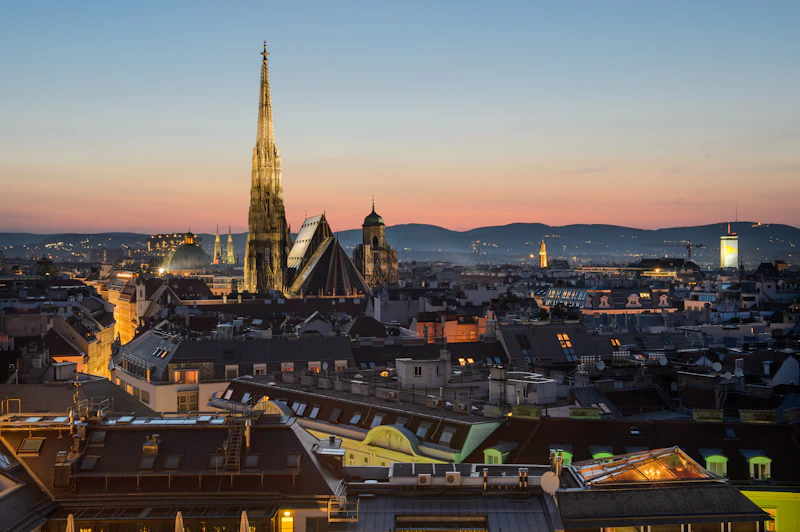
Fall is Prague's most photogenic season, and October in particular offers conditions that photographers dream about. The low-angle sun creates dramatic side-lighting on building facades from mid-morning onward. The fog that settles on the Vltava in October and November mornings produces ethereal conditions on Charles Bridge and the riverfront. And the foliage adds a layer of color that transforms familiar compositions into something new.
- Charles Bridge at dawn (6:30-7:30 AM in October): the combination of fog, low light, and near-empty bridge creates Prague's most iconic photographic conditions. The gas lamps may still be lit, adding warm points of light against the blue-grey mist
- Stromovka park at peak foliage (mid-October): the chestnut avenues in full autumn color, with morning light filtering through the canopy, produce Impressionist-quality compositions. Best before 10:00 AM when the light is directional
- Vysehrad ramparts at golden hour (4:00-5:00 PM in October): the view south along the Vltava with autumn trees in the foreground and the river bending through golden hills in the background
- Petrin Hill in October: the funicular ascending through a tunnel of autumn color is a unique Prague image. Also shoot from the lookout tower looking down on the gold-and-red canopy with the city skyline beyond
- Signal Festival (mid-October): the light installations against Prague's architecture create surreal, other-worldly images. Bring a tripod -- the best shots require long exposures in low light
- November fog on the Vltava: from Cechuv Most bridge or the Manes Bridge, shoot downstream with the bridge towers emerging from fog. Eerily beautiful, and available only on damp November mornings
- Wallenstein Garden in late October: the reflecting pool with autumn foliage and the loggia creates a perfect symmetrical composition that changes character daily as the leaves turn and fall
Does Halloween Exist in Prague?
Halloween is not a traditional Czech holiday -- the Czech Republic has its own Day of the Dead tradition around All Saints' Day (November 1) and All Souls' Day (November 2), which is observed with cemetery visits, candle lighting, and quiet remembrance rather than costumes and candy. However, Halloween has been increasingly adopted by younger Praguers and the expat community, particularly in the bar and club scene.
On October 31, expect Halloween parties at many of Prague's cocktail bars, clubs, and international-oriented venues. Karlovy Lázně (the five-floor mega-club near Charles Bridge) hosts one of the city's biggest Halloween events. Chapeau Rouge, Roxy, and SaSaZu also run themed nights. More family-oriented events include the Prague Botanical Garden's Halloween evening and the Prague ZOO's Halloween weekend. Some restaurants (particularly in the expat-heavy neighborhoods of Vinohrady and Karlín) offer Halloween-themed menus.
For a more Czech experience, visit any of Prague's cemeteries on November 1 or 2. The Vysehrad cemetery, Olsany cemetery, and New Jewish cemetery are illuminated by thousands of candles placed on graves by visiting families. The effect -- especially at dusk -- is quietly powerful and deeply beautiful. This is not a tourist event; it is a genuine cultural moment, and visitors who observe respectfully are welcome.
The Fewer Crowds Advantage: What Does It Actually Mean?
Numbers tell the story. Prague receives approximately 8 million visitors per year. July and August account for about 25% of that total. September drops to 10-12%. October is 8-10%. November is 5-6%. In practical terms, this means the experience at major attractions changes fundamentally.
- Prague Castle: summer queue 30-60 minutes, fall queue 0-10 minutes. In November, you may be nearly alone in the nave of St. Vitus Cathedral
- Charles Bridge: summer peak has 400+ people on the bridge at any moment. October morning has 30-50. November morning has fewer than 20
- Old Town Square: summer crowds make it difficult to walk at your own pace. In fall, you can stand in the center, photograph the Astronomical Clock, and turn 360 degrees without bumping into anyone
- Restaurants: summer requires reservations at popular spots days in advance. In October and November, same-day reservations work at all but the most sought-after venues. Many restaurants offer autumn specials (game meat, mushroom dishes, goose) at prices unchanged from their less-busy reality
- Jewish Quarter: summer tour groups create bottlenecks at every stop. In fall, you can move through the Old Jewish Cemetery and the synagogues at your own pace, actually reading the interpretive displays instead of being pushed along by the group behind you
A Suggested 4-Day Fall Itinerary
Day 1: Old Town Without the Crowds
Morning: Walk Charles Bridge at sunrise (6:30-7:30 AM in October) in near-solitude. Continue to Old Town Square, watch the Astronomical Clock, and explore the Jewish Quarter museums without queues. Afternoon: Walk through Josefov to Letna Park for the terrace viewpoint and the chestnut-lined avenues. If it is early fall, end at the Letna Beer Garden. Evening: Dinner in Vinohrady, followed by a pub crawl through Zizkov's legendary beer scene.
Day 2: Castles, Gardens, and Autumn Light
Morning: Prague Castle opens at 9:00 AM -- arrive early for near-empty rooms. St. Vitus Cathedral in autumn light is extraordinary. Walk the castle gardens (open through October). Afternoon: Descend to Mala Strana. Visit the Wallenstein Garden in its autumn dress. Walk Kampa Island as the plane trees turn gold. Cross to Petrin Hill for the funicular ride through autumn foliage and the lookout tower views. Evening: dinner in Mala Strana, then a concert at St. Nicholas Church.
Day 3: Parks, Foliage, and Local Life
Morning: Explore Stromovka park during peak foliage. Walk the chestnut avenues, circle the lake, and continue into Holesovice for coffee at one of Karlin or Holesovice's excellent cafes. Visit the DOX Centre for Contemporary Art or the National Gallery at the Trade Fair Palace. Afternoon: Take the tram to Vysehrad. Walk the ramparts, visit the cemetery, and photograph the river valley in autumn light. Evening: if Signal Festival is running, spend the evening following the light art route. Otherwise, dinner in Karlin and drinks at a local wine bar.
Day 4: Day Trip or Deep Dive
Option A: Day trip to Cesky Krumlov or Karlstejn for autumn countryside. Option B: A deeper Prague day -- Naplavka farmers' market (if Saturday), the hidden gems of off-the-beaten-path Prague, an afternoon beer tasting, and a long golden-hour walk along the Vltava. If it is mid-November, the Christmas markets may have just opened -- catch the first days before the December crowds arrive.
Is Fall the Right Season for Your Prague Trip?
Fall is the right choice if you value atmosphere over sunshine, prefer fewer tourists to warmer temperatures, love autumn foliage, are interested in Czech food and wine culture (the harvest season delivers), or want the best hotel prices outside of deep winter. September is the closest to a 'have it all' month -- warm weather, thin crowds, and long days. October trades warmth for foliage and atmosphere. November is for the traveler who finds beauty in grey skies and empty streets.
Fall is not ideal if you need guaranteed warm weather for outdoor activities, want to swim or sunbathe (river beaches close in September), or are primarily interested in the Christmas market experience (wait until late November or December for that). For a full comparison of every season, see our Prague seasonal guide.
Prague in autumn does not perform for visitors the way it does in summer. The buildings are the same, the bridges are the same, the beer is the same. But the light is different, the pace is different, and the city -- emptied of its summer audience -- feels like it remembers who it actually is.
Frequently Asked Questions
September: 12-20°C (54-68°F), mostly sunny with warm days. October: 7-14°C (45-57°F), cooler with increasing cloud and the first fog. November: 2-8°C (36-46°F), grey, damp, and cold. Each month feels distinctly different. September still carries summer warmth; November is pre-winter.
Peak foliage typically arrives in the second and third weeks of October, though it varies by tree species and location. Chestnuts in Letna turn first (early October), followed by maples and lindens in Stromovka (mid-October), and oaks and beeches on Petrin and Vysehrad (late October). By November 1, most trees are bare. The window of full color is roughly three weeks.
Significantly less than summer. September sees a noticeable drop after the first week when European school holidays end. October is quieter still, with the exception of Signal Festival weekend (mid-October). November is one of the least crowded months, with tourist numbers dropping to 5-6% of the annual total. Major attractions like Prague Castle and Charles Bridge are dramatically more pleasant.
Signal Festival is Prague's annual light art festival, held over four days in mid-October. International artists create large-scale video projections, interactive light installations, and illuminated sculptures on buildings and public spaces across the city. It is free, outdoor, and runs from dusk to midnight. The festival attracts hundreds of thousands of visitors over four days.
November 11 is St. Martin's Day (Svatý Martin), when the year's new wine (Svatomartinské víno) is released at 11:00 AM and restaurants across Prague serve the traditional feast of roast goose with red cabbage and bread dumplings. It is one of the most beloved Czech autumn traditions. Book restaurant reservations at least two weeks ahead -- this is an extremely popular dining event.
September: 15-25% below July-August peaks. October: 25-40% below peaks. November: 40-60% below peaks (the cheapest month alongside January-February). A couple can save 8,000-15,000 CZK (EUR 320-600) on a four-night trip by choosing October over July.
A warm jacket (not heavy winter coat -- a mid-weight option for 7-14°C range), layers (long-sleeve shirts, sweater, light fleece), waterproof boots or shoes, a compact rain jacket, and a light scarf. Mornings can be 4-7°C while afternoons reach 14°C, so layering is essential. An umbrella is wise for the drizzle days.
Most outdoor beer gardens stay open through September and into early-to-mid October, weather depending. Letna Beer Garden and Riegrovy sady typically close in late October or early November. The riverside Naplavka bars stay open longer if the weather cooperates. By November, the beer scene moves indoors to pubs and craft beer bars -- which, for many, is even better.
September and October are excellent for day trips -- comfortable temperatures, long-enough daylight, and spectacular autumn scenery in the countryside. Cesky Krumlov and Karlstejn are both stunning in autumn color. November day trips work but require planning around the shorter days (9.5 hours of light by month's end). Kutna Hora, with its indoor attractions, is the best November day trip option.
Fall is game and harvest season in Czech cuisine. Restaurants feature venison (jelení), wild boar (kančí), and duck (kachna) alongside seasonal mushrooms (houby), root vegetables, and the St. Martin's goose feast in November. Fresh mushroom dishes -- fried, in soups, on toast -- appear on menus throughout September and October. Svatomartinské víno (St. Martin's new wine) arrives November 11.
It depends on your temperament. November is grey, damp, and dark (sunset before 4:30 PM by month's end). But it is also hauntingly atmospheric: fog on the Vltava, empty streets, candlelit cemeteries on All Saints' Day, and the most authentic local atmosphere of any month. If you find beauty in melancholy and prefer quiet over spectacle, November Prague is extraordinary. If grey skies depress you, choose September instead.
The main Christmas markets (Old Town Square, Wenceslas Square) typically open in the last week of November. The exact date varies each year but is usually the last Saturday of November, marked by the tree-lighting ceremony at Old Town Square. If you visit in late November, you can catch the very first days of the markets with November's low prices and thin crowds -- before the December rush begins.
September 1: about 14 hours (sunrise 6:15 AM, sunset 7:45 PM). October 1: about 11.5 hours (sunrise 7:00 AM, sunset 6:40 PM). October 31: about 9.5 hours (sunrise 6:45 AM, sunset 4:30 PM, after clocks change). November 30: about 8.5 hours (sunrise 7:25 AM, sunset 4:05 PM). The transition from September's generous light to November's compressed days is dramatic.
Stromovka park is the single best location for concentrated autumn color. Petrin Hill offers foliage combined with city panoramas. Vysehrad provides autumn trees framing dramatic river views. Riegrovy sady and Letna park both have excellent chestnut canopies. For a single walk combining multiple foliage spots, start at Vysehrad and walk north along the river to Kampa Island, then up Petrin Hill.
Very safe. Prague is one of Europe's safest capitals year-round. The main fall-specific considerations are slippery cobblestones after rain (wear shoes with good grip), reduced visibility in fog (be attentive crossing streets), and early darkness in November (which can make unfamiliar neighborhoods feel intimidating even though they are perfectly safe). Standard big-city precautions -- watch for pickpockets in tourist zones, do not leave bags unattended -- apply as always.
The Dvorak Prague Festival is a classical music festival held in early September at the Rudolfinum and other venues, dedicated to the music of Antonin Dvorak and his contemporaries. It is more intimate than the Prague Spring festival, with excellent programming featuring Czech and international ensembles. Tickets range from 300-1,200 CZK (EUR 12-48) and are easier to obtain than Prague Spring tickets.
September for warm weather, outdoor dining, and the most pleasant day-to-day experience. October for autumn foliage, the Signal Festival, cooler-but-comfortable temperatures, and lower prices. September feels like late summer; October feels like proper autumn. Both are excellent choices and significantly better value than summer. If forced to choose, we lean toward October for the atmosphere and color, but September is the objectively easier month to enjoy.
Klára Dvořáková
Prague Historian & Licensed Guide · Prague 1, Czech Republic
Born and raised in Prague's Staré Město, Klára holds a degree in Art History from Charles University and has been a licensed city guide since 2014. She specializes in Gothic and Baroque architecture, and leads walking tours through neighborhoods most tourists never find.
You might also enjoy
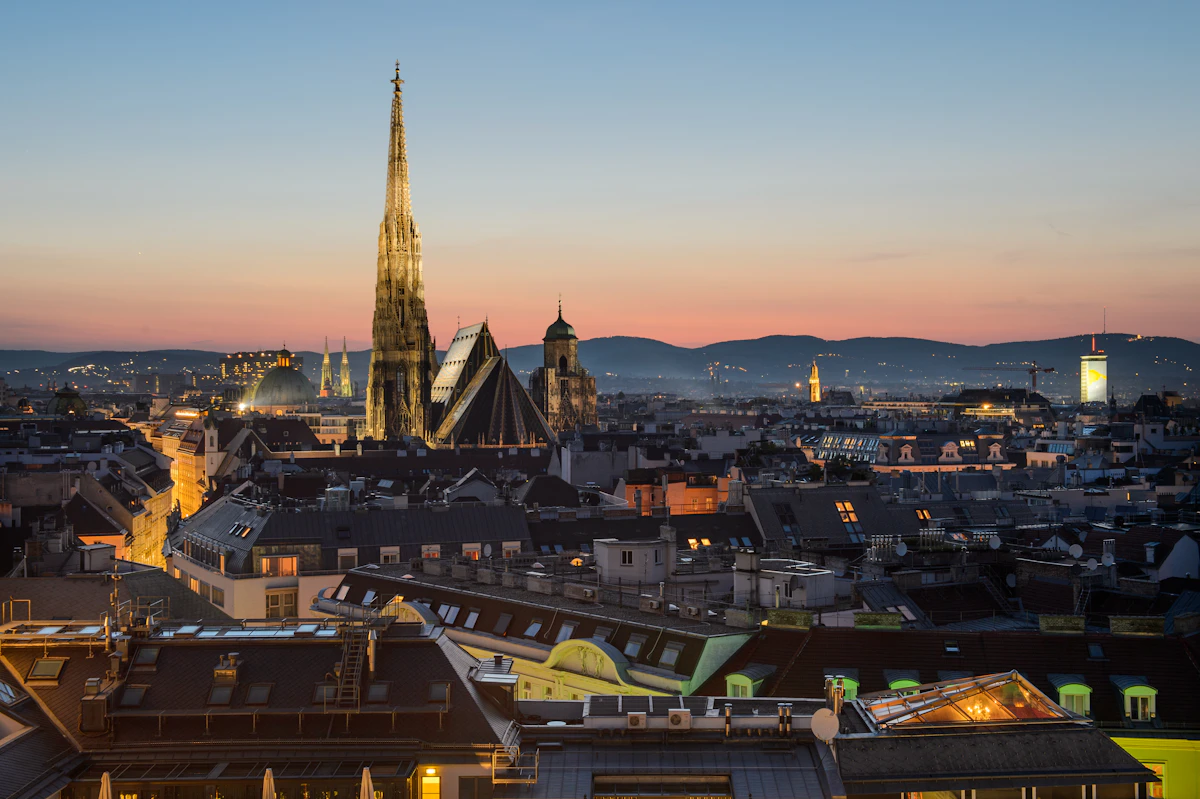
Best Time to Visit Prague in 2026: Month-by-Month Guide
When is the best time to visit Prague in 2026? Month-by-month weather, crowd levels, events, and packing tips to help you pick the perfect travel dates.
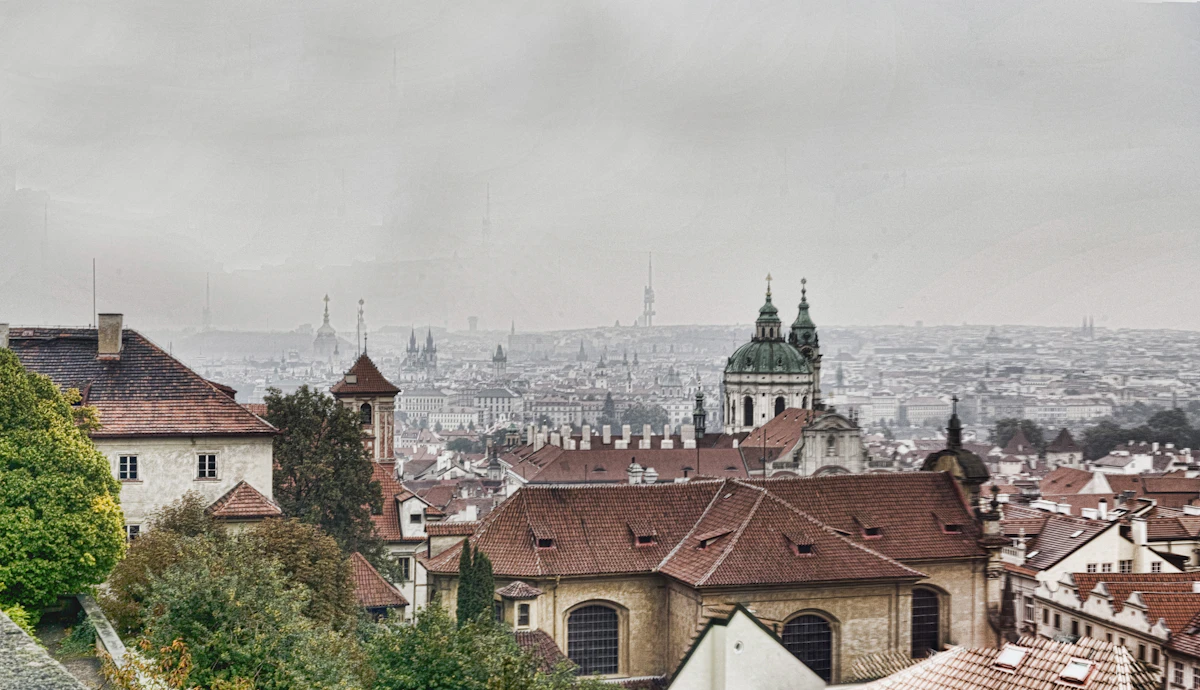
Prague's Hidden Gems: Off the Beaten Path in 2026
Skip the tourist crowds in 2026. Explore 15 Prague hidden gems from Vyšehrad fortress to Žižkov's backstreets, with local-only viewpoints, parks, and secret spots.
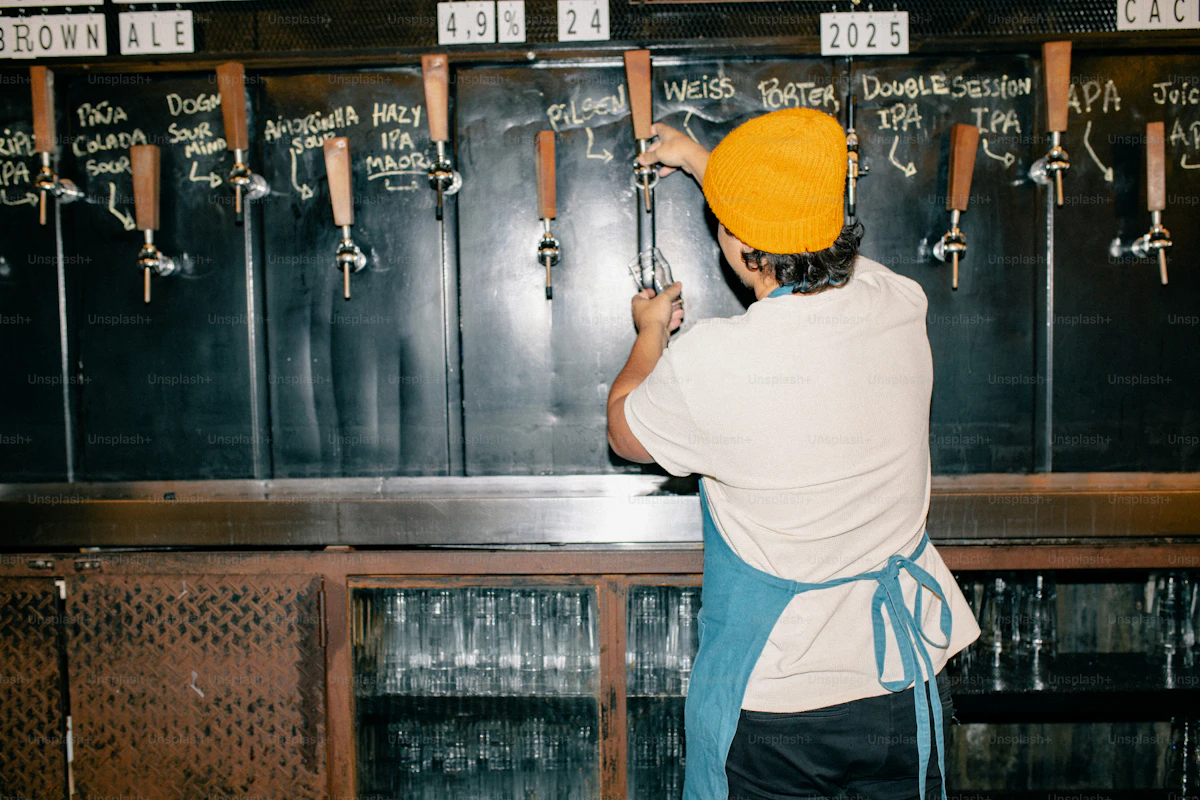
Czech Craft Beer Guide: Beyond Pilsner Urquell (2026)
Discover Prague's best craft breweries, taprooms, and beer gardens beyond Pilsner Urquell in 2026. Includes local favorites, beer etiquette, and a brewery map.