Český Krumlov Day Trip from Prague (2026)
A fairy-tale town wrapped in a river bend — the best overnight-worthy day trip from Prague and how to make one day count
Powered by ITINE
Get this guide as a tappable itinerary
Day-by-day plan, audio tours, and one-tap Google Maps — completely free.
Destinations
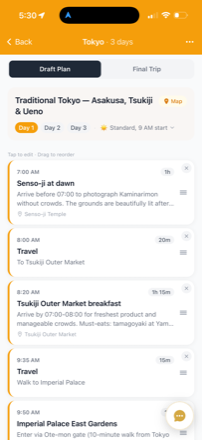
Your Itinerary
Google Maps
Why Český Krumlov
Český Krumlov is the kind of place that looks fictional. A near-perfect medieval and Renaissance town built inside a dramatic horseshoe bend of the Vltava River, dominated by a castle complex so large it is second only to Prague Castle in the entire Czech Republic. The old town is a UNESCO World Heritage site — a dense cluster of Gothic, Renaissance, and Baroque buildings connected by cobbled lanes, hidden courtyards, and bridges over the river. It is, without exaggeration, one of the most beautiful small towns in Europe.
The town's survival is partly a story of neglect. Under communist rule, Český Krumlov was largely ignored and left to decay — which meant it was also left intact. When the Velvet Revolution opened Czechoslovakia to the world, a medieval gem emerged from behind the Iron Curtain nearly untouched by modern development. The restoration effort that followed has been remarkable, and today the town is impeccably maintained, if heavily touristed in peak season.
How to Get There
By Bus (Recommended)
The RegioJet or FlixBus service from Prague to Český Krumlov is the best option. RegioJet buses depart from Prague's Na Knížecí bus station (metro Anděl, Line B) and take approximately 2 hours 45 minutes. The buses are comfortable — leather seats, free Wi-Fi, complimentary hot drinks, and on-board entertainment. Tickets cost 200–300 CZK each way depending on how far in advance you book. Reserve online at regiojet.cz for the best fares.
By Train
The train journey from Prague to Český Krumlov takes about 3 hours and usually requires a change in České Budějovice. It is slower and less convenient than the bus, but the scenery through the South Bohemian countryside is gorgeous — especially the final stretch along the Vltava valley. Check idos.cz for schedules and connections. Fares are roughly 250–350 CZK each way.
By Car or Private Transfer
Driving from Prague to Český Krumlov takes roughly 2 hours and 15 minutes via the D3 motorway toward České Budějovice, then Route 39 south. The road is straightforward and well-signed. Parking in Český Krumlov, however, is another matter. The old town is pedestrianized, so you must use one of the peripheral car parks — P1 (Objížďková, 381 01 Český Krumlov) at the northern edge of town is the largest and most convenient, charging around 300 CZK per day. In peak season, arriving before 10:00 is essential if you want a spot close to the center.
Private transfer services from Prague typically cost 3,000–5,000 CZK for a one-way trip in a sedan (up to 4 passengers), which can be cost-effective for a small group. Some operators offer a stop at Hluboká Castle en route, adding another South Bohemian highlight to the day. Companies like Prague Airport Transfers and CK Shuttle are reliable and can be booked online in advance.
Český Krumlov Castle
The castle complex (Státní hrad a zámek Český Krumlov) is enormous — 40 buildings, 5 courtyards, a 7-hectare garden, and a history stretching back to the 13th century. The most recognizable feature is the round painted tower, decorated with Renaissance sgraffito and visible from every vantage point in town. The castle has been owned by some of Bohemia's most powerful families — the Vítkovci, the Rožmberks, the Eggenbergs, and the Schwarzenbergs — each of whom left their architectural mark.
Two guided tours are available. Tour I covers the Renaissance and Baroque interiors, the Chapel of St. George, and the Rožmberk and Eggenberg halls. Tour II focuses on the Schwarzenberg era — the 19th-century apartments and the portrait gallery. If time is limited, Tour I is the more historically significant option. The castle courtyards and the elevated walkway (the Cloak Bridge) offer stunning views and are free to access.
Český Krumlov Castle
Castle & Historic ComplexZámek 59, 381 01 Český Krumlov
Insider tip: The Cloak Bridge — a three-story covered bridge connecting the castle to the theatre and gardens — offers one of the best panoramic views of the old town for free. Do not skip it.
The Baroque Theatre
Hidden within the castle complex is one of the rarest treasures in European theatre: a fully preserved Baroque theatre from 1682, complete with original stage machinery, backdrops, costumes, and lighting. Only a handful of such theatres survive anywhere in the world. The machinery — a system of ropes, pulleys, and painted flats — could create thunder, lightning, wind, and scene changes in seconds, all operated manually. Performances are still held here occasionally, using the original equipment.
Access is by guided tour only, and tours are limited to protect the fragile interiors (no more than a few per day in season). Check availability when you arrive at the castle ticket office — this sells out, especially in summer. The tour lasts about 40 minutes and is conducted in Czech with English text available.
The Old Town
Český Krumlov's old town fills the horseshoe bend of the Vltava, a compact maze of narrow streets, colourful Renaissance facades, and small squares. The main square — náměstí Svornosti — is ringed by gabled townhouses and anchored by a plague column and the Gothic-Renaissance town hall. From here, lanes radiate in every direction through a townscape that has barely changed in outline since the 16th century.
The Egon Schiele Art Centrum, housed in a former brewery, is worth a visit if you have time. The Austrian Expressionist painter Schiele lived in Český Krumlov in 1911 (his mother was born here), and his turbulent paintings of the town — twisted rooftops, brooding skies — captured something raw beneath the picture-postcard surface. The museum holds rotating exhibitions of early 20th-century art alongside Schiele's work.
Beyond the main square, seek out Latrán — the district on the castle side of the river, linked to the old town by a small bridge. This was historically the servants' quarter, home to craftsmen and tradespeople who served the castle. Today Latrán is quieter than the east bank, lined with artisan workshops, small galleries, and some of the town's best independent cafes. The former Minorite monastery at its southern end houses the Museum of Regional History, which traces the story of South Bohemia from prehistoric times through the Rožmberk era.
Egon Schiele Art Centrum
Art MuseumŠiroká 71, 381 01 Český Krumlov
Insider tip: Note: the Egon Schiele Art Centrum may be temporarily closed — check their website or call ahead before visiting. The permanent collection is modest but the rotating exhibitions are often excellent. The building itself — a Renaissance brewery with massive stone vaults — is worth seeing regardless.
Český Krumlov is what happens when a town is beautiful enough to survive its own neglect. Communist indifference preserved what capitalist development would have demolished, and what remains is a medieval dream pressed between a river and a castle, almost too perfect to be real.
— Prague Itinerary
River Rafting on the Vltava
The Vltava River through and around Český Krumlov is a popular rafting and canoeing route. Several rental companies offer inflatable rafts, canoes, and kayaks for half-day or full-day trips on gentle Class I–II water. The most popular route runs from Vyšší Brod or Rožmberk nad Vltavou downstream to Český Krumlov — a scenic float through the South Bohemian countryside that takes 3–5 hours depending on your starting point and pace.
If you are on a day trip and time is limited, shorter routes are available. Some operators offer a 2-hour paddle from Český Krumlov downstream, or you can rent a boat for a quick loop around the old town bend. The river is gentle here — no prior experience is needed. The season runs from May through September, with July and August being the busiest (and the warmest for an inevitable splash).
Where to Eat
Krčma v Šatlavské
Medieval-Style Czech TavernHorní 157, 381 01 Český Krumlov
Insider tip: A vaulted stone cellar with a wood-fired grill. The grilled meats and dark beer are the draw — order the mixed grill platter to share. Yes, it leans into the medieval theme, but the food is genuinely good and the atmosphere is earned by the 15th-century building.
If Czech cuisine is not your mood, or if you are looking for something lighter, the old town has a surprising range for a small town. Italian and vegetarian options are both available within a short walk of the main square.
Nonna Gina
Italian RestaurantKlášterní 52, 381 01 Český Krumlov
Insider tip: When you need a break from Czech cuisine, this Italian restaurant on a quiet lane near the monastery serves excellent thin-crust pizza and fresh pasta. The garden terrace overlooking the river is lovely in warm weather.
Laibon
Vegetarian & Vegan RestaurantParkán 105, 381 01 Český Krumlov
Insider tip: Set directly on the river with an outdoor terrace over the water. The vegetarian and vegan menu is creative and well-executed — rare for a small Czech town. The riverside setting is the best lunch spot in Český Krumlov.
Is One Day Enough?
The honest answer: one day is enough to see the highlights but not enough to feel the town. For another castle day trip that takes only half a day, see our Karlštejn Castle guide. You can comfortably visit the castle, climb the tower, walk the old town, eat a proper lunch, and browse a museum or two in a single day trip from Prague. What you miss is the evening — when the tour buses leave, the streets empty, and Český Krumlov becomes the quiet, lantern-lit medieval town that earns its UNESCO status. If you can spare an overnight stay, the experience transforms. But if one day is all you have, it is absolutely worth the trip.
Suggested Day Plan
- 7:00 — RegioJet bus from Prague (Na Knížecí station)
- 9:45 — Arrive Český Krumlov, walk to old town (10 min from bus stop)
- 10:00 — Castle courtyards, Cloak Bridge, tower climb
- 11:00 — Castle Tour I (guided, approximately 50 min)
- 12:00 — Baroque Theatre tour (if available)
- 12:45 — Lunch at Krčma v Šatlavské or Laibon
- 14:00 — Old town exploration: main square, Egon Schiele Centre, riverside walk
- 15:30 — Optional: short river paddle or further exploration
- 16:30 — Castle gardens walk (free, open April–October)
- 17:30 — Coffee and final wander
- 18:00 — RegioJet bus back to Prague (arrive ~20:45)
Practical Tips
- RegioJet bus: approximately 200–300 CZK each way, 2h 45min
- Castle tours, tower, and old town: budget 400–600 CZK for entry fees
- Total day cost: roughly 1,000–1,500 CZK per person including transport, tickets, and meals
- Wear sturdy shoes — the cobblestones are steep and uneven in places
- The town is compact and entirely walkable — no public transport needed within Český Krumlov
- ATMs are available on the main square; most restaurants accept cards
- Download offline maps — mobile signal is reliable but having a backup helps in narrow lanes
Photography Spots
Český Krumlov is absurdly photogenic from almost every angle, but a few vantage points stand above the rest. The single most iconic view is from the castle's upper terrace and the Cloak Bridge — looking down over the Vltava's horseshoe bend with the old town filling the peninsula, red rooftops layered against each other like a medieval jigsaw. Morning light is best here, when the sun hits the eastern facades of the old town and the river catches a silver gleam.
For the reverse angle — the classic postcard shot of the castle and its round tower rising above the town — walk to the Seminary Garden (Seminární zahrada) on the east side of the river, or find the viewpoint along the path to the Křížový vrch hilltop cross. The Seminary Garden is a terraced park above the old town that few tourists visit; the view from its upper benches is breathtaking and largely unobstructed. Another superb but overlooked vantage is the weir beneath the castle — stand on the small footbridge just downstream and you get the tower reflected in the rushing water, framed by the medieval houses along Parkán street.
- Cloak Bridge (castle complex) — the classic aerial view over the old town bend, free access
- Seminary Garden (Seminární zahrada) — elevated east-bank panorama of the castle, usually deserted
- Parkán street along the river — low-angle shots of colourful houses reflected in the Vltava
- The weir below the castle — the round tower mirrored in white water, best in morning light
- Křížový vrch hilltop — a 10-minute uphill walk for a wide-angle panorama of the entire town and valley
- Lazebnický Bridge — the small bridge connecting the old town and Latrán, with the castle looming directly above
Shopping in Český Krumlov
Český Krumlov is not a shopping destination in the conventional sense, but there are genuine finds if you know where to look beyond the souvenir kitsch. The town has a small but committed community of artisans — potters, glassworkers, jewellers, and printmakers — many of whom sell directly from workshops in the old town and Latrán. Czech garnet (Bohemian garnet, or granát) is a traditional local gemstone, and Český Krumlov has several reputable jewellers selling authentic pieces — look for the Czech Garnet mark of origin to avoid cheap imitations.
For something distinctly South Bohemian, seek out locally made ceramics in the Rožmberk five-petalled rose motif — a design that appears everywhere in town and makes an attractive, affordable souvenir. Koh-i-Noor, the Czech art supply company founded in České Budějovice nearby, has a small shop in town selling beautiful pencils, pastels, and sketchbooks that make excellent gifts. And if you have any interest in marionettes — a Czech cultural tradition recognized by UNESCO — the puppet shops in Český Krumlov sell handcrafted wooden marionettes far superior to the mass-produced versions found in Prague tourist shops.
Český Krumlov at Night
This section is for those wise enough to stay overnight. When the last tour buses pull away around 17:00–18:00, a different Český Krumlov reveals itself. The cobblestone lanes, so crowded at midday that you could barely lift a camera, become empty and echoing. Street lamps — real gas-style lanterns in parts of the old town — cast a warm amber glow across the stone facades. The castle, illuminated from below, floats above the town like a stage set. It is, without drama, one of the most beautiful things you will see in the Czech Republic.
The evening dining scene is intimate and unhurried. Restaurant Na Louži, a wood-panelled Czech pub on Kájovská street, fills with locals and overnight visitors sharing plates of svíčková and dark Eggenberg beer (brewed in town since the 14th century). For a more refined meal, Apotheka at the former pharmacy on the main square serves creative Czech-European cuisine in a candlelit vaulted cellar. After dinner, a walk along the river is pure meditation — the water murmurs over the weirs, the castle tower glows against the night sky, and for a few hours you inhabit a medieval town exactly as it was meant to be experienced.
Pivovar Eggenberg
Historic BreweryLatrán 27, 381 01 Český Krumlov
Insider tip: The Eggenberg brewery has been operating since 1560 and produces excellent lager and dark beer. The brewery tour includes the medieval cellars and a tasting. Even if you skip the tour, order an Eggenberg tmavý ležák (dark lager) at any local pub — it is superb and rarely available outside the region.
Seasonal Visit Tips
Each season offers a different version of Český Krumlov, and the right choice depends on what you want from the visit. Spring (April–May) brings fresh green to the castle gardens and the Vltava valley, with mild temperatures and manageable crowds. The castle interiors reopen in April, and the town feels alive again after winter without the summer crush. Late May is arguably the ideal window — warm enough for outdoor cafes, uncrowded enough to wander freely.
Summer (June–August) is peak season, with the longest days, warmest water for rafting, and the Five-Petalled Rose Festival in late June — a two-day Renaissance celebration with costumed processions, jousting, music, and fireworks that transforms the entire town into a 16th-century spectacle. The trade-off is significant overcrowding, especially on weekends. Autumn (September–October) is magnificent — the South Bohemian forests turn gold and copper, the light is warm and low, and the town empties noticeably after mid-September. Winter visits are atmospheric but limited: most castle interiors close from November through March, river activities are suspended, and some restaurants reduce their hours. The Christmas market in December, however, is charming and far less hectic than Prague's.
Common Mistakes to Avoid
- Arriving too late — if you catch the 10:00 or 11:00 bus from Prague, you lose half the day. Take the 7:00 or 8:00 departure
- Skipping the castle interiors — the courtyards are free and impressive, but Tour I reveals the real historical depth. Budget the time and money
- Eating on the main square — the restaurants ringing náměstí Svornosti are the most expensive and generally the least interesting. Walk two minutes in any direction for better food at lower prices
- Ignoring the castle gardens — the Baroque gardens behind the castle are free, peaceful, and beautiful. Most day-trippers never reach them because they are beyond the theatre at the far end of the complex
- Trying to do everything — a day trip allows for the castle, old town, and a good lunch. Trying to add rafting, multiple museums, and the gardens will leave you rushed and exhausted
- Forgetting to check return bus times — the last RegioJet departures are in the early evening. Missing the last bus means an expensive taxi or an unplanned overnight stay
- Visiting only in summer — the shoulder seasons (May, September, October) offer far better experiences with fewer crowds and softer light
Combining with Other Day Trips
Český Krumlov sits in the heart of South Bohemia, a region rich enough to warrant several days of exploration. If you are driving or have arranged a private transfer, combining the trip with a stop at Hluboká nad Vltavou — a neo-Gothic château modelled on Windsor Castle, about 30 minutes north of Český Krumlov — makes for a full and varied day. Hluboká is visually spectacular (the white fairy-tale exterior is irresistible) and the guided tour of the interiors takes about an hour.
České Budějovice, the regional capital and birthplace of Budweiser beer, is only 25 minutes from Český Krumlov by bus. Its vast main square — the largest in the Czech Republic — is ringed by arcaded Baroque buildings and anchored by the Samson fountain. The Budvar brewery offers guided tours for beer enthusiasts. For those with more time, the ruined hilltop fortress of Dívčí Kámen, about 10 kilometres north of Český Krumlov along the Vltava, is one of the largest Gothic castle ruins in Bohemia and makes an excellent half-day hike through forest and river valley.
If you are planning multiple day trips from Prague, Český Krumlov pairs well with Kutná Hora on a separate day — the two towns represent very different aspects of Czech heritage (medieval silver mining versus Renaissance aristocratic splendour) and together they give a much richer picture of the country beyond Prague.
Frequently Asked Questions
The best option is a RegioJet bus from Prague's Na Knížecí station (metro Anděl) — comfortable leather seats, free Wi-Fi and hot drinks, 2 hours 45 minutes, and tickets from 200-300 CZK booked at regiojet.cz. Trains take about 3 hours with a change in České Budějovice.
Yes, though the 2.75-hour travel time each way means a long day. You can comfortably see the castle, climb the tower, explore the old town, and have a proper lunch. What you miss is the magical evening after tour buses leave. If you can spare an overnight stay, the experience transforms dramatically.
Budget roughly 1,000-1,500 CZK per person including return RegioJet bus (400-600 CZK), castle entry fees (260-360 CZK for tours), and meals. Add 100 CZK for the tower climb and 200 CZK for the Egon Schiele Art Centrum if you visit those.
Prioritize the castle courtyards and Cloak Bridge (free, amazing views), the castle Tower climb (100 CZK), Tour I of the castle interiors (260 CZK), the old town and main square, and lunch at a riverside restaurant. If time allows, add the Baroque Theatre tour and castle gardens.
Take the 7:00 or 8:00 AM RegioJet bus to maximize your day. Arriving at 10:00 or later means losing half the day. The last return buses depart in the early evening — check the schedule and do not miss it.
A full rafting trip is difficult to fit into a single day alongside the castle and old town. If you want to try the river, opt for a short 1-2 hour loop near town (available May-September). For a longer upstream route, save it for an overnight stay.
Absolutely. It is one of only three theatres in the world with original 17th-century stage machinery still intact. Tours are limited to protect the fragile interiors and sell out in summer. Ask at the castle ticket office first thing in the morning for availability.
Krčma v Šatlavské is a vaulted stone cellar with excellent grilled meats and dark beer (mains 195-345 CZK). Laibon serves creative vegetarian food on a riverside terrace — the best lunch setting in town. Avoid the restaurants directly on the main square (most expensive, least interesting).
Late May or September-early October are ideal — warm enough, uncrowded. Summer (June-August) is peak season with heavy crowds, especially weekends. The Five-Petalled Rose Festival in late June is spectacular but the town fills completely. Winter is atmospheric but castle interiors are mostly closed.
The town receives over 2 million visitors per year. July-August weekends can feel overwhelming. Visit on a weekday, arrive early, and consider shoulder season (May, September, October) for the best experience. The crowds thin dramatically after the last tour buses leave around 17:00-18:00.
Yes. The drive takes roughly 2 hours 15 minutes via the D3 motorway. The old town is pedestrianized, so use the P1 car park at the northern edge (about 300 CZK per day). Arrive before 10:00 in peak season to secure parking. A private transfer costs 3,000-5,000 CZK for up to 4 passengers.
The Cloak Bridge is a three-story covered bridge connecting the castle to the theatre and gardens. It offers one of the best panoramic views of the old town, completely free. It is one of the most iconic photo spots in Český Krumlov and should not be missed.
Yes, but be careful. Genuine Czech garnets are deep red, small (rarely over 5mm), and sold by certified jewellers. Cheap 'Bohemian garnet' at souvenir stalls is almost always synthetic or imported. Look for the Granát Turnov brand or ask for a certificate of authenticity.
If driving, stop at Hluboká nad Vltavou (neo-Gothic château, 30 minutes north) on the way. České Budějovice (birthplace of Budweiser beer) is 25 minutes away by bus. For a separate day trip in a different direction, pair with Kutná Hora on another day.
The castle's Cloak Bridge offers the classic aerial view over the old town bend. For the reverse angle showing the castle and tower, visit the Seminary Garden (Seminární zahrada) on the east bank — an elevated park that few tourists visit. The weir below the castle offers a dramatic reflected view.
One night is perfect and highly recommended if you can manage it. You see the highlights during the day and experience the magical evening when the old town empties, streets are lantern-lit, and the castle glows above the river. Two nights only if you want to add a longer rafting trip.
Held on the weekend closest to the summer solstice (usually mid-to-late June), this festival re-enacts the Rožmberk era with costumed processions, jousting, medieval crafts, theatre, and fireworks over the river. It is the single best weekend to visit — but book accommodation months in advance.
Tereza Nováková
Food & Culture Journalist · Karlín, Prague
Tereza is a Prague-based food and culture journalist whose work has appeared in Czech Hospodářské noviny and The Forkful. She covers the Czech culinary scene from traditional hospoda kitchens to new-wave tasting menus, and organizes seasonal food walks through Prague's markets.
You might also enjoy
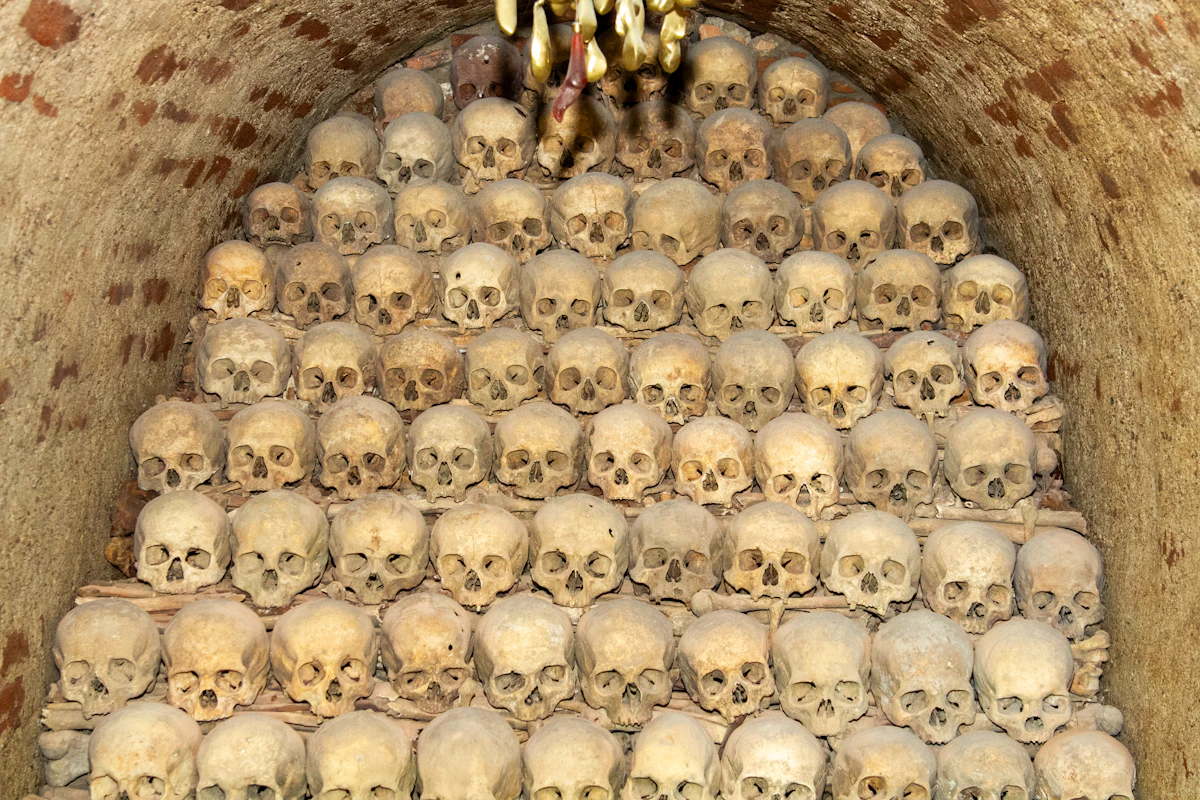
Kutná Hora Day Trip: Bone Church and Beyond (2026)
Visit Kutna Hora's Bone Church, St. Barbara's Cathedral, and medieval old town on a day trip from Prague. Updated for 2026 with train schedule, tickets, and full walking route.
Karlštejn Castle Day Trip from Prague (2026)
Karlštejn Castle is just 33 minutes from Prague by train. Find out which tour to book in 2026, how to get there, and what to see along the Berounka river valley.
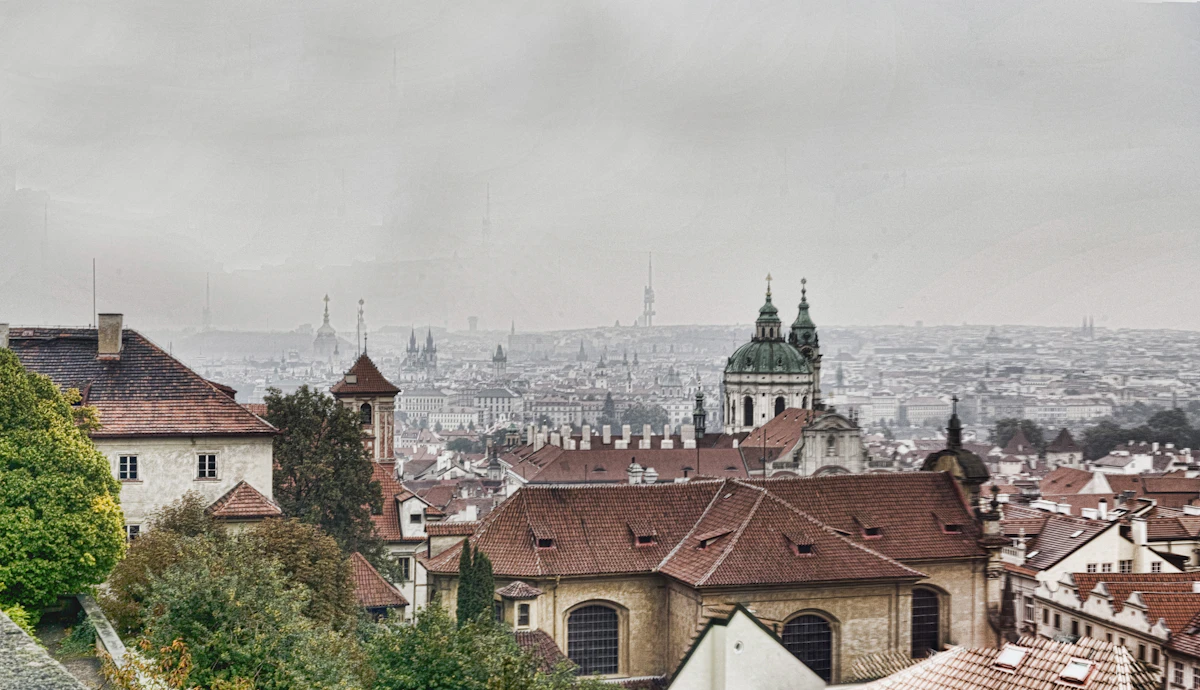
Three Days in Prague: The Complete 2026 Itinerary
Plan your 3 days in Prague with this 2026 hour-by-hour itinerary. Covers Old Town, Prague Castle, Malá Strana, Vinohrady, and Vyšehrad with restaurant picks.