
Prague in Spring: Cherry Blossoms, Easter Markets, and Perfect Weather (2026)
March through May in a city that shakes off winter and becomes the most beautiful version of itself
Powered by ITINE
Get this guide as a tappable itinerary
Day-by-day plan, audio tours, and one-tap Google Maps — completely free.

Destinations

Your Itinerary

Google Maps
There is a week in April -- the exact dates shift each year, but it lands somewhere between the 10th and the 20th -- when Prague undergoes a transformation so sudden it feels like stage magic. On Monday, the trees along the Vltava are bare. By Friday, Petrin Hill is a cloud of pink cherry blossoms, the Wallenstein Garden peacocks are strutting through beds of tulips, and every beer garden terrace in Letna is crowded with Praguers blinking in the sunshine as if they have forgotten what it looks like. Spring in Prague is not a gradual process. It is an ambush.
This guide breaks down the spring season month by month -- March, April, and May -- because each one is dramatically different. March is still winter wearing a thin disguise. April is the great awakening, unstable but thrilling. May is the city at its peak: warm, green, culturally alive, and not yet overrun by summer's tourist masses. Together they form Prague's shoulder season, which means better hotel prices, thinner crowds, and a version of the city that rewards the traveler willing to pack a rain jacket alongside their sunglasses.
What Is Prague Like in March?
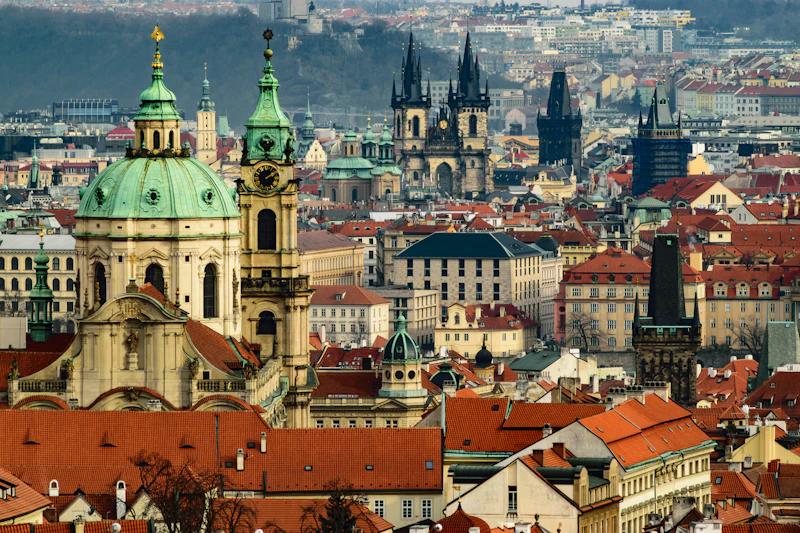
March in Prague is winter's last stand. The first week often brings the year's final snow flurry -- a stubborn reminder that the Bohemian winter does not surrender easily. Average temperatures range from 3°C to 10°C (37-50°F), but those averages hide significant swings. A warm spell can push afternoon temperatures to 15°C, only for a cold front to drag them back to 2°C the following day. Rain is more frequent than snow, falling as a persistent drizzle that turns the cobblestones slick and the sky uniformly grey.
Daylight is improving rapidly: March 1 gives you roughly 11 hours of light, and by March 31 you have nearly 13 hours -- a world of difference from the eight-hour December days. The clocks spring forward on the last Sunday of March (to Central European Summer Time), gifting you an extra hour of evening light that changes the entire rhythm of the day.
Why come in March? Because the city is yours. Hotel prices are at their annual low — our where to stay guide has neighborhood-by-neighborhood picks. The Prague Castle queue that takes 45 minutes in July takes zero minutes in March. Charles Bridge at 9:00 AM has more statues than pedestrians. Museums and galleries are uncrowded, restaurant reservations are unnecessary, and the locals have not yet developed their summer wariness of tourists. If you do not mind grey skies and cool temperatures, March is Prague in its most honest, unperformative state.
What Should You Pack for March in Prague?
- A warm but not heavy winter coat -- a mid-weight down jacket or wool coat is ideal for March's 3-12°C range
- Layers: thermal base layer for cold mornings, lighter long-sleeve shirts for warmer afternoons
- Waterproof boots with decent grip -- rain and occasional ice are more likely than snow, but the cobblestones punish slippery soles regardless
- A compact umbrella and a lightweight rain jacket (the drizzle is persistent, not heavy)
- A scarf and light gloves for mornings and evenings -- you may not need them by noon but you will want them at 7:00 AM
- Sunglasses: when the sun does break through in late March, the angle is low and direct
What Is Prague Like in April?
April is when Prague becomes Prague -- the version you have seen in photographs, the version that makes people fall in love with the city and immediately start planning a return trip. Average temperatures climb to 8-16°C (46-61°F), and sunny days can hit 20°C by the third week. The rain does not stop (April averages 11-12 rainy days), but it alternates with stretches of warm sunshine that feel like a reward for enduring March's gloom.
The gardens open. This is the defining event of April Prague. The Royal Garden at Prague Castle, closed all winter, reopens in early April, revealing its Renaissance architecture, manicured lawns, and the Ball Game Hall (Micovna). The Wallenstein Garden in Mala Strana -- with its baroque loggia, bronze statues, and resident peacocks -- comes alive with tulips and early roses. The Vrtba Garden, one of the finest baroque gardens in Central Europe, reopens its terraced hillside with views over the red rooftops of Mala Strana. These are not just parks: they are living architecture, and they transform the city's character overnight.
When Do the Cherry Blossoms Bloom on Petrin Hill?

The cherry blossom season on Petrin Hill is Prague's most ephemeral and most beautiful natural event. The orchard below the Petrin Lookout Tower contains several dozen cherry and magnolia trees that bloom in a concentrated burst, typically lasting 10-14 days. The peak usually falls between April 10 and April 25, though it shifts depending on how warm March was. In warm years, the first blossoms appear in late March; in cold years, they may hold off until the last week of April.
At peak bloom, the orchard is a cloud of pink and white against the backdrop of Prague's spires and red rooftops. It is genuinely stunning -- the kind of scene that stops even jaded locals in their tracks. The best time to visit is early morning (before 9:00 AM) when the light is soft and the crowds have not arrived, or late afternoon (4:00-6:00 PM) when the setting sun turns the blossoms golden. On weekends, the orchard gets busy by mid-morning with families, photographers, and picnickers.
What Happens at Prague's Easter Markets?
Easter markets appear at Old Town Square and Wenceslas Square approximately two weeks before Easter Sunday and run through the week after. In 2026, Easter falls on April 5, so expect markets from roughly March 20 through April 12. The markets are smaller and more craft-focused than the Christmas versions: hand-painted Easter eggs (kraslice), woven willow whips (pomlazky, used in the Czech Easter Monday tradition), folk pottery, embroidered textiles, and wooden toys.
The food stalls serve many of the same items as the Christmas markets (trdelnik, klobasa, langos) but also add spring-specific offerings: mazanec (a traditional Easter bread flavored with lemon zest and raisins), velikonocni beranek (lamb-shaped cakes), and fresh pastries. The atmosphere is lighter and less intense than December -- families with children, moderate crowds, and a genuine Czech holiday feel rather than a tourist event.
What Should You Pack for April in Prague?
- A versatile mid-weight jacket -- one that handles 8°C mornings and can be tied around your waist at 18°C in the afternoon
- A compact rain jacket or packable waterproof layer (April showers are real and sudden)
- Comfortable walking shoes with some water resistance -- you will walk 15,000-20,000 steps daily on wet cobblestones
- Light layers: long-sleeve shirts, a light sweater or fleece, and at least one short-sleeve option for warm afternoons
- Sunscreen and sunglasses -- the April sun is deceptively strong, especially at Petrin's elevation
- A light scarf for cool mornings and breezy evenings along the river
What Is Prague Like in May?
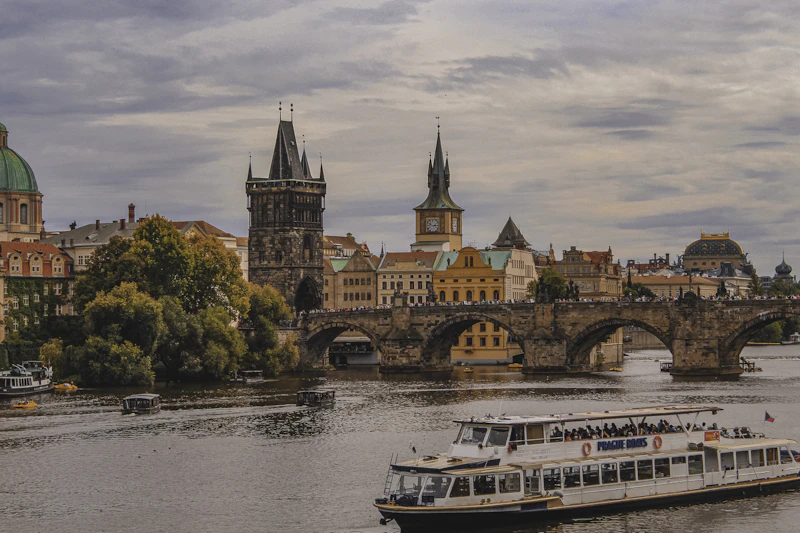
May is Prague at its objective best. The temperatures settle into a comfortable 13-22°C (55-72°F) range, with genuinely warm days hitting 25°C. Rain tapers off compared to April (though afternoon thunderstorms appear, usually brief and dramatic rather than all-day drizzle). Daylight stretches to nearly 16 hours by month's end, with sunset after 8:45 PM. The city is green and lush, the beer gardens are in full swing, river cruises are running, and the cultural calendar peaks with the Prague Spring International Music Festival.
Crowds are building but have not yet reached summer intensity. You will share Charles Bridge with other visitors, but you can still photograph the statues without fifty heads in frame during early morning or evening. Hotel prices are climbing from shoulder season toward summer rates but remain 20-30% below July-August peaks. May threads the needle between perfect weather and manageable tourism pressure better than any other month.
What Is the Prague Spring Music Festival?
The Prague Spring International Music Festival (Prazske jaro) is one of Europe's most prestigious classical music events, running from May 12 to June 3. It opens on May 12 -- the anniversary of Bedrich Smetana's death -- with a performance of Ma vlast (My Country) at the Rudolfinum's Dvorak Hall. This opening concert is one of the most sought-after tickets in European classical music. The festival hosts orchestras, soloists, and chamber ensembles from around the world at venues across Prague, including the Rudolfinum, Municipal House, Estates Theatre, and various churches.
Tickets for major performances sell out months in advance, but the festival also includes free open-air concerts, church recitals, and young-artist showcases that are easier to access. Even if you are not a classical music enthusiast, attending one performance in a historic Prague venue is an experience worth having -- the architecture alone justifies the ticket price. Check the festival website starting in January for the full programme and ticket sales.
When Do Beer Gardens Reopen in Prague?
Prague's beer garden culture is central to the city's identity, and the spring reopening is a communal event that marks the real start of warm weather. Most outdoor beer gardens open between late March and mid-April, depending on the weather. By May, they are all fully operational and crowded every evening.
- Letna Beer Garden (Letenske sady): perched on the bluff above the Vltava with a panoramic view of the Old Town bridges and spires. The most famous beer garden in Prague, and deservedly so. Opens typically in late March. A half-liter of Gambrinus runs 55-65 CZK (EUR 2.20-2.60). Arrive by 5:00 PM on sunny days to get a bench with a view
- Riegrovy sady Beer Garden (Vinohrady): a sprawling hilltop beer garden with views toward Prague Castle and a giant outdoor screen showing football matches. The crowd is younger and more local than Letna. Opens in April
- Strelecky ostrov (Shooters' Island): a riverside beer garden on an island in the Vltava, accessible from Most Legii bridge. Relaxed, tree-shaded, and with views of the National Theatre. One of the most pleasant afternoon spots in the city
- Naplavka riverside: not a single beer garden but a string of boat bars, pop-up stalls, and food vendors along the riverfront south of the National Theatre. The Saturday farmers' market (Naplavka Farmers Market) is one of Prague's best. The evening scene on warm May nights -- hundreds of people sitting on the stone embankment with beer and street food -- is quintessential Prague
- Kasarna Karlin (Karlin Barracks): a cultural center in a former military barracks with an outdoor bar, food trucks, and events. More urban and hipster than the traditional beer gardens, but excellent on a warm evening
When Do River Cruises Start Running?
Most Vltava river cruise operators begin their full schedules in late March or early April. By May, the full range is available: sightseeing cruises (45-60 minutes, 300-400 CZK / EUR 12-16), lunch cruises (2 hours, 700-1,200 CZK / EUR 28-48), dinner cruises (3 hours, 1,000-2,000 CZK / EUR 40-80), and private rentals. The most scenic cruise routes pass under Charles Bridge and along the Mala Strana waterfront, with views of Prague Castle above.
For something more active, paddleboat and kayak rentals operate from Slovanski ostrov (Slavic Island) starting in April. A paddleboat for two costs about 200 CZK (EUR 8) per hour and lets you cruise the Certovka canal -- a narrow, tree-lined waterway that runs behind Kampa Island -- or paddle out toward the Vltava's mid-river islands. It is an unexpectedly romantic way to see the city from a perspective that walking cannot provide.
What Should You Pack for May in Prague?
- Light layers: t-shirts and short-sleeve shirts for daytime, a light sweater or cardigan for evenings
- A light jacket for cooler days and evening breezes along the river -- May evenings can still drop to 10-12°C
- Comfortable walking shoes (you will be on your feet all day, every day)
- Sunscreen, sunglasses, and a hat -- the May sun is strong, especially during the long afternoon hours
- A compact rain layer for the afternoon thunderstorms that appear without warning
- At least one slightly dressy outfit if you plan to attend a Prague Spring concert or a nice dinner
Which Gardens Should You Visit in Spring?
Prague's gardens are among Europe's most underrated. In spring, they burst into color and offer a counterpoint to the stone-and-cobblestone intensity of the Old Town. Most are free or inexpensive, and several provide elevated viewpoints over the city that rival the famous lookout towers.
Wallenstein Garden (Valdstejnska Zahrada)
The Wallenstein Garden in Mala Strana is a baroque masterpiece attached to the Wallenstein Palace (now the Czech Senate). It opens in April and runs through October. The garden features a massive loggia with frescoes depicting the Trojan War, bronze replicas of statues by Adriaen de Vries (the originals were looted by Sweden in 1648), a grotto wall dripping with stalactites, a rectangular reflecting pool with enormous koi, and several resident peacocks who have zero respect for personal space. It is free, it is magnificent, and it is quieter than you would expect.
Wallenstein Garden
Historic GardenLetenska 123/4, Prague 1 (Mala Strana)
Insider tip: Visit before 10:00 AM on weekdays to have the garden nearly to yourself. The peacocks are most active in the morning. The reflecting pool with the loggia behind it is the most photographed composition.
Vrtba Garden (Vrtbovska Zahrada)
Vrtba Garden is a UNESCO-listed baroque garden hidden behind an unremarkable doorway on Karmelitska street in Mala Strana. It is tiny -- you can walk through it in fifteen minutes -- but it packs more beauty per square meter than anywhere else in Prague. The garden climbs a steep hillside in three terraces connected by staircases, with each level offering progressively more staggering views over the Mala Strana rooftops, the Vltava, and the Old Town beyond. The baroque statues by Matthias Braun are exceptional, and the spring planting (tulips, roses, lavender) against the weathered stone is achingly photogenic.
Vrtba Garden
Historic GardenKarmelitska 25, Prague 1 (Mala Strana)
Insider tip: The upper terrace at golden hour (5:00-6:00 PM in April, 7:00-8:00 PM in May) offers one of the finest views in Prague. Bring a camera with a wide-angle lens -- the terraces are narrow and you will want to capture the full panorama.
Royal Garden (Kralovska Zahrada)
The Royal Garden sits north of Prague Castle, separated from the main complex by the Stag Moat. It was founded in 1534 by Ferdinand I and is one of the finest Renaissance gardens in Central Europe. The star attraction is the Summer Palace of Queen Anne (Belvedere), a delicate Renaissance pavilion with a singing fountain in front -- the acoustic effect of water striking the bronze bowl creates a ringing tone that gives the fountain its name. In spring, the garden's tulip beds, fruit trees, and meticulously shaped hedges come alive. Access is from the northern entrance of Prague Castle (U Prasneho mostu). For complete castle area coverage, see our Prague Castle guide.
Letna Park (Letensky Sady)
Letna is not a formal garden -- it is a rambling urban park on the bluff above the Vltava, stretching from the Metronome (the giant ticking sculpture that replaced a former Stalin statue) eastward through chestnut-lined avenues, a playground, a skatepark, and the famous Letna Beer Garden. In spring, the chestnuts bloom in spectacular white-and-pink canopies, and the terraces along the southern edge offer what many consider the single best panorama of Prague: the river, the bridges (all seven visible in a single glance), the Old Town skyline, and the castle. It is where Praguers come on warm evenings, and it is where you should be too.
How Much Do Hotels Cost in Spring?
Spring prices follow a steady upward curve from March to May. March is the tail end of low season: expect 1,400-2,500 CZK (EUR 56-100) for a solid three-star hotel, or 2,500-4,000 CZK (EUR 100-160) for a four-star in the center. April prices jump 15-25% as Easter arrives and the gardens open. May climbs another 10-15% as the weather improves and the Prague Spring festival brings a culturally motivated audience with larger budgets.
The best value window is the last two weeks of March through the first week of April (excluding Easter weekend): winter prices with the first signs of spring weather. For Easter week itself, book at least two months ahead -- prices rise 20-30% above normal April rates for the long weekend. May weekends in the center can approach summer pricing, but midweek stays remain reasonable.
What Day Trips Work Best from Prague in Spring?
Spring is the ideal season for day trips from Prague. The daylight hours are generous (13-16 hours), the temperatures are comfortable for walking, and the countryside is at its most photogenic. Three destinations stand out.
Cesky Krumlov in Spring
Cesky Krumlov is the most popular day trip from Prague, and spring is the best time to do it. The town is genuinely beautiful -- a UNESCO-listed medieval village wrapped around a bend in the Vltava River, with a fairy-tale castle complex rising above. In summer, it is overrun with tour buses and cruise ships (on the river). In spring, particularly March and April, the streets are quiet, the castle gardens are coming alive, and you can photograph the famous views without forty other cameras in frame. The drive takes 2.5 hours each way (or 3 hours by bus via Student Agency/Flixbus). Consider an overnight stay to catch the town at dawn.
Karlstejn Castle in Spring
Karlstejn Castle, perched on a limestone cliff above the Berounka River valley, is a 40-minute train ride from Prague's main station. The castle reopens for interior tours in late March or early April (check the website for exact dates). In spring, the walk from Karlstejn village up to the castle passes through blooming meadows and budding forests, and the views from the castle ramparts extend across a green valley that looks timeless. Combined with a visit to the surrounding countryside -- the Berounka valley is excellent for cycling -- Karlstejn makes a perfect half-day or full-day spring excursion.
Kutna Hora: Bone Church and Cathedral
Kutna Hora works in any season, but spring adds warmth and longer hours for exploring the town beyond the headline attractions. The Sedlec Ossuary (Bone Church) and the Cathedral of St. Barbara are the main draws, but the town itself -- with its medieval silver-mining heritage, Italian Court, and quiet cobblestone streets -- rewards a full day of wandering. The train from Prague takes one hour and runs frequently. In May, combine Kutna Hora with a stop at the Sedlec Monastery garden, which blooms beautifully.
What Are the Best Photography Conditions in Spring?
Spring light in Prague is a photographer's dream, especially in April and May. The sun rises early enough to catch golden morning light on Charles Bridge (around 6:00-6:30 AM in May) but does not climb as aggressively as in summer, giving you extended golden hours both morning and evening. The low-angle light that makes December Prague so photogenic returns in early spring, combined with the bonus of green trees, blossoming gardens, and longer shooting windows.
- Cherry blossoms on Petrin Hill: mid-April, early morning or late afternoon for soft light and thin crowds
- Charles Bridge at sunrise: aim for 5:30-6:30 AM in May for near-empty bridge in golden light. The fog that sometimes hangs over the river in April mornings adds an ethereal quality
- Wallenstein Garden: the reflecting pool with the loggia behind it, shot in morning side-light (10:00-11:00 AM) -- one of the most elegant compositions in Prague
- Letna terrace at sunset: the panorama of all seven bridges lit by evening light, taken from the grassy slope near the Metronome. Best from late April when the sun sets far enough north to backlight the Old Town
- Vrtba Garden upper terrace: golden-hour light on the Mala Strana rooftops from the highest terrace is a magazine cover waiting to happen
- Naplavka riverfront in May: the evening social scene along the embankment, shot in warm side-light with the river and the castle in the background
- Vysehrad ramparts: the view south along the Vltava in spring, with green trees framing the river bends -- particularly powerful at sunrise when the mist lifts
What Else Happens in Prague in Spring?
- Burning of the Witches (Paleni carodejnic) -- April 30: bonfires across Prague (biggest at Ladronka park and Kampa Island) celebrate Walpurgis Night. Czechs grill sausages, drink beer, and burn effigies of witches. Free, chaotic, and wonderfully pagan
- Prague Marathon (early May): one of Europe's most scenic marathon courses, winding through the Old Town, past Prague Castle, and along the Vltava. Even if you are not running, the route offers a festive atmosphere across the city center
- Naplavka Farmers Market: the Saturday morning market on the riverfront embankment south of the National Theatre. It runs year-round but comes alive in spring with fresh produce, Czech cheeses, bread, and craft beer. Best from late March onward
- Open Garden Weekend (mid-May): private gardens across Prague open their gates to the public for one weekend. An extraordinary chance to see hidden courtyards, rooftop gardens, and private baroque terraces that are normally locked
- Prague Fringe Festival (late May): an English-language theatre festival with comedy, drama, and experimental performance at venues across the city. The spiritual cousin of Edinburgh Fringe, smaller but excellent
- Czech Beer Festival (late May at the Vystaviste fairgrounds in Holesovice): hundreds of Czech breweries under one roof for two weeks. Entry is free; you pay per beer. An overwhelming but brilliant crash course in Bohemian brewing
A Suggested 4-Day Spring Itinerary
Day 1: Old Town and the Riverside
Morning: Walk the Old Town -- Astronomical Clock, Tyn Church, Old Town Square (Easter market if the timing aligns). Cross to the Jewish Quarter for the Old Jewish Cemetery and the Spanish Synagogue. Afternoon: Walk along the Vltava to Naplavka. If it is Saturday, hit the farmers' market. Continue to Vysehrad for sunset views from the ramparts. Evening: Dinner in Vinohrady, then a drink at a local beer bar.
Day 2: Castle District and Gardens
Morning: Prague Castle -- St. Vitus Cathedral, Old Royal Palace, Golden Lane. Walk through the Royal Garden (if open). Afternoon: Descend through Mala Strana. Visit the Wallenstein Garden, then the Vrtba Garden. Walk Kampa Island and the Certovka canal. Evening: Dinner in Mala Strana, then a classical concert at St. Nicholas Church or the Rudolfinum.
Day 3: Petrin Hill and Local Neighborhoods
Morning: Take the funicular up Petrin Hill. Visit the cherry orchard (if in bloom), Petrin Lookout Tower, and the Mirror Maze. Walk down through the Strahov Monastery garden. Afternoon: Explore Zizkov or Vinohrady -- local cafes, street art, the TV Tower with its crawling baby sculptures. Riegrovy sady beer garden for an afternoon beer with castle views. Evening: Letna Beer Garden for sunset, followed by dinner in Holesovice.
Day 4: Day Trip to Karlstejn or Kutna Hora
Full day: train to Karlstejn (40 minutes) or Kutna Hora (1 hour). Spring conditions make either trip more enjoyable than winter or summer. Return to Prague by late afternoon. Evening: a final walk across Charles Bridge at golden hour, then a farewell dinner at a restaurant you have been eyeing all trip.
Is Spring the Right Season for Your Prague Trip?
Spring is the right choice if you want comfortable walking weather, blooming gardens, moderate crowds, and shoulder-season hotel prices. April and May deliver the best combination of these factors. March is ideal for budget travelers and those who prefer a raw, quieter city. The only genuine downsides are April's unpredictable rain and the fact that some outdoor attractions are still closed in early March.
If your dates are flexible, aim for the last ten days of April or the first two weeks of May. This window captures the tail end of cherry blossoms, the reopened gardens, the start of the Prague Spring festival, warm-enough temperatures for long outdoor days, and hotel prices that have not yet reached summer levels. For a broader comparison with every season, see our Prague seasonal guide.
Frequently Asked Questions
March averages 3-10°C (37-50°F) with frequent rain and occasional snow. April warms to 8-16°C (46-61°F) with alternating rain and sunshine. May is the warmest spring month at 13-22°C (55-72°F) with long sunny days and occasional thunderstorms. Each month feels significantly different from the last -- pack layers and expect variability.
The cherry blossom season on Petrin Hill typically peaks between April 10 and April 25, lasting 10-14 days. The exact timing depends on how warm March was. In warm years, early blossoms can appear in late March; in cold years, the peak may shift to late April. The Strahov Monastery garden and Kampa Island also have cherry trees that bloom in the same window.
Easter falls on April 5 in 2026. Easter markets at Old Town Square and Wenceslas Square typically open approximately two weeks before Easter Sunday (around March 20) and run through the week after (approximately April 12). Hours are generally 10:00 AM to 8:00 PM daily.
Not at all, but set your expectations correctly. March is still cold (3-10°C), grey, and rainy. Gardens are closed, outdoor cafes have not opened, and the city has a raw, wintry feel. The advantages are significant: the lowest hotel prices of the year, virtually no crowds anywhere, and an authentic local atmosphere. If you like urban exploration, museums, and pub culture, March is excellent. If you want blossoms and beer gardens, wait until April.
March hotels are 40-50% below July-August rates. April is 25-35% below peak summer. May is 15-25% below. For a couple spending four nights, the total trip cost difference between late April and mid-July is roughly 7,000-12,000 CZK (EUR 280-480). The savings come primarily from accommodation, with some impact on restaurant prices in tourist zones.
Dress in layers. A mid-weight jacket, long-sleeve shirts, a light sweater, and comfortable waterproof walking shoes form the base. Bring a compact rain jacket -- April showers are frequent and sudden. Mornings can be 8°C while afternoons reach 18°C, so the ability to add and remove layers is more important than any single garment.
Most formal gardens (Wallenstein, Vrtba, Royal Garden) open in April. Petrin Hill and Letna Park are accessible year-round. The Wallenstein Garden typically opens April 1, and the Vrtba Garden and Royal Garden follow within the first two weeks of April. Check specific opening dates on the gardens' websites, as they can shift by a week depending on weather.
The Prague Spring International Music Festival (Prazske jaro) is one of Europe's premier classical music events, running from May 12 to June 3 each year. It opens with a performance of Smetana's Ma vlast at the Rudolfinum. The festival features world-class orchestras, soloists, and chamber ensembles at historic venues across Prague. Book popular concerts months in advance; standing-room and student tickets offer budget access.
Most outdoor beer gardens open between late March and mid-April, depending on the weather. Letna Beer Garden, the most famous, typically opens in late March. Riegrovy sady and Naplavka follow in April. By May, all beer gardens are fully operational and busy every sunny evening.
Spring is the best season for day trips. The long daylight hours (13-16 hours), comfortable temperatures, and blooming countryside make destinations like Cesky Krumlov, Karlstejn Castle (interior tours reopen in late March/April), and Kutna Hora especially rewarding. The Berounka valley near Karlstejn is particularly beautiful in spring for cycling or walking.
March is one of the least crowded months. April gets busier around Easter but remains manageable. May sees increasing tourist numbers, especially on weekends, but is still significantly less crowded than June-September. Charles Bridge before 8:00 AM in May is uncrowded; by 10:00 AM it fills up. The key attractions (Prague Castle, Old Town Square) are always busiest 10:00 AM to 4:00 PM.
Paleni carodejnic (Burning of the Witches) is a Czech tradition celebrated on April 30 (Walpurgis Night). Bonfires are lit across Prague and the countryside, and an effigy of a witch is burned. Czechs gather to grill sausages, drink beer, and celebrate the arrival of spring. The biggest Prague celebrations happen at Ladronka park (Prague 6) and Kampa Island. It is free, family-friendly (early evening) and increasingly festive (later evening).
In March, no -- walk-ins are easy everywhere. In April, booking is wise for popular restaurants on weekend evenings. In May, advance reservations (even a day ahead) are recommended for sought-after spots, especially in the Old Town and Mala Strana. Local neighborhood restaurants in Vinohrady and Zizkov remain easier to get into without reservations throughout spring.
Late April or early May offers the optimal combination: cherry blossoms (if the timing aligns), open gardens, warm-but-not-hot temperatures, long daylight hours, the start of the Prague Spring festival, and prices still below summer peaks. If budget is the priority, March offers the lowest prices. If guaranteed warm weather matters most, late May is safer.
Spring snowmelt and heavy rain can raise the Vltava's water level, but major flooding (like the catastrophic 2002 flood) is rare. Minor flooding occasionally affects Kampa Island, Naplavka, and low-lying areas along the riverbanks in April or May. This is unusual enough that it should not factor into your travel planning, but if heavy rain coincides with snowmelt, check water levels at the CHMI website.
The Petrin funicular railway runs from Ujezd street in Mala Strana to the summit, and a standard public transport ticket is valid. Alternatively, walk up from Mala Strana via the gardens and paths on the hillside (20-30 minutes uphill). The cherry orchard is located below the Petrin Lookout Tower, roughly halfway between the funicular's upper station and the tower itself. Follow the signs for 'rozhledna' (lookout tower).
The shorter sightseeing cruises (45-60 minutes, 300-400 CZK / EUR 12-16) are worthwhile for a different perspective on the city, especially on a sunny day. The views of Charles Bridge and Prague Castle from the water are unique. Lunch and dinner cruises are pricier and the food is average -- you are paying for the setting, not the cuisine. Paddleboat rentals on Slavic Island (200 CZK/hour) offer a more fun, DIY alternative.
Daylight increases dramatically through spring. March 1: about 11 hours (sunrise 6:40 AM, sunset 5:45 PM). April 1: about 13 hours (sunrise 6:30 AM, sunset 7:40 PM, after clocks spring forward). May 1: about 15 hours (sunrise 5:35 AM, sunset 8:25 PM). May 31: nearly 16 hours (sunrise 5:00 AM, sunset 8:55 PM). The long May evenings are one of the great pleasures of spring Prague.
Klára Dvořáková
Prague Historian & Licensed Guide · Prague 1, Czech Republic
Born and raised in Prague's Staré Město, Klára holds a degree in Art History from Charles University and has been a licensed city guide since 2014. She specializes in Gothic and Baroque architecture, and leads walking tours through neighborhoods most tourists never find.
You might also enjoy
Best Time to Visit Prague in 2026: Month-by-Month Guide
When is the best time to visit Prague in 2026? Month-by-month weather, crowd levels, events, and packing tips to help you pick the perfect travel dates.
Prague Castle: The Complete Visitor's Guide (2026)
Plan your Prague Castle visit with this 2026 guide to ticket circuits, St. Vitus Cathedral, Golden Lane, and gardens. Includes best times and approach routes.
Český Krumlov Day Trip from Prague (2026)
Plan your 2026 Český Krumlov day trip from Prague with train times, a walking itinerary, river rafting tips, and the best lunch spots in this UNESCO town.