
Vienna to Prague: Best Ways to Travel in 2026 (Train, Bus, Car, Flight)
A detailed comparison of every route between two of Central Europe's greatest capitals, with prices, schedules, and scenic detours worth the extra hour
Powered by ITINE
Get this guide as a tappable itinerary
Day-by-day plan, audio tours, and one-tap Google Maps — completely free.
Destinations
Your Itinerary
Google Maps
Vienna and Prague are separated by roughly 330 kilometers of rolling Moravian countryside, and the route between them is one of the most-traveled corridors in Central Europe. Thousands of people make this journey every day -- tourists connecting two imperial capitals, business travelers, students, weekenders -- and the transport options have never been better or more competitive. In 2026, you can take a direct train, ride a modern long-distance bus, drive through wine country, or even fly, though that last option rarely makes sense once you factor in airport time. This guide breaks down every option with current prices, real journey times, booking strategies, and the scenic detours that make the trip between these two cities worth savoring rather than rushing through.
The good news is that this is an easy journey no matter which method you choose. The infrastructure is excellent, the route is well-served, and competition between operators keeps prices low. The best choice depends on your priorities: speed, comfort, scenery, or budget. We will cover all four in detail.
How Far Is Vienna from Prague?
The straight-line distance between Vienna and Prague is about 256 kilometers, but the actual travel distance depends on the route. By rail, the most common routing runs approximately 330 kilometers via Breclav and Brno. By road, the motorway route via the E461 and D1/D2 covers about 330-340 kilometers. Both cities sit on opposite ends of the historic Bohemia-Moravia-Austria corridor that has connected them for centuries -- the same route that Habsburg couriers, medieval merchants, and modern Eurocity trains have used to link the two capitals.
What Is the Best Way to Get from Vienna to Prague?
For most travelers, the train is the best option. It is comfortable, reasonably fast (around four hours), takes you from city center to city center, and the competing operators -- RegioJet, OBB, and Ceske drahy -- keep prices aggressive. The bus is the budget champion, often available for under 15 EUR if you book early. Driving makes sense if you want to stop in the Mikulov wine region or explore Brno along the way. Flying is theoretically possible but almost never worth it for this distance. Here is the full breakdown.
How Do You Travel from Vienna to Prague by Train?
The train is the most popular choice for this route, and for good reason. Direct services run multiple times daily, the journey takes approximately 4 hours, and you arrive in the heart of both cities. There are three main operators to consider, each with a different character and price point.
RegioJet: The Comfort Pick
RegioJet is a Czech private railway company that has transformed this corridor since launching its Vienna-Prague service. Their bright yellow trains run 4-6 times daily in each direction, with the journey taking approximately 3 hours 55 minutes to 4 hours 10 minutes. The trains depart from Wien Hauptbahnhof (Vienna's main station) and arrive at Praha hlavni nadrazi (Prague's main station). The standard class is already a step above what you might expect: free WiFi, power outlets at every seat, a complimentary hot drink, and onboard entertainment. The business class adds wider seats, a dedicated quiet zone, and a broader selection of complimentary refreshments including beer and snacks.
RegioJet prices are dynamic, meaning they increase as the train fills up. The cheapest tickets -- called Low Cost or Relax fares -- start from around 15 EUR (approximately 375 CZK) when booked 2-4 weeks in advance. Standard fares typically run 19-29 EUR, and last-minute tickets can reach 35-45 EUR. Business class adds roughly 10-15 EUR to whatever the base fare is. The sweet spot is booking 10-14 days ahead, which usually locks in fares around 19-22 EUR.
OBB and Ceske Drahy: The Rail Legacy Options
The Austrian national railway OBB and Czech national railway Ceske drahy (CD) jointly operate Railjet and EuroCity services on this route. These are the traditional intercity trains -- heavier, with a classic European rail feel -- running 3-5 times daily. The journey time is similar at around 4 hours to 4 hours 15 minutes, with stops at Breclav and sometimes Brno along the way.
OBB Sparschiene (advance purchase) tickets start from 19.90 EUR when booked early on the OBB website or app. Standard flex tickets run 49-69 EUR, which is significantly more expensive than RegioJet for comparable comfort. The advantage of OBB/CD is the Railjet rolling stock, which some travelers prefer for its spacious first-class compartments and dining car. If you hold a Eurail or Interrail pass, these services are included (with a seat reservation of around 3-4 EUR), whereas RegioJet trains are not covered by rail passes.
Train Comparison at a Glance
- RegioJet -- Journey time: 3h 55min to 4h 10min | Price: from 15 EUR | Frequency: 4-6 daily | Free WiFi, hot drink, power outlets | No rail pass acceptance
- OBB Railjet -- Journey time: 4h to 4h 15min | Price: from 19.90 EUR (Sparschiene) to 69 EUR (flex) | Frequency: 3-5 daily | Dining car, first class available | Eurail/Interrail valid
- CD EuroCity -- Journey time: 4h to 4h 20min | Price: from 19.90 EUR (advance) to 59 EUR (standard) | Frequency: 2-3 daily | Classic intercity comfort | Eurail/Interrail valid
Which Train Station Do You Arrive at in Prague?
All Vienna-Prague trains arrive at Praha hlavni nadrazi (Prague Main Station), located on the eastern edge of Nove Mesto, the New Town. This is the city's largest and most central station, sitting directly on metro line C (red line). From the platform, follow signs down to the metro level -- one stop south to Vysehrad, one stop north to Florenc (for connections to line B), or two stops north to Nadrazi Holesovice. For most hotels in the Old Town, Mala Strana, or Vinohrady, the metro will have you at your destination in 10-15 minutes. Our Prague transport guide covers metro tickets, tram connections, and the Litacka app in detail.
Some RegioJet services also stop at Praha-Holesovice station before reaching the main station. If your accommodation is in Holesovice or Letna, you can get off here and save yourself the backtrack. Check your ticket for the full stop list.
What About Taking the Bus from Vienna to Prague?
Long-distance buses are the budget option on this corridor, and the competition between operators has driven prices remarkably low. The journey takes approximately 4 hours 15 minutes to 4 hours 45 minutes depending on the operator, traffic, and border stop (or lack thereof -- there is no physical border check, but some services make a brief stop near the border area).
FlixBus: The Budget Standard
FlixBus operates the most frequent bus service between Vienna and Prague, with 8-12 departures daily in each direction. Buses depart from Vienna Erdberg (the main bus terminal, accessible via metro line U3) and arrive at Prague Florenc bus station, which sits atop the Florenc metro station (lines B and C). The journey takes 4 hours 20 minutes to 4 hours 45 minutes. Prices start from as low as 9.99 EUR when booked several weeks in advance, with typical fares running 14-22 EUR. Last-minute tickets can reach 29-35 EUR. All FlixBus coaches have WiFi, power outlets, and a toilet on board.
RegioJet Bus: The Comfort Alternative
RegioJet also operates bus services on this route alongside their trains. The buses run 3-5 times daily, take approximately 4 hours 15 minutes, and depart from Vienna Erdberg to Prague Florenc. Prices start from 11 EUR and typically range 15-25 EUR. The RegioJet buses are known for slightly better comfort than FlixBus -- wider seats, a more consistent onboard service, and the same free hot drink policy as their trains. They also stop at Brno along the way, which is useful if you want to break the journey.
Can You Drive from Vienna to Prague?
Driving the Vienna-Prague corridor is straightforward and takes approximately 3 hours 30 minutes to 4 hours without stops. The most direct route follows the A5/E461 north from Vienna through Mikulov and across the Czech border, then picks up the D2 motorway to Brno before joining the D1 westward toward Prague. Total driving distance is about 330-340 kilometers. The motorways are well-maintained and the route is clearly signposted.
You will need two things for the drive: an Austrian motorway vignette (Vignette) and a Czech motorway e-vignette. The Austrian 10-day vignette costs 9.90 EUR and can be purchased digitally via the ASFINAG website or at gas stations near the border. The Czech e-vignette costs 310 CZK (approximately 12.50 EUR) for 10 days and is available online at edalnice.cz. Both are linked to your license plate -- no physical sticker required. Driving without a valid vignette in either country risks fines of 100+ EUR.
- Distance: approximately 330-340 km via the D2/D1 motorway route
- Drive time: 3 hours 30 minutes to 4 hours (without stops)
- Fuel cost: approximately 30-40 EUR for a mid-size car (diesel or petrol, 2026 prices)
- Austrian vignette (10-day): 9.90 EUR
- Czech e-vignette (10-day): 310 CZK / 12.50 EUR
- Total driving cost: approximately 52-63 EUR one way (fuel + vignettes)
- Tolls: no additional tolls beyond the vignettes on this route
- Parking in Prague: 40-80 CZK/hour in the center; hotel garages 400-700 CZK/night
Is It Worth Flying from Vienna to Prague?
On paper, there are occasional direct flights between Vienna (VIE) and Prague (PRG), and the flight time is just 50-55 minutes. But by the time you factor in getting to Vienna Airport (16-25 minutes by CAT or S-Bahn from the center), arriving 90 minutes before departure, the flight itself, baggage claim, and the 40-minute transfer from Prague Airport to the city center, you are looking at 4-5 hours total -- roughly the same as the train, but at a much higher cost and carbon footprint. One-way flights typically run 80-200 EUR, and availability on this route is inconsistent since airlines frequently cancel the service due to low demand relative to the excellent ground transport options.
The only scenario where flying makes marginal sense is if you have a connecting flight through either airport. Otherwise, take the train or bus. The Prague airport guide covers arrivals at PRG if you are flying in from elsewhere.
What Is the Cheapest Way to Get from Vienna to Prague?
The cheapest option is FlixBus booked 2-3 weeks in advance, which regularly offers fares from 9.99-12.99 EUR. RegioJet buses come in close behind at 11-15 EUR for advance bookings. If you prefer the train, RegioJet's Low Cost fares from 15 EUR are the best deal on rails. For groups of 3-4 people, driving can be competitive once you split fuel and vignette costs -- roughly 15-20 EUR per person. The OBB Sparschiene train fare from 19.90 EUR is also reasonable, especially if you value the dining car and Railjet comfort.
- FlixBus (advance): from 9.99 EUR -- cheapest absolute price, 4.5-hour journey
- RegioJet Bus (advance): from 11 EUR -- slightly better comfort than FlixBus
- RegioJet Train (Low Cost): from 15 EUR -- best value train option, under 4 hours
- Driving (per person, 3-4 sharing): from 15-20 EUR -- flexible stops, need to park
- OBB Railjet (Sparschiene): from 19.90 EUR -- dining car, rail pass compatible
- OBB Railjet (standard): 49-69 EUR -- full flexibility, refundable
- Flying: 80-200+ EUR -- rarely makes sense for this distance
What Is the Fastest Way to Get from Vienna to Prague?
Driving is technically the fastest at 3 hours 30 minutes without stops, assuming no traffic delays. The RegioJet train comes in close at 3 hours 55 minutes, with the advantage of being city-center to city-center without any parking hassle. The OBB Railjet takes about 4 hours. Buses are the slowest surface option at 4 hours 15 minutes to 4 hours 45 minutes. Flying, despite the short airtime, ends up taking 4-5 hours door-to-door once you account for airport logistics on both ends.
What Should You See on the Way from Vienna to Prague?
One of the great advantages of driving -- or breaking the train journey -- is the chance to explore the Moravian countryside that lies between the two capitals. This is one of Europe's most underrated wine regions and a landscape of gentle hills, Baroque churches, Renaissance chateaux, and small towns where tourism has barely registered. If you have the flexibility, consider stopping at one or more of these places.
Mikulov: The Wine Capital of Moravia
Mikulov sits just 60 kilometers north of Vienna and feels like a small town that belongs in a storybook. A Renaissance chateau crowns the hill above a square lined with pastel facades, and the surrounding Palava Hills produce some of the Czech Republic's finest white wines -- Gruner Veltliner, Riesling, and the local Palava grape variety. The town has wine bars (vinoteka) on practically every corner, and several family vineyards offer tastings without reservation. If you stop here, allow at least 2-3 hours to explore the chateau, the main square, and a wine tasting. The Mikulov Wine Trail (Mikulovska vinarska stezka) is a marked cycling route through the vineyards that connects multiple villages and cellars.

Brno: The City That Deserves More Than a Train Change
Brno is the Czech Republic's second city, with about 400,000 residents, and it has quietly become one of Europe's most interesting mid-size cities. The Spilberk fortress overlooks a city that mixes Gothic, Baroque, Art Nouveau, and brutalist functionalist architecture in a way that is distinctly Central European. The Cathedral of Saints Peter and Paul rings its noon bells at 11:00 AM -- a tradition dating to the Thirty Years War when the bell-ringer tricked Swedish besiegers into retreating early. The city's bar and cafe scene rivals Prague's, with lower prices and none of the tourist inflation.
If traveling by train, the Vienna-Prague route passes through Brno, and you can easily break the journey here. RegioJet and CD/OBB services stop at Brno hlavni nadrazi. Allow at least half a day to see the highlights: the Cathedral, the underground ossuary beneath the Capuchin Monastery, the Villa Tugendhat (a UNESCO-listed masterpiece of functionalist architecture by Mies van der Rohe), and a walk through the Zelny trh (Cabbage Market). Trains between Brno and Prague run every 30-60 minutes and take 2 hours 30 minutes to 2 hours 45 minutes.
Lednice-Valtice Cultural Landscape
About 50 kilometers north of Vienna and just east of Mikulov, the Lednice-Valtice Cultural Landscape is a UNESCO World Heritage site spanning two Liechtenstein family estates connected by a vast system of planned gardens, lakes, and romantic follies. The Lednice Chateau, often called the Versailles of Moravia, features spectacular neo-Gothic architecture and a 200-hectare English-style park. Valtice Chateau houses the National Wine Salon, where you can taste the 100 best Czech wines of the year in the historic cellars. This detour adds about 30-45 minutes to the driving route but is one of the finest cultural landscapes in Central Europe.
Can You Combine Vienna and Prague in One Trip?
Absolutely, and this is one of the most popular multi-city itineraries in Europe. Vienna and Prague complement each other beautifully -- Vienna for its imperial grandeur, coffeehouse culture, and classical music; Prague for its medieval street-level magic, beer culture, and compact walkability. If you are still planning your Vienna stay, we have a dedicated guide for that. The 4-hour train ride between them is one of the easiest intercity connections on the continent.
Sample 7-Day Vienna + Prague Itinerary
- Days 1-3: Vienna -- Schonbrunn Palace, Hofburg, MuseumsQuartier, Naschmarkt, a Heuriger wine tavern in Grinzing, an evening at the Musikverein or Staatsoper
- Day 4: Morning in Vienna, afternoon RegioJet train to Prague (depart around 13:00, arrive by 17:00), evening walk across Charles Bridge at sunset
- Days 5-7: Prague -- Old Town Square, Prague Castle, Mala Strana, Vinohrady neighborhood, a day trip to Kutna Hora or Cesky Krumlov
- Alternative: spend Day 4 stopping in Brno or Mikulov to break the journey and add a third city to your trip
When Should You Book Your Vienna-to-Prague Transport?
For the best prices, book your train or bus ticket 2-4 weeks in advance. RegioJet releases tickets about 60 days before departure and the cheapest fares sell out quickly, especially for Friday and Sunday services. OBB Sparschiene tickets are also released about 60 days ahead. FlixBus prices fluctuate but tend to be lowest when booked 3-4 weeks out. If you are traveling during peak periods -- Easter, Christmas markets season (late November through December), or summer weekends in July and August -- book as early as possible. Midweek departures (Tuesday through Thursday) are almost always cheaper and less crowded than weekend services.
For maximum flexibility, RegioJet offers a Flex fare that allows free cancellation and changes, and OBB standard tickets are refundable with a fee. FlixBus tickets can be changed for a small fee but are non-refundable. If your plans are uncertain, consider paying the small premium for a flexible ticket rather than gambling on the cheapest non-refundable fare.
What Do You Need to Know About the Border Crossing?
Both Austria and the Czech Republic are in the Schengen Area, which means there is no border control or passport check when traveling between them. You will not even notice the border on the train -- there is no stop, no announcement, no official checking documents. On the bus, the same applies. If you are driving, you simply pass from one country into the other; the only visible change is the road signs switching from German to Czech. That said, always carry your passport or national ID card when crossing international borders in Europe. Random spot checks do occur, particularly during periods of heightened security, and you are legally required to be able to identify yourself.
What About Currency?
Austria uses the Euro (EUR) and the Czech Republic uses the Czech Koruna (CZK). As of 2026, 1 EUR equals approximately 25 CZK, though the rate fluctuates. You will need to switch currencies when you arrive in Prague. The best approach is to use an ATM in Prague to withdraw CZK at the bank rate, or pay by card (Visa and Mastercard are widely accepted). Avoid the currency exchange booths at train and bus stations, which typically charge commissions of 5-15%. Our Prague travel tips guide covers money matters in detail, including the exchange scams to watch for.
What If You Are Arriving in Prague for the First Time?
If this is your first time in Prague, arriving by train at the main station is one of the best introductions to the city. Praha hlavni nadrazi is a grand Art Nouveau building from 1909, and stepping out of the front entrance puts you immediately on a street that slopes downward toward Wenceslas Square and the Old Town. The metro station beneath the train station (line C, red) connects you to the rest of the city in minutes. Buy a 90-minute or 24-hour transport ticket from the yellow machines in the metro vestibule, or download the PID Litacka app for mobile tickets. Our transport guide has the full details.
If you need to arrange your accommodation, consult our where to stay in Prague guide for neighborhood recommendations. The short version: stay in Vinohrady or Zizkov for a local experience, Stare Mesto for proximity to sights, Mala Strana for romance, or Holesovice for a modern, creative vibe. Avoid booking apartments directly on Old Town Square or on Wenceslas Square -- they are noisy, overpriced, and surrounded by tourist-trap restaurants.
What Are the Best Booking Platforms?
- RegioJet (regiojet.com) -- book directly for trains and buses; the app is excellent and supports Apple Pay and Google Pay
- OBB (oebb.at/en) -- Austrian railways; best for Railjet tickets and Sparschiene deals. Also available via the OBB app
- Ceske drahy (cd.cz/en) -- Czech railways; same trains as OBB but sometimes different pricing. The CD app works well for Czech domestic connections too
- FlixBus (flixbus.com) -- largest bus network; book via website or app. Compare prices with RegioJet before booking
- Omio (omio.com) -- aggregator that compares trains and buses across operators; useful for side-by-side comparison but sometimes has a small markup
- Trainline (thetrainline.com) -- another aggregator; good for multi-country European rail planning
Is the Vienna to Prague Route Scenic?
The route is pleasant rather than spectacular. From Vienna, you pass through the flat Marchfeld plain before entering the rolling hills of South Moravia. The stretch between Breclav and Brno offers glimpses of vineyards and small villages. North of Brno, the landscape becomes more wooded as you enter the Czech-Moravian Highlands (Cesko-moravska vysocina), a gentle upland of forests and meadows. The final approach into Prague is through suburbs and industrial areas -- not the city's best angle. If you want maximum scenery, sit on the left side of the train (facing forward) for the best views of the Moravian countryside.
For a more scenic alternative, drivers can take the smaller roads through the Palava Hills and Moravian Karst instead of the motorway. This adds 45-60 minutes but passes through some of the most beautiful landscape in the Czech Republic, including the dramatic limestone cliffs of the Moravian Karst (Moravsky kras) and the picturesque town of Blansko.
Can You Do Vienna to Prague as a Day Trip?
Technically yes, but it is not recommended. The 4-hour journey each way leaves you only a few hours in the destination city, which is not enough to do either Vienna or Prague justice. If you absolutely must do a same-day return, take the earliest morning train (usually departing around 6:00-7:00 AM) and the last evening train back (departing Prague around 19:00-20:00). This gives you roughly 8-9 hours in Prague, enough for a compressed walking tour of the Old Town, Charles Bridge, and Prague Castle. But you will spend 8 hours on trains for 8 hours of sightseeing. Far better to spend at least one night.
Tips for Traveling with Luggage
Trains on this route have overhead racks and luggage areas near the doors. RegioJet has designated luggage spaces and allows one large bag plus one carry-on per passenger at no extra charge. The same applies to OBB Railjet services. On FlixBus, you can bring one carry-on and one checked bag (stored in the luggage compartment below the bus) for free; additional bags cost 2-4 EUR each. If you are traveling with oversized luggage, bicycles, or ski equipment, check the operator's policy in advance -- RegioJet and OBB both accommodate bikes but require advance reservation.
If you arrive in Prague and need to store luggage before your hotel check-in, Praha hlavni nadrazi has lockers on the lower level (40-80 CZK for 24 hours depending on size) and a staffed left-luggage office. There are also private luggage storage services like LuggageHero and Radical Storage with drop-off points throughout the city center.
What About Traveling from Prague to Vienna?
Everything in this guide applies in reverse. The same operators, the same prices, the same journey times. Trains depart from Praha hlavni nadrazi and arrive at Wien Hauptbahnhof. Buses depart from Prague Florenc and arrive at Vienna Erdberg. The scenic stops (Brno, Mikulov, Lednice-Valtice) are just as accessible from the Prague end. One small difference: if you are booking on the Czech railways (CD) website rather than OBB, you sometimes find marginally different pricing for the same train -- always check both sites.
Summary: Which Option Should You Choose?
If you want the best overall experience: take the RegioJet train. It is fast, comfortable, affordable, and drops you in the center of both cities. If you are on a tight budget: take FlixBus or the RegioJet bus, booked 2-3 weeks ahead. If you want flexibility and scenic stops: drive, and plan a detour through Mikulov or Brno. If you have a rail pass: take the OBB Railjet and enjoy the dining car. If someone suggests flying: politely decline and show them this guide.
Frequently Asked Questions
The direct train takes approximately 4 hours. RegioJet services run in 3 hours 55 minutes to 4 hours 10 minutes, while OBB Railjet and EuroCity trains take 4 hours to 4 hours 15 minutes. All trains run from Wien Hauptbahnhof to Praha hlavni nadrazi.
FlixBus offers the lowest fares, starting from 9.99 EUR when booked 2-3 weeks in advance. RegioJet buses start from 11 EUR, and RegioJet trains from 15 EUR. Booking early is the key to the lowest prices on all operators.
Both Austria and the Czech Republic are in the Schengen Area, so there is no border control. However, you should always carry a valid passport or national ID card when crossing international borders in Europe, as random spot checks can occur.
All Vienna-Prague trains arrive at Praha hlavni nadrazi (Prague Main Station), which is centrally located and connected to metro line C (red line). From there, you can reach most neighborhoods in 10-15 minutes by metro or tram.
Yes, but only on OBB Railjet and CD EuroCity trains. RegioJet does not accept rail passes. You will need a seat reservation (approximately 3 EUR) for the pass-valid services, which can be booked at oebb.at or at station counters.
RegioJet is typically cheaper (from 15 EUR vs 19.90 EUR) and includes free WiFi and a hot drink. OBB Railjet has a dining car, accepts rail passes, and offers more spacious first-class seats. For most budget-conscious travelers, RegioJet is the better choice. For rail pass holders or those who want a traditional dining car experience, choose OBB.
The metro station is directly below the train station on line C (red). One stop north takes you to Muzeum (connection to line A), and from there you can reach Old Town, Mala Strana, or Vinohrady within minutes. Alternatively, several tram lines stop right outside the station.
Yes. FlixBus operates 8-12 direct buses daily (4 hours 20 minutes to 4 hours 45 minutes), and RegioJet runs 3-5 daily bus services (about 4 hours 15 minutes). Both depart from Vienna Erdberg and arrive at Prague Florenc.
Yes. Brno is roughly halfway and all train services stop there. You can book separate tickets for Vienna-Brno and Brno-Prague, spend a few hours or overnight in Brno, and continue your journey. Trains from Brno to Prague run frequently (every 30-60 minutes) and take about 2 hours 30 minutes.
Expect to spend approximately 52-63 EUR one way, including fuel (30-40 EUR), an Austrian vignette (9.90 EUR for 10 days), and a Czech e-vignette (310 CZK / 12.50 EUR for 10 days). Add parking costs in Prague, which run 400-700 CZK per night for hotel garages.
The Czech Republic uses the Czech Koruna (CZK), not the Euro. As of 2026, 1 EUR equals approximately 25 CZK. Use ATMs to withdraw CZK at the bank rate, and avoid currency exchange booths at stations which charge high commissions. Cards are widely accepted.
Almost never. The flight is only 50-55 minutes, but total door-to-door travel time is 4-5 hours once you factor in airport transfers, check-in, and security. Flights cost 80-200+ EUR compared to 15-30 EUR for a train. The train is faster, cheaper, and more comfortable for this distance.
Morning departures (8:00-10:00 AM) give you the most daylight for enjoying the scenery and arriving with time to explore Prague. Avoid Friday and Sunday evening trains, which are the most crowded and expensive due to weekend travelers. Midweek departures are quieter and cheaper.
Yes. RegioJet allows one large bag plus one carry-on at no extra charge. OBB Railjet has overhead racks and luggage areas near the doors. There are no strict weight limits, but oversized items like bicycles require advance reservation. FlixBus allows one carry-on and one checked bag free; additional bags cost 2-4 EUR.
Absolutely. Mikulov is just 60 kilometers north of Vienna and is the heart of South Moravia's wine country. The town has a beautiful Renaissance chateau, excellent white wines (Gruner Veltliner, Riesling, Palava), and a charming main square. Allow 2-3 hours for a visit including a wine tasting.
For the best prices, book 2-4 weeks ahead. RegioJet and OBB both release tickets about 60 days before departure. The cheapest fares sell out first, especially for weekend services and during peak travel periods like summer and the Christmas markets season.
It is technically possible but not recommended. The 4-hour journey each way leaves only 8-9 hours for sightseeing if you take the earliest and latest trains. Both cities deserve at least 2-3 full days. If you must do a day trip, take the 6:00-7:00 AM train and return on the 19:00-20:00 service.
The same operators, prices, and journey times apply in both directions. Trains depart from Praha hlavni nadrazi to Wien Hauptbahnhof, and buses run from Prague Florenc to Vienna Erdberg. Check both CD (cd.cz) and OBB (oebb.at) websites for pricing, as they sometimes differ for the same train.
James Whitfield
Travel Writer & Prague Resident · Vinohrady, Prague
James moved to Prague in 2017 after a decade of travel writing across Central Europe. A former editor at Wanderlust Magazine, he now writes practical travel guides drawn from eight years of navigating the city's tram network, budget pubs, and bureaucratic quirks.
You might also enjoy
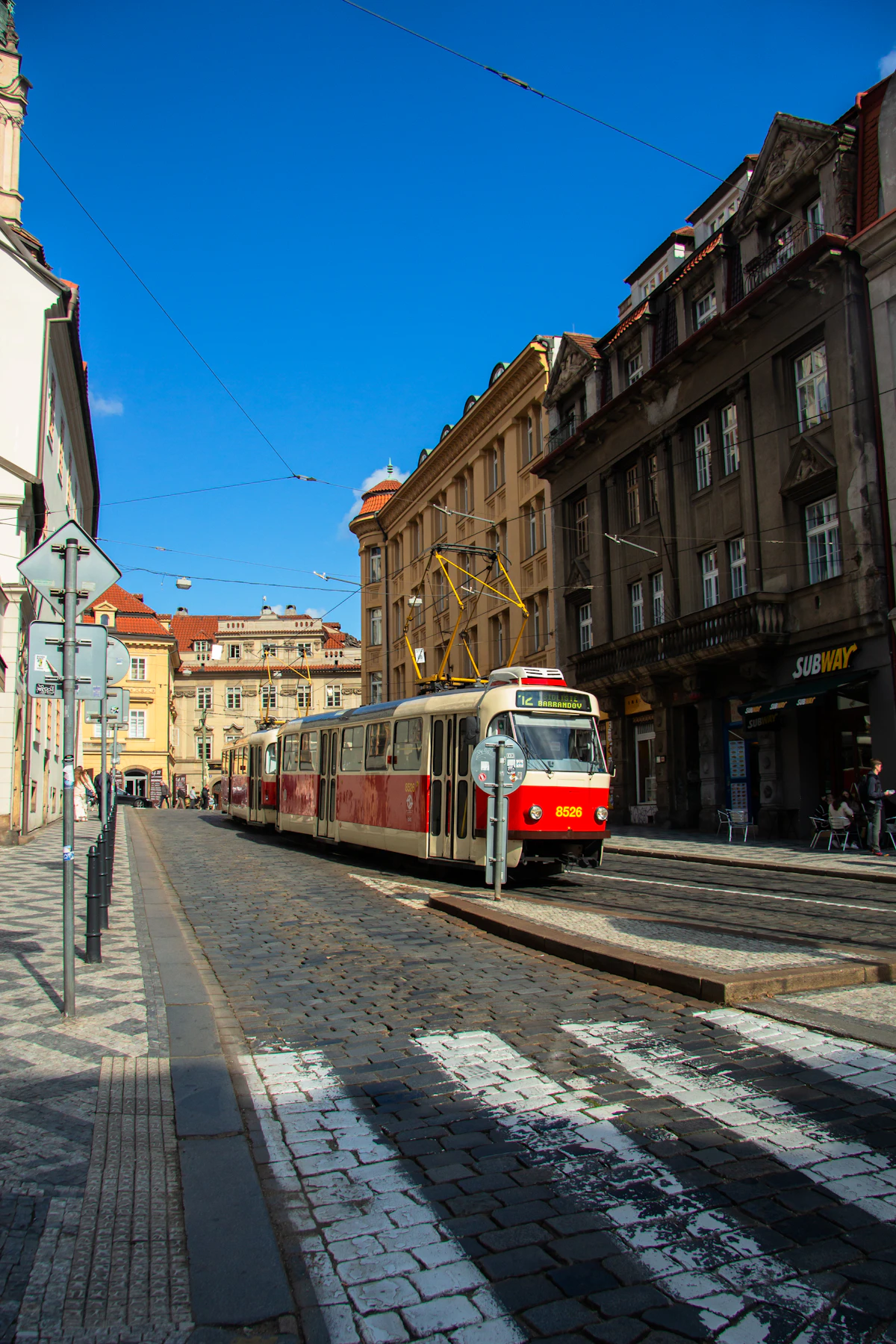
Getting Around Prague in 2026: Transport Guide for Travelers
How to use Prague's metro, trams, and buses as a tourist in 2026. Covers ticket prices, the Litacka app, taxi scam warnings, and getting to the airport.
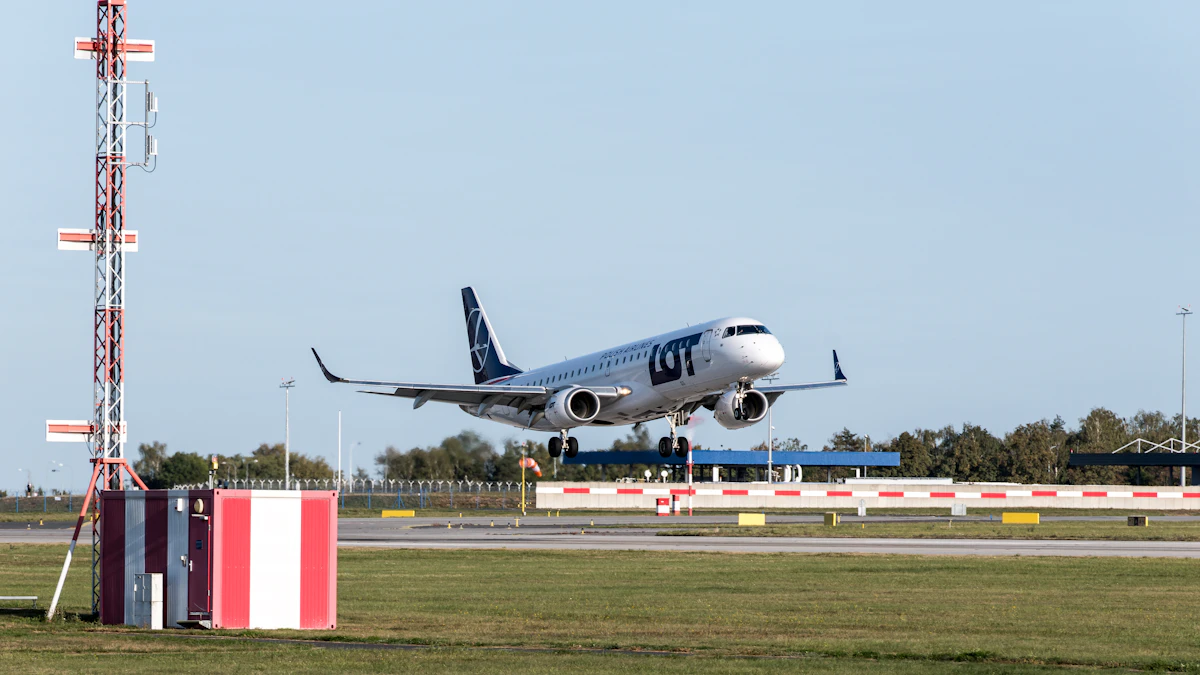
Prague Airport Guide: Arrivals, Transport, and Tips
Navigate Prague Airport like a pro. Compare bus, taxi, and rideshare options to the city center, plus tips on SIM cards, currency exchange, and scam avoidance.
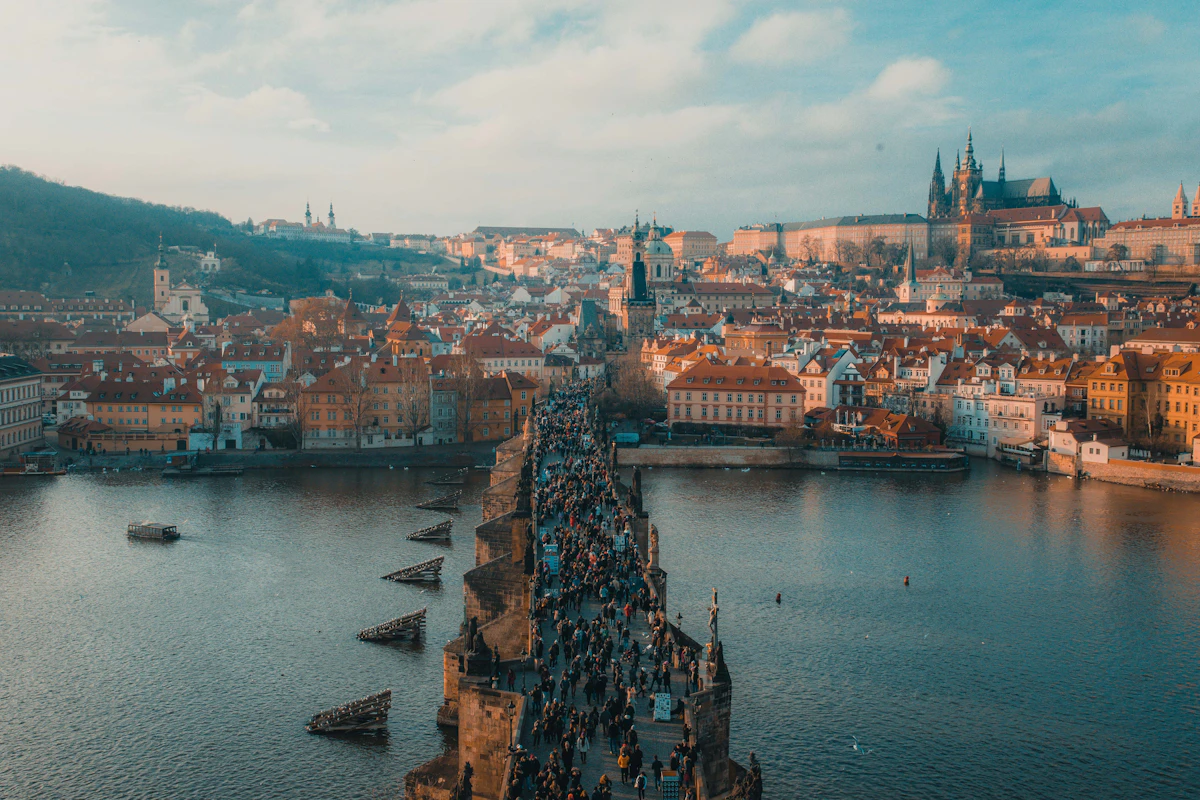
Where to Stay in Prague in 2026: Best Neighborhoods and Hotels
Where should you stay in Prague? Compare 6 neighborhoods by price, vibe, and access to attractions. Updated for 2026 with hotel picks for every budget.