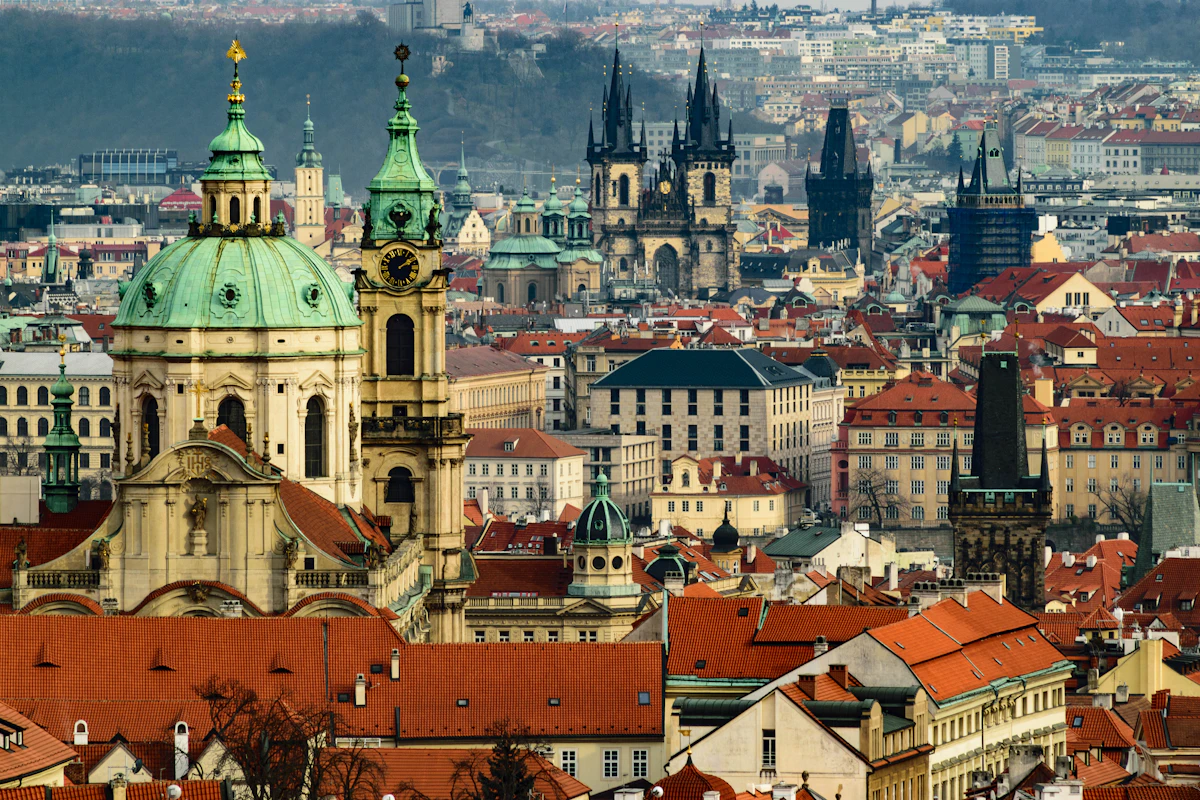
Munich to Prague: Complete Travel Guide for 2026 (Train, Bus, Drive)
Navigate the Bavarian-Bohemian corridor with real prices, schedules, and the best stops between Germany's beer capital and the Czech Republic's golden city
Powered by ITINE
Get this guide as a tappable itinerary
Day-by-day plan, audio tours, and one-tap Google Maps — completely free.
Destinations
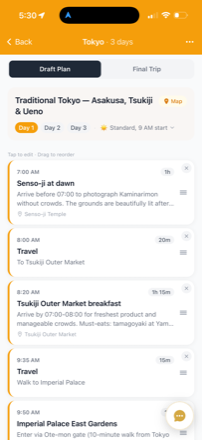
Your Itinerary
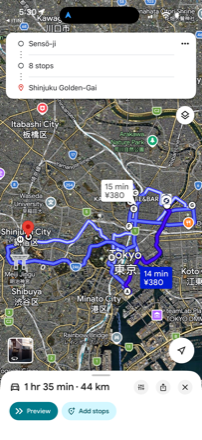
Google Maps
Munich and Prague are closer than most people realize -- just 380 kilometers of motorway or roughly 5 hours by train through a landscape that transitions from Bavarian farmland to Bohemian forest. This is a route with deep historical roots: the same corridor that medieval salt merchants, Habsburg diplomats, and post-war refugees once traveled is now served by modern trains, express buses, and a well-maintained motorway. Yet the connection between these two great Central European cities is surprisingly underserved compared to routes like Munich-Vienna or Prague-Berlin. There is no high-speed rail line, no direct flight worth taking, and the train often requires a change in Nuremberg. None of this makes the journey difficult -- it just means you need to know your options and plan a little more carefully.
This guide covers every practical way to travel from Munich to Prague in 2026, with real prices, actual journey times, booking strategies, and the scenic stops that can transform a transit day into a highlight of your trip. Whether you are connecting two city breaks, continuing a wider European loop, or heading to Prague from Munich Airport, you will find everything you need below.
How Far Is Munich from Prague?
The straight-line distance between Munich and Prague is about 300 kilometers, but all practical routes are longer. By rail, the most common routing via Nuremberg and Cheb or via Regensburg and Plzen covers approximately 380-460 kilometers depending on the service. By road, the A6/E50 motorway route is about 380 kilometers. The two cities sit on opposite sides of the Bohemian Forest (Sumava in Czech, Boehmerwald in German), the ancient mountain range that forms the natural border between Bavaria and Bohemia.
What Is the Best Way to Get from Munich to Prague?
For most travelers, the choice comes down to train versus bus versus car. There is no direct flight worth considering (Munich to Prague flights exist occasionally but are absurd for this distance once you factor in airport time). The bus is the cheapest option and often faster than the train. The train is more comfortable but usually requires a change. Driving is the most flexible and allows for excellent stops along the way. Here is each option in full detail.
How Do You Travel from Munich to Prague by Train?
The train journey from Munich to Prague is comfortable but slightly more complex than you might expect between two major European cities. As of 2026, there are limited direct services and most journeys require one change, typically in Nuremberg (Nurnberg). The total journey time ranges from 5 hours to 6 hours depending on the routing and connection time.
The Nuremberg Route (Most Common)
The most frequent train routing goes from Munich Hauptbahnhof (Hbf) via ICE high-speed train to Nuremberg Hbf (approximately 1 hour 10 minutes), where you change to a Deutsche Bahn (DB) or Ceske drahy (CD) regional express or Alex train onward to Prague via Cheb or Schwandorf. The second leg takes approximately 3 hours 30 minutes to 4 hours, making the total journey time around 5 hours to 5 hours 30 minutes including the connection. Trains via this route run roughly every 2 hours throughout the day.
Deutsche Bahn (DB) is the primary operator for the Munich-Nuremberg ICE leg, and either DB or Ceske drahy (CD) operates the Nuremberg-Prague segment. The DB Sparpreis (advance purchase) fare for the entire Munich-Prague journey starts from 29.90 EUR when booked early. Standard flex tickets run 79-99 EUR. The Ceske drahy website sometimes offers the cross-border ticket at a slightly lower price for the same trains -- always check both sites.
Direct Train Services
There are a small number of direct trains between Munich and Prague, typically 1-2 per day, operated as Alex (Arriva-Landerbahn-Express) or CD EuroCity services routing via Regensburg and Plzen. These take approximately 5 hours 30 minutes to 6 hours but have the significant advantage of no connection to worry about. The Alex service is a regional-quality train -- functional but not luxurious. The CD EuroCity, when running, offers a more comfortable intercity experience with a bistro car. Check the timetable at bahn.de or cd.cz for current direct service availability, as schedules change seasonally.
The Regensburg-Plzen Alternative
An alternative routing goes from Munich via Regensburg and Plzen (Pilsen) to Prague. This is the route used by the direct Alex trains and some CD services. While slightly slower in total journey time (5 hours 30 minutes to 6 hours), it passes through more interesting scenery -- the Bavarian Forest and the rolling Bohemian countryside -- and offers the opportunity to stop in either Regensburg or Plzen, both of which are excellent cities in their own right. If you are not in a rush, this is the more rewarding route.
The Bayern-Bohmen-Ticket: A Budget Hack for Groups
If you are traveling in a group of 2-5 people and prioritize budget over speed, the Bayern-Bohmen-Ticket is remarkable value. This regional day ticket costs 28 EUR for one person, plus 10 EUR for each additional traveler (up to 5 total, so 68 EUR for a group of 5 -- just 13.60 EUR per person). It is valid on all regional trains (RE, RB, S-Bahn) in Bavaria and onward to Prague, but not on ICE, IC, or EC trains. The catch is that the journey using only regional trains takes approximately 7-8 hours with 2-3 changes, routing through Regensburg, Schwandorf, and Plzen. Think of it as a slow scenic journey rather than efficient transport -- bring a book, some snacks, and enjoy the Bavarian and Bohemian countryside rolling past your window.
What About Taking the Bus from Munich to Prague?
The bus is often the most practical option on this corridor -- surprisingly, it is frequently faster than the train (because there is no connection to miss) and significantly cheaper. The journey takes approximately 4 hours 45 minutes to 5 hours 15 minutes on a direct service, which is competitive with or faster than most train options.
FlixBus: The Dominant Operator
FlixBus runs 6-10 direct buses daily between Munich and Prague. Buses depart from the Munich Central Bus Station (ZOB), which is directly adjacent to Munich Hauptbahnhof (a 3-minute walk), and arrive at Prague Florenc bus station, located at the Florenc metro hub (lines B and C). The journey takes 4 hours 45 minutes to 5 hours 15 minutes depending on traffic and the specific route. Some services make an intermediate stop in Nuremberg or Plzen.
FlixBus prices start from as low as 12.99 EUR when booked well in advance, with typical fares running 19-29 EUR. Last-minute tickets rarely exceed 39 EUR. All buses have WiFi, power outlets, and a toilet. The coaches are modern and comfortable enough for a 5-hour journey, though legroom in the standard seats is modest -- if you are tall, try to book an exit row or front-of-bus seat.
RegioJet Bus
RegioJet also operates bus services on the Munich-Prague route, typically 2-4 departures daily. Their buses are generally considered a step above FlixBus in comfort, with wider seats and complimentary hot drinks. Prices start from around 14 EUR for advance bookings, with standard fares of 19-25 EUR. The journey time is similar at approximately 5 hours. Some RegioJet services route via Plzen, which is useful if you want to break the journey there.
Can You Drive from Munich to Prague?
Driving is the fastest and most flexible option, taking approximately 3 hours 30 minutes to 4 hours via the A93 and E50 (or alternatively the A6 via Nuremberg). The most direct motorway route heads northeast from Munich on the A9 to Nuremberg, then east on the A6 which becomes the Czech E50/D5 after the border, continuing through Plzen to Prague. Total distance is about 380 kilometers. An alternative route via Regensburg on the A93/E50 is slightly shorter (about 370 km) and passes through more scenic countryside.
Germany has no motorway tolls (the Autobahn is free for passenger cars), but you will need a Czech e-vignette for the Czech motorways. The 10-day Czech e-vignette costs 310 CZK (approximately 12.50 EUR) and can be purchased online at edalnice.cz -- it is linked to your license plate, so there is no physical sticker needed. Purchase it before crossing the border.
- Distance: approximately 370-380 km depending on route
- Drive time: 3 hours 30 minutes to 4 hours (without stops)
- Fuel cost: approximately 35-45 EUR for a mid-size car (2026 fuel prices)
- German Autobahn: no toll for passenger cars
- Czech e-vignette (10-day): 310 CZK / 12.50 EUR
- Total driving cost: approximately 47-58 EUR one way
- Speed limits: no general limit on German Autobahn (advisory 130 km/h), 130 km/h on Czech motorways
- Parking in Prague: 40-80 CZK/hour in the center; hotel garages 400-700 CZK/night
Is It Worth Flying from Munich to Prague?
No. As of 2026, there are no consistent direct flights between Munich (MUC) and Prague (PRG), and even when they exist, they make no practical sense. Munich Airport is 40 minutes from the city center by S-Bahn, you need 90 minutes for check-in and security, the flight itself is under an hour, and then Prague Airport is 40 minutes from the center by bus. Total door-to-door time: 4-5 hours. Total cost: 100-250+ EUR. The bus does it in 5 hours for 15 EUR. The math simply does not work for this distance. The only exception is if you are connecting through Munich Airport from a long-haul flight and Prague is your next destination -- in that case, check if a connection flight exists, but be aware that a bus or train from Munich city center is almost certainly faster and cheaper.
What Should You See on the Way from Munich to Prague?
The corridor between Munich and Prague passes through two regions with serious cultural and scenic weight: eastern Bavaria and western Bohemia. If you are driving or willing to break your train journey, these stops transform the transit into a destination.
Regensburg: A UNESCO Medieval Marvel
Regensburg sits about 125 kilometers northeast of Munich on the Danube River and holds UNESCO World Heritage status for its remarkably preserved medieval center. The Stone Bridge (Steinerne Brucke), built in the 12th century, was the only permanent crossing of the Danube for centuries and served as the model for Prague's Charles Bridge. The old town is a dense web of medieval tower houses, Gothic churches, and narrow lanes that have barely changed in 600 years. The city has a thriving beer culture -- the Historische Wurstkuche (Historic Sausage Kitchen) next to the Stone Bridge has been grilling sausages since the 12th century and claims to be the world's oldest continuously operating restaurant.
If you are driving, Regensburg is a natural halfway stop. If taking the train, the direct Alex services between Munich and Prague stop at Regensburg Hbf, and you can break your journey here -- spend a few hours exploring the old town and continue to Prague on the next service. Allow at least 3-4 hours for a proper visit.
Plzen (Pilsen): Where Pilsner Was Born
Plzen (known internationally as Pilsen) is the city that gave its name to the world's most popular style of beer. In 1842, a Bavarian brewer named Josef Groll created the first golden lager in the cellars of the Plzensky Prazdroj brewery -- now known globally as Pilsner Urquell -- and changed brewing history forever. The Pilsner Urquell Brewery offers guided tours that include the historic underground cellars, the old copper brewhouse, and a tasting of unfiltered, unpasteurized Pilsner drawn directly from the oak lagering barrels. This is widely considered one of the best brewery tours in Europe.
Beyond beer, Plzen has a handsome main square (Namesti Republiky) anchored by the Gothic Cathedral of St. Bartholomew, whose 102-meter spire is the tallest church tower in the Czech Republic. The city also has an extensive network of medieval underground tunnels (Plzenske historicke podzemni) that can be visited on guided tours. Plzen is about 90 kilometers west of Prague -- easily reached by car or by train (1 hour 10 minutes from Prague, 2 hours 30 minutes from Munich via the direct route). If you are breaking the Munich-Prague journey, Plzen is the most rewarding stop on the Czech side.
Pilsner Urquell Brewery
Brewery & MuseumU Prazdroje 64/7, 301 00 Plzen, Czech Republic
Insider tip: The tour of the historic underground cellars is the highlight -- tasting Pilsner Urquell straight from the oak barrel is a fundamentally different experience from the bottled version. Book in advance, especially on weekends and in summer.
Nuremberg: If You Are Changing Trains Anyway
If you are taking the most common train routing, you will change at Nuremberg Hbf. Rather than rushing between platforms, consider extending your layover into a few hours of sightseeing. Nuremberg's medieval Altstadt (Old Town) is a 10-minute walk from the station, and the city offers the Kaiserburg (Imperial Castle) looming over the old town, the haunting Documentation Centre covering the Nazi Rally Grounds, the Bratwursthaus for the city's famous small grilled sausages, and the Christmas Market (if you are traveling in December). Nuremberg is not as polished as Munich or as atmospheric as Prague, but it has a raw, honest character and a complicated history that rewards attention. Even 2-3 hours is enough to see the castle and the old town core.
What Do You Need to Know About the Border Crossing?
Germany and the Czech Republic are both in the Schengen Area, so there is no border control or passport check. On the train, you will not notice the border at all. On the bus, the same applies -- the coach simply crosses from Germany into the Czech Republic without stopping. If driving, the transition is marked by road signs and a change in language, but there is no checkpoint or barrier. As always in Schengen, carry your passport or national ID card in case of random checks, which are rare but legally required.
Can You Combine Munich and Prague in One Trip?
Munich and Prague are natural companions on a Central European itinerary. Munich offers its beer gardens, Baroque churches, world-class art museums (the Pinakothek galleries), and proximity to the Alps and Bavarian castles. Prague counters with its medieval architecture, Bohemian beer culture, affordable dining, and compact walkability. The two cities share a deep beer tradition but express it in completely different ways -- Munich through its grand beer halls and garden culture, Prague through its intimate hospody (pubs) and craft beer revolution.
Sample 8-Day Munich + Prague Itinerary
- Days 1-3: Munich -- Marienplatz and the Glockenspiel, Nymphenburg Palace, a day at the Deutsches Museum, evening at Augustiner Braustuben or Hofbrauhaus, optional day trip to Neuschwanstein Castle
- Day 4: Morning in Munich, midday FlixBus or train to Prague via Regensburg or Plzen (stop for a few hours if driving), arrive Prague by evening
- Days 5-7: Prague -- Old Town Square, Prague Castle complex, Charles Bridge at dawn, Vinohrady neighborhood for local pubs, half-day trip to Kutna Hora
- Day 8: Departure from Prague, or continue to Vienna/Berlin/Krakow
- Variation: Swap the order if flying into Prague and out of Munich -- this works equally well in reverse
Which Station Do You Arrive at in Prague?
Trains from Munich arrive at Praha hlavni nadrazi (Prague Main Station), the city's central railway hub. The station sits on metro line C (red) and is a 15-minute walk from Wenceslas Square and the Old Town. Some services may also stop at Praha-Smichov or Praha-Holesovice, depending on the routing. Buses from FlixBus and RegioJet arrive at Prague Florenc bus station, which is conveniently located at the Florenc metro interchange (lines B and C). From either arrival point, you are well connected to the rest of the city. Our Prague transport guide covers metro tickets, the Litacka app, and tram connections.
What About Currency and Payments?
Germany uses the Euro (EUR) and the Czech Republic uses the Czech Koruna (CZK). As of 2026, 1 EUR is approximately 25 CZK. When you arrive in Prague, withdraw CZK from an ATM (look for banks like Komercni banka, CSOB, or Ceska sporitelna -- avoid the Euronet ATMs which charge higher fees). Cards are widely accepted in Prague, but always choose to pay in CZK when the terminal offers a choice -- never accept Dynamic Currency Conversion (DCC) in EUR, which adds a 3-7% markup. See our Prague travel tips for detailed money advice.
When Should You Book Munich-to-Prague Transport?
For Deutsche Bahn Sparpreis fares, book as early as possible -- tickets are released 180 days before departure, and the 29.90 EUR fares sell out within the first few weeks for popular departures. For FlixBus and RegioJet buses, booking 2-3 weeks ahead typically secures the best prices. Peak travel times on this route include summer weekends (June-August), Oktoberfest period (mid-September to early October, when Munich accommodation and transport are at a premium), the Christmas markets season (late November through December), and Easter week. Midweek departures are consistently cheaper and less crowded.
What Are the Best Booking Platforms?
- Deutsche Bahn (bahn.de/en) -- essential for train tickets; Sparpreis fares only available here or via the DB Navigator app
- Ceske drahy (cd.cz/en) -- Czech railways; sometimes offers lower prices for the same cross-border trains. Also useful for onward Czech connections
- FlixBus (flixbus.com) -- largest bus network; 6-10 daily Munich-Prague departures. Book via website or app
- RegioJet (regiojet.com) -- Czech operator with 2-4 daily buses; slightly better comfort and free hot drinks
- Omio (omio.com) -- aggregator comparing trains and buses; useful for quick comparison but occasionally has a small markup
- Bayern-Bohmen-Ticket -- purchase at bahn.de, DB ticket machines, or DB station counters. Only valid on regional trains (not ICE/IC)
Tips for Traveling with Luggage
Deutsche Bahn ICE trains have luggage racks above seats and larger storage areas between carriages. There are no strict luggage limits but space can be tight on busy services -- board early to secure space for large bags. On the regional trains used for the Bayern-Bohmen-Ticket route, luggage space is more limited. FlixBus allows one carry-on and one checked bag in the luggage compartment for free, with additional bags at 2-4 EUR each. RegioJet buses have similar policies. If you arrive in Prague needing luggage storage, the main station has lockers (40-80 CZK for 24 hours) and a staffed left-luggage office.
What If You Are Coming from Munich Airport?
If you are arriving at Munich Airport (MUC) and heading directly to Prague, the most efficient route is: take the S-Bahn S1 or S8 from the airport to Munich Hauptbahnhof (approximately 45 minutes, covered by any Munich public transport day ticket at 15.50 EUR or the Airport-City-Day-Ticket at 14.80 EUR). From the Hauptbahnhof, walk 3 minutes to the ZOB (central bus station) for a FlixBus or RegioJet bus to Prague. Total journey time from landing to Prague: approximately 7-8 hours including airport processing, S-Bahn, and the bus. Alternatively, take the S-Bahn to Hbf and board a train. There is no direct bus or train from Munich Airport to Prague.
Summary: Which Option Should You Choose?
If you want the best balance of speed, comfort, and price: take FlixBus or RegioJet bus, booked 2 weeks ahead (from 13-15 EUR, about 5 hours, direct). If you prefer train travel and want flexibility: book a DB Sparpreis ticket via Nuremberg (from 29.90 EUR, about 5-5.5 hours). If you are traveling in a group on a budget: the Bayern-Bohmen-Ticket is unbeatable value for 2-5 people on regional trains. If you want scenic stops: drive via Regensburg and Plzen, or break the train journey at either city. If you want the fastest option: drive (3.5-4 hours).
Frequently Asked Questions
The journey takes approximately 5 to 5 hours 30 minutes with one change in Nuremberg. Direct trains (when available) take about 5 hours 30 minutes to 6 hours via Regensburg and Plzen. The Bayern-Bohmen-Ticket regional route takes 7-8 hours.
FlixBus advance fares start from 12.99 EUR. For groups of 2-5, the Bayern-Bohmen-Ticket on regional trains offers the lowest per-person cost (from 13.60 EUR each for 5 people). RegioJet buses start from 14 EUR, and Deutsche Bahn Sparpreis train tickets from 29.90 EUR.
There are limited direct services (1-2 per day) via Regensburg and Plzen, operated as Alex or CD EuroCity trains. Most connections require a change in Nuremberg. Check bahn.de or cd.cz for current direct service availability.
The bus is often the better choice: it is direct (no connections), typically faster (5 hours vs 5-5.5 hours with a train change), and cheaper (from 13 EUR vs 30 EUR). The train is more comfortable and scenic, especially if you take the route via Regensburg. If you have a rail pass, the train is the obvious choice.
Yes, on Deutsche Bahn and Ceske drahy services. The ICE to Nuremberg and the onward Alex or CD trains accept rail passes. A seat reservation (approximately 4.50 EUR) is recommended but not always mandatory. RegioJet and FlixBus do not accept rail passes.
A regional day ticket costing 28 EUR for one person plus 10 EUR per additional person (up to 5). It is valid on all regional trains in Bavaria and onward to Prague, but not on ICE or IC trains. The journey takes 7-8 hours with changes. Best for budget groups who enjoy slow travel.
Both Germany and the Czech Republic are in the Schengen Area, so there is no border control. However, always carry your passport or national ID card as you are legally required to be able to identify yourself, and random checks can occur.
Most trains arrive at Praha hlavni nadrazi (Prague Main Station), which is on metro line C (red). Some services may also stop at Praha-Smichov. Buses arrive at Prague Florenc, at the Florenc metro interchange (lines B and C).
Absolutely. Pilsen (Plzen) is the birthplace of Pilsner beer, and the Pilsner Urquell Brewery tour is one of the best in Europe. The city also has a beautiful main square, a Gothic cathedral, and medieval underground tunnels. Allow 3-5 hours for a brewery tour, lunch, and a walk around the center.
Approximately 47-58 EUR one way, including fuel (35-45 EUR) and a Czech e-vignette (310 CZK / 12.50 EUR for 10 days). German Autobahn has no toll for cars. Add parking in Prague at 400-700 CZK per night for hotel garages.
There is no general speed limit on the German Autobahn, but advisory speed is 130 km/h and many sections have posted limits. Once you cross into the Czech Republic, the motorway speed limit is 130 km/h, strictly enforced by speed cameras. Headlights must be on at all times in the Czech Republic.
Prague uses the Czech Koruna (CZK), not the Euro. As of 2026, 1 EUR equals approximately 25 CZK. Use bank ATMs to withdraw CZK, avoid Euronet ATMs and exchange booths at stations, and always pay in CZK when given the choice on card terminals.
It is not practical. The fastest option (driving) takes 3.5 hours each way, leaving minimal time in the destination city. The bus takes 5 hours each way. Both cities deserve at least 2-3 full days of exploration.
Morning departures (8:00-10:00 AM) arrive in Prague by early afternoon, giving you a full half-day. Avoid traveling during Oktoberfest (mid-September to early October) when Munich transport is at peak capacity. Midweek departures are cheaper and less crowded.
Yes. Regensburg has a UNESCO-listed medieval old town, a 12th-century Stone Bridge, and one of Germany's oldest restaurants (the Historische Wurstkuche). It is about halfway between Munich and Prague by car, making it a natural lunch stop. Allow 3-4 hours for a visit.
For the best train prices, book as soon as tickets open (180 days ahead for DB). For buses, booking 2-3 weeks ahead is usually sufficient. During peak periods (summer, Oktoberfest, Christmas), book as early as possible.
James Whitfield
Travel Writer & Prague Resident · Vinohrady, Prague
James moved to Prague in 2017 after a decade of travel writing across Central Europe. A former editor at Wanderlust Magazine, he now writes practical travel guides drawn from eight years of navigating the city's tram network, budget pubs, and bureaucratic quirks.
You might also enjoy
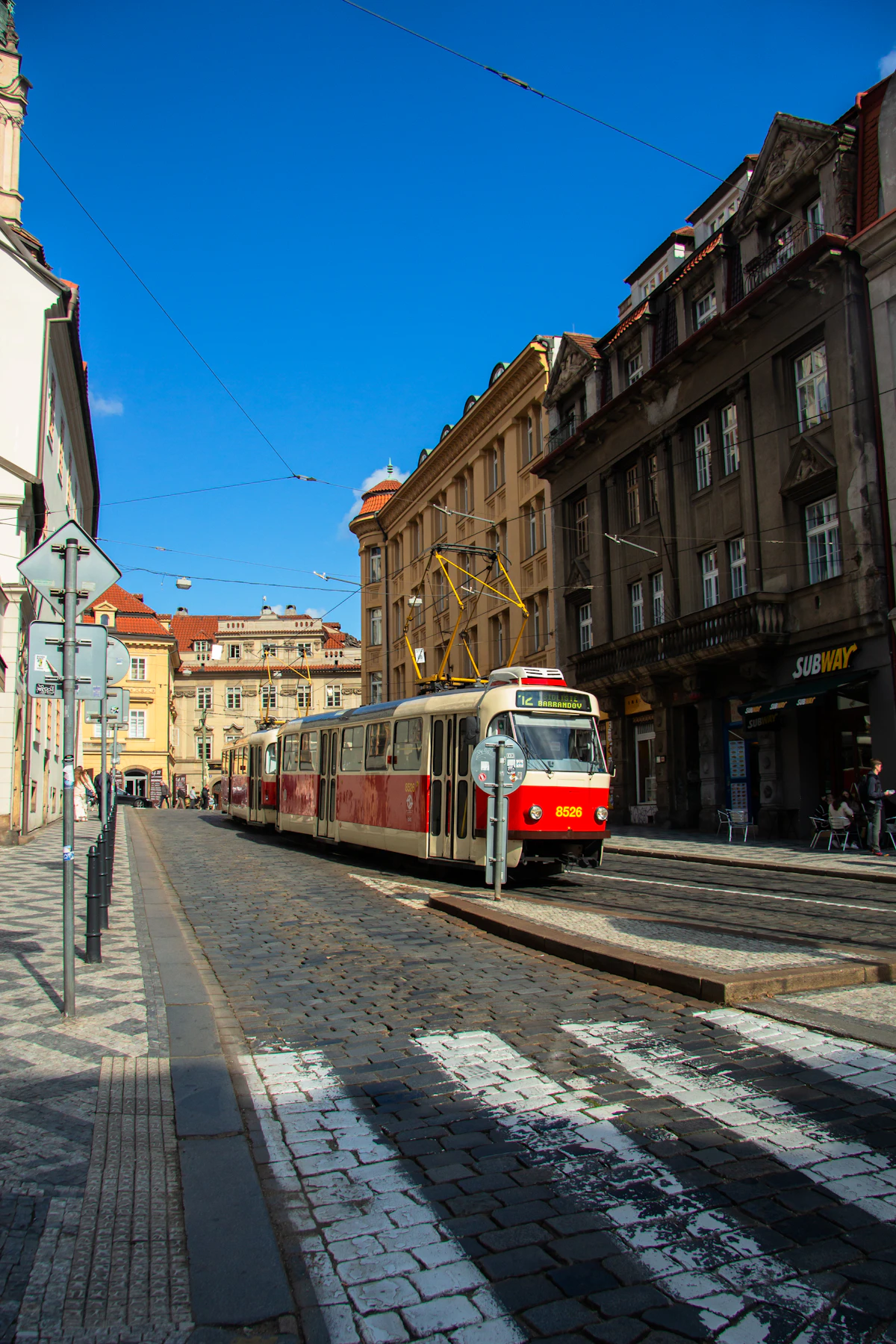
Getting Around Prague in 2026: Transport Guide for Travelers
How to use Prague's metro, trams, and buses as a tourist in 2026. Covers ticket prices, the Litacka app, taxi scam warnings, and getting to the airport.
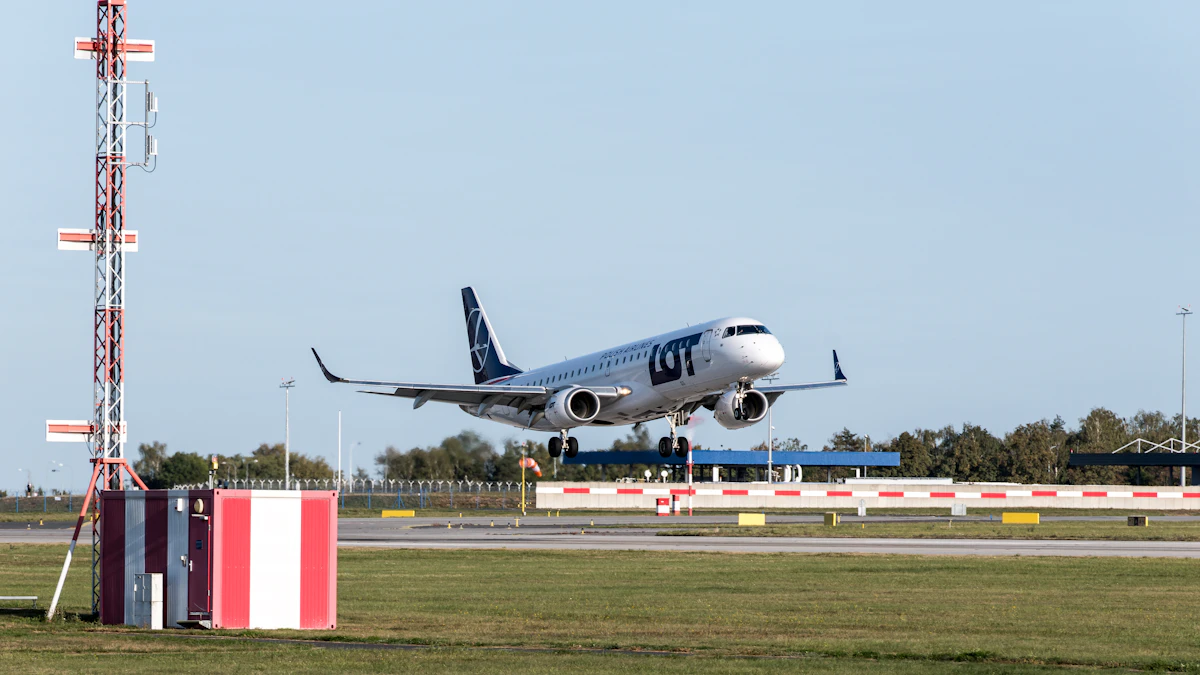
Prague Airport Guide: Arrivals, Transport, and Tips
Navigate Prague Airport like a pro. Compare bus, taxi, and rideshare options to the city center, plus tips on SIM cards, currency exchange, and scam avoidance.
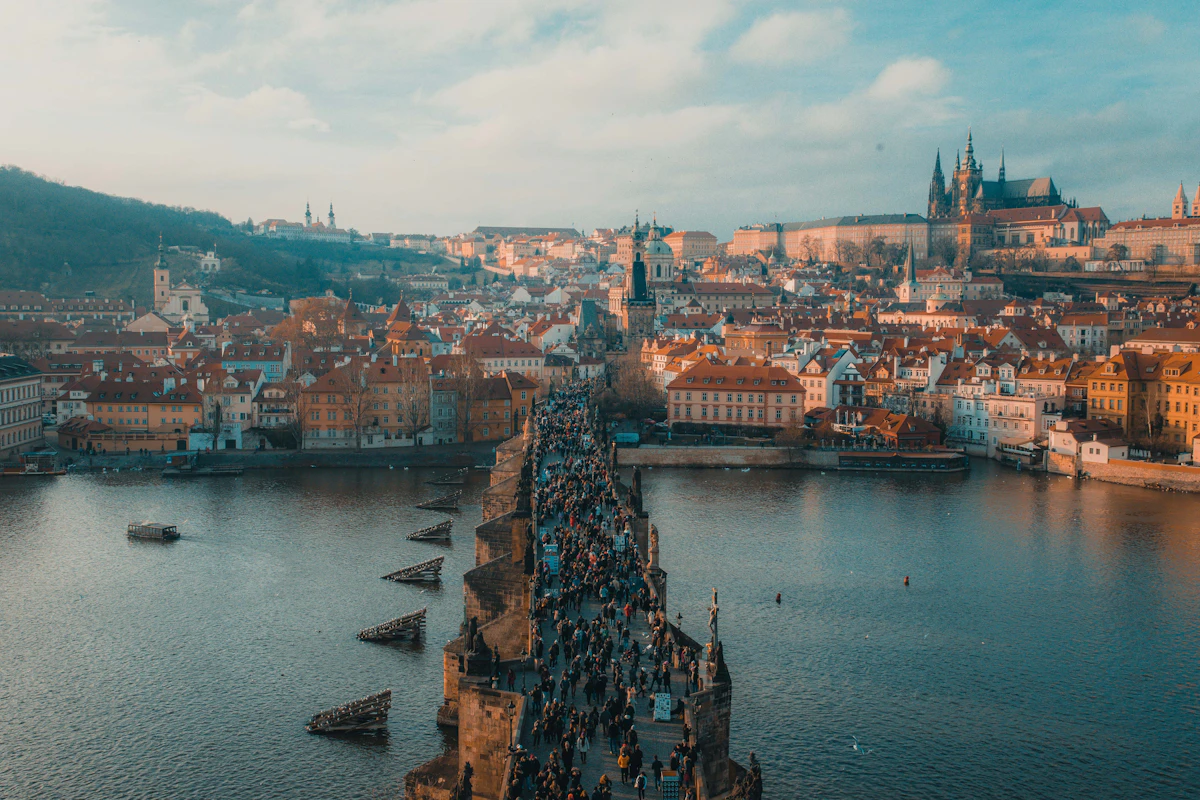
Where to Stay in Prague in 2026: Best Neighborhoods and Hotels
Where should you stay in Prague? Compare 6 neighborhoods by price, vibe, and access to attractions. Updated for 2026 with hotel picks for every budget.