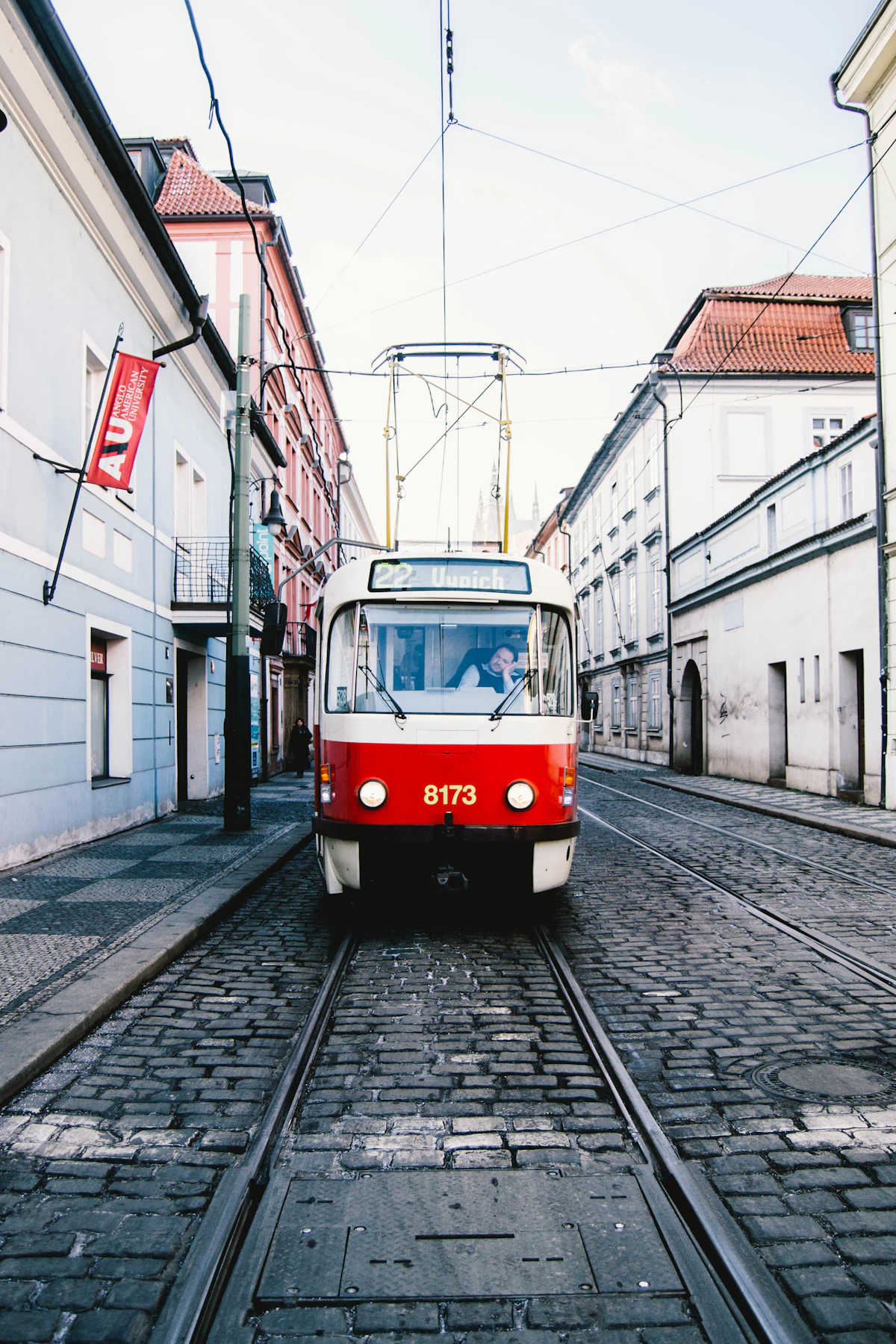
Berlin to Prague: How to Get There in 2026 (Train, Bus, Drive, Fly)
Two of Europe's most compelling capitals are just four hours apart -- here is every way to travel between them, with prices, scenic detours, and the details that matter
Powered by ITINE
Get this guide as a tappable itinerary
Day-by-day plan, audio tours, and one-tap Google Maps — completely free.
Destinations
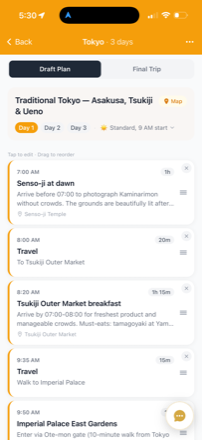
Your Itinerary
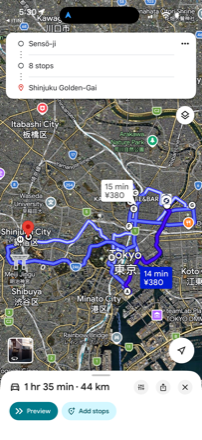
Google Maps
Berlin and Prague are connected by one of the great railway corridors of Central Europe. The distance is modest -- about 350 kilometers by road -- and the direct train covers it in roughly 4 hours 30 minutes, cutting through the Elbe Valley and the sandstone towers of Saxon Switzerland on what is widely considered one of the most scenic rail routes in Germany. This is not a journey to sleep through. It is also one of the most competitively served routes in the region, with frequent trains, cheap buses, and a motorway that makes driving straightforward. Whether you are connecting two city breaks, continuing a loop through Central Europe, or heading from Berlin to catch a Prague-bound adventure, this guide covers every practical option with real prices, actual journey times, and the scenic stops that elevate the trip from transit to experience.
How Far Is Berlin from Prague?
The straight-line distance between Berlin and Prague is approximately 280 kilometers. By rail, the direct route via Dresden and Bad Schandau covers about 350 kilometers. By road via the A13 and D8 motorways, the driving distance is about 350 kilometers. The route follows the Elbe River for a significant stretch on the German side, passing through Saxony and crossing into Bohemia through the Elbe Sandstone Mountains -- a landscape of dramatic rock formations, deep valleys, and hilltop fortresses that straddles the German-Czech border.
What Is the Best Way to Get from Berlin to Prague?
The direct train is the best option for most travelers. It is fast (4 hours 20 minutes to 4 hours 40 minutes), runs multiple times daily, goes from city center to city center, and the section through Saxon Switzerland is genuinely beautiful. The bus is cheaper but slower. Driving offers flexibility and scenic stops. Flying exists but is irrational for this distance. Here is each option in full detail.
How Do You Travel from Berlin to Prague by Train?
The Berlin-Prague train is everything European rail travel should be: a direct, comfortable, scenic journey between two major capitals with no changes required. Deutsche Bahn (DB) and Ceske drahy (CD) jointly operate EuroCity (EC) trains on this route, with departures roughly every 2 hours throughout the day. The trains run from Berlin Hauptbahnhof (Hbf) to Praha hlavni nadrazi (Prague Main Station), with stops at Dresden Hauptbahnhof, Bad Schandau, Decin, and Usti nad Labem along the way.
The total journey time is approximately 4 hours 20 minutes to 4 hours 40 minutes. The trains are proper intercity stock with comfortable seating, a bistro car or trolley service, power outlets (in newer carriages), and large windows perfect for the scenic Elbe Valley section. First class offers wider seats, more legroom, and a quieter atmosphere. Second class is perfectly comfortable for a 4.5-hour journey.
What Does the Berlin-Prague Train Cost?
Deutsche Bahn offers Sparpreis (saver) fares from 19.90 EUR when booked in advance at bahn.de or via the DB Navigator app. These tickets are released up to 180 days before departure and the cheapest allocations sell fast, especially for weekend departures. Standard Flexpreis tickets cost 59-79 EUR for second class and 89-119 EUR for first class. The Czech railways website (cd.cz) sometimes offers the same trains at slightly different prices -- always check both. CD also occasionally runs promotions on this route, particularly for off-peak departures.
Should You Reserve a Seat on the Berlin-Prague Train?
Seat reservations on the Berlin-Prague EuroCity trains are optional but strongly recommended, especially for weekend departures, summer travel, and any departure on a Friday or Sunday. A reservation costs 4-4.50 EUR on Deutsche Bahn and can be added when purchasing your ticket or separately afterward. Without a reservation, you can still board and sit in any unreserved seat, but the train can fill up and you may end up standing or sitting in a less desirable spot. For the best scenic views, reserve a window seat on the left side of the train (facing the direction of travel) -- this gives you the best views of the Elbe Valley and Saxon Switzerland between Dresden and the Czech border.
What Is the Train Journey Like?
The first 2 hours from Berlin to Dresden are straightforward -- flat Saxon countryside, industrial towns, and suburban sprawl. The journey becomes interesting after Dresden. South of the city, the tracks follow the Elbe River into a narrow valley flanked by vertical sandstone cliffs. This is the Elbsandsteingebirge (Elbe Sandstone Mountains), a landscape of eroded rock towers, mesa-like formations, and deep gorges shared between Germany's Saxon Switzerland National Park and the Czech Republic's Bohemian Switzerland. The train passes through tunnels carved into the rock, hugs the riverbank past the medieval fortress of Konigstein, and stops at Bad Schandau, a spa town that serves as the gateway to the national park.
After Bad Schandau, the train crosses the German-Czech border (no stop, no passport check -- you are in the Schengen Area) and enters the Czech section of the Elbe Valley. The landscape remains dramatic past Decin, where the Elbe meets the Ploucnice River beneath a hilltop castle. From Usti nad Labem onward, the scenery transitions to the gentler Czech countryside -- orchards, small towns, factory chimneys -- before the suburban outskirts of Prague appear and the train pulls into the grand Art Nouveau hall of Praha hlavni nadrazi.
What About Taking the Bus from Berlin to Prague?
Long-distance buses are the budget alternative, with journey times of approximately 4 hours 30 minutes to 5 hours depending on the operator, route, and traffic. The bus cannot match the train's scenic Elbe Valley routing (buses take the motorway instead), but the price difference can be significant.
FlixBus: The Main Bus Operator
FlixBus operates 8-14 direct buses daily between Berlin and Prague, making this one of the most frequently served bus routes in Central Europe. Buses depart from the Berlin Central Bus Station (ZOB) at Funkturm in the Charlottenburg district (accessible via S-Bahn to Messe Nord/ICC or U2 to Kaiserdamm) and arrive at Prague Florenc bus station. Some departures also pick up at Berlin Sudkreuz or Berlin Alexanderplatz. The journey takes 4 hours 30 minutes to 5 hours. Most services stop in Dresden along the way.
FlixBus prices on this route start from an impressively low 9.99 EUR when booked 3-4 weeks in advance. Typical fares run 14-24 EUR, and last-minute tickets rarely exceed 34 EUR. All coaches have WiFi, power outlets, and a toilet. The ride is comfortable enough for the duration, though the motorway route via the A13 and D8 lacks the scenic drama of the train's Elbe Valley path.
RegioJet Bus
RegioJet runs 3-5 daily bus services between Berlin and Prague, with prices starting from around 12 EUR for advance bookings and typically running 17-25 EUR. The journey time is similar at approximately 4 hours 45 minutes. RegioJet buses are known for wider seats, free hot drinks, and a generally more comfortable ride than FlixBus. Some services stop in Dresden, which is useful for breaking the journey.
Can You Drive from Berlin to Prague?
Driving is straightforward and takes approximately 3 hours 30 minutes to 4 hours without stops. The most direct route follows the A13 south from Berlin through Saxony, transitions to the A17 south of Dresden (which leads through the Ore Mountains with some impressive bridge engineering), crosses the Czech border, and becomes the D8 motorway heading south through Usti nad Labem to Prague. Total distance is about 350 kilometers.
The German Autobahn is toll-free for passenger cars. You will need a Czech e-vignette for the Czech motorways: the 10-day option costs 310 CZK (approximately 12.50 EUR) and can be purchased online at edalnice.cz before you cross the border. Buy it in advance -- there are no toll booths at the border and driving on Czech motorways without a valid e-vignette risks an on-the-spot fine.
- Distance: approximately 350 km via the A13/A17/D8 route
- Drive time: 3 hours 30 minutes to 4 hours (without stops)
- Fuel cost: approximately 30-40 EUR for a mid-size car (2026 fuel prices)
- German Autobahn: no toll for passenger cars
- Czech e-vignette (10-day): 310 CZK / 12.50 EUR
- Total driving cost: approximately 42-53 EUR one way
- Speed limits: advisory 130 km/h on German Autobahn (many sections with posted limits), 130 km/h on Czech motorways (strictly enforced)
- Parking in Prague: 40-80 CZK/hour in the center; hotel garages 400-700 CZK/night
Is It Worth Flying from Berlin to Prague?
No. As of 2026, there are very few direct flights between Berlin Brandenburg (BER) and Prague (PRG), and even when they exist, the economics and logistics are terrible. Berlin Brandenburg Airport is 30-40 minutes from the city center by train. Add 90 minutes for check-in and security, a 55-minute flight, 20 minutes for baggage claim, and 40 minutes from Prague Airport to the city center. Door-to-door time: 4-5 hours. Cost: 80-200+ EUR. The direct train does it in 4 hours 30 minutes for as little as 19.90 EUR, takes you from city center to city center, and shows you Saxon Switzerland along the way. There is no scenario where flying makes sense unless you are connecting through one of the airports from a long-haul origin.
If you are arriving at Prague Airport from an international flight, our Prague airport guide covers all the transfer options to the city center.
What Is the Cheapest Way to Get from Berlin to Prague?
FlixBus advance fares from 9.99 EUR are the absolute cheapest. RegioJet buses from 12 EUR are close behind with better comfort. DB Sparpreis train tickets from 19.90 EUR offer the best value if you factor in comfort, scenery, and the fact that you arrive in the heart of both cities. For groups of 3-4 sharing a car, driving can work out to roughly 12-15 EUR per person. Here is the ranked breakdown.
- FlixBus (advance): from 9.99 EUR -- cheapest absolute price, 4.5-5 hours, motorway route
- RegioJet Bus (advance): from 12 EUR -- better comfort, free hot drink, 4.75 hours
- Driving (per person, 3-4 sharing): from 12-15 EUR -- flexible stops, 3.5-4 hours
- DB Sparpreis train (advance): from 19.90 EUR -- best overall value, scenic Elbe Valley, 4.5 hours
- CD train (advance via cd.cz): from 19 EUR -- sometimes cheaper than DB for the same train
- DB Flexpreis train (standard): 59-79 EUR -- full flexibility, refundable, same 4.5-hour journey
- Flying: 80-200+ EUR -- irrational for this distance
What Should You See on the Way from Berlin to Prague?
The Berlin-Prague corridor passes through Saxony, one of Germany's most culturally rich states, and the border region contains some of the most dramatic natural scenery in Central Europe. If you are driving or willing to break your train journey, these stops are exceptional.
Saxon Switzerland: The Bastei Bridge and Beyond
Saxon Switzerland (Sachsische Schweiz) is the German half of the Elbe Sandstone Mountains, a national park of vertical rock pillars, deep gorges, flat-topped mesas, and forested valleys that looks like something from a fantasy novel. The most famous landmark is the Bastei Bridge, a 19th-century stone bridge spanning a 40-meter-deep chasm between sandstone pillars, with panoramic views over the Elbe River 194 meters below. The bridge is accessible via a well-marked trail from the Bastei car park (about a 15-minute walk) and the views are extraordinary.
Beyond the Bastei, the park offers hundreds of kilometers of hiking trails ranging from gentle riverside walks to challenging routes through rock labyrinths and along exposed ridgelines. The Konigstein Fortress -- one of Europe's largest hilltop fortifications, perched on a flat-topped mesa rising 240 meters above the Elbe -- is another highlight, accessible by car, bus, or a short ferry ride and steep walk from the riverside.
If you are driving, Saxon Switzerland is an easy detour. Exit the A17 at Pirna (about 30 minutes south of Dresden) and follow signs to the Bastei or Konigstein. Allow 2-4 hours for a visit depending on how much hiking you want to do. If you are on the train, get off at Bad Schandau (the EuroCity stops here) and take the bus or walk to the national park trailheads. You can continue to Prague on the next EuroCity train a couple of hours later -- just make sure you have a flexible ticket or have booked separate legs.
Dresden: The Baroque Phoenix
Dresden is roughly halfway between Berlin and Prague and one of the most rewarding cities in Germany. Devastated by Allied bombing in February 1945, the city has spent decades meticulously reconstructing its Baroque center. The Frauenkirche (Church of Our Lady), completed in its reconstruction in 2005, is the most powerful symbol of this rebirth -- a soaring Baroque dome that was deliberately left as a ruin for 50 years as a war memorial before being rebuilt stone by stone. The Zwinger Palace houses one of Europe's great art collections, including Raphael's Sistine Madonna. The Semperoper is one of the world's most important opera houses. The Green Vault (Grunes Gewolbe) in the Royal Palace contains an astonishing collection of treasures.
Dresden is a standard stop on the Berlin-Prague EuroCity train (about 2 hours from Berlin, 2 hours 15 minutes from Prague). Breaking the journey here is easy: simply book two separate tickets (Berlin-Dresden and Dresden-Prague) and spend a few hours or an overnight in the city. Allow at least half a day for the Frauenkirche, the Zwinger, and a walk along the Bruhlsche Terrasse (the 'Balcony of Europe') overlooking the Elbe. The Neustadt (New Town) across the river has Dresden's best restaurants, bars, and street art.
Frauenkirche Dresden
Church & LandmarkNeumarkt, 01067 Dresden, Germany
Insider tip: The church interior is impressive, but climbing the dome for the 360-degree view over Dresden and the Elbe is the real reward. The dome climb involves a mix of stairs and ramps and takes about 30 minutes round trip. Go on a clear day.
Can You Combine Berlin and Prague in One Trip?
Berlin and Prague are one of the best two-city combinations in Europe. They share a border but could not be more different in character. Berlin is sprawling, raw, avant-garde, haunted by 20th-century history, and perpetually reinventing itself. Prague is compact, medieval, golden-hued, and layered with centuries of Bohemian culture. Berlin's nightlife is legendary; Prague's beer culture is unmatched. Berlin's museums cover everything from ancient Babylon to the Cold War; Prague's architecture is the museum. Together, they give you an extraordinary sweep of Central European history and culture in two cities connected by a single, beautiful train ride.
Sample 8-Day Berlin + Prague Itinerary
- Days 1-3: Berlin -- Museum Island (Pergamon, Neues Museum), East Side Gallery, Brandenburg Gate, Checkpoint Charlie and the DDR Museum, Kreuzberg for street food and nightlife, a full day at Charlottenburg Palace and gardens
- Day 4: Morning train from Berlin Hbf to Dresden (2 hours), half-day exploring the Frauenkirche, Zwinger, and Neustadt. Late afternoon train to Prague (2 hours 15 minutes), evening arrival
- Days 5-7: Prague -- Old Town Square and Astronomical Clock, Prague Castle complex (St. Vitus Cathedral, Golden Lane), Charles Bridge at dawn, Vinohrady neighborhood for local pubs and restaurants, day trip to Kutna Hora or Cesky Krumlov
- Day 8: Departure from Prague
- Alternative: skip Dresden and take the direct 4.5-hour train, using the saved time for a hike in Saxon Switzerland (get off at Bad Schandau, explore for 3-4 hours, continue to Prague)
Which Station Do You Arrive at in Prague?
Berlin-Prague trains arrive at Praha hlavni nadrazi (Prague Main Station), the city's central railway hub located on metro line C (red). The station is a 10-minute walk downhill to Wenceslas Square and the Old Town. The metro connects you to the rest of the city in minutes -- one stop to Muzeum (transfer to line A for Mala Strana and the Castle), two stops to Florenc (transfer to line B). Buses arrive at Prague Florenc bus station at the Florenc metro interchange (lines B and C). From either point, our Prague transport guide covers everything you need to know about metro tickets, the Litacka app, and tram connections.
If this is your first time in Prague, the walk from the main station down to Wenceslas Square is a fine introduction to the city. Exit through the front of the station and head downhill along Jeruzalemska or Washingtonova -- within 5 minutes you will be on the upper end of Wenceslas Square, with the National Museum at your back and the boulevard stretching toward the Old Town ahead.
What Do You Need to Know About the Border Crossing?
Germany and the Czech Republic are both in the Schengen Area, so there is no border control, no passport check, and no stop at the border on trains, buses, or when driving. On the train, the transition happens somewhere between Bad Schandau and Decin -- you will notice the landscape change and the station signs switch from German to Czech, but there is no interruption to the journey. Always carry your passport or national ID card, as random spot checks are legally possible, but in practice you will not encounter any border formalities.
What About Currency and Payments?
Germany uses the Euro (EUR) and the Czech Republic uses the Czech Koruna (CZK). As of 2026, 1 EUR is approximately 25 CZK. When you arrive in Prague, use a bank ATM (Komercni banka, CSOB, Ceska sporitelna) to withdraw CZK at the interbank rate. Avoid the Euronet ATMs which charge elevated fees and push unfavorable Dynamic Currency Conversion. When paying by card, always pay in CZK -- never accept the option to pay in EUR, which adds a 3-7% hidden markup. Our Prague travel tips guide covers money matters in detail.
When Should You Book Berlin-to-Prague Transport?
Deutsche Bahn Sparpreis fares are released 180 days before departure. For the Berlin-Prague route, the 19.90 EUR tickets sell out fast for popular departures -- especially Friday and Sunday trains, summer weekends, and the Christmas markets period (late November through December). Set a calendar reminder and book on the day your date opens for the best price. FlixBus and RegioJet fares are most affordable 2-3 weeks ahead but do not sell out as fast as train tickets.
For flexibility, DB Flexpreis tickets are fully refundable before departure. FlixBus tickets can be rebooked for a fee. RegioJet offers various fare tiers including refundable options. If your travel dates are firm, always book the Sparpreis advance fare -- the savings compared to Flexpreis are substantial (19.90 EUR vs. 59-79 EUR for the same seat on the same train).
What Are the Best Booking Platforms?
- Deutsche Bahn (bahn.de/en) -- essential for Sparpreis fares; also available via the DB Navigator app. Best platform for the Berlin-Prague train
- Ceske drahy (cd.cz/en) -- sometimes offers the same EuroCity trains at a lower price. Also useful for Czech domestic connections onward from Prague
- FlixBus (flixbus.com) -- largest bus network; 8-14 daily Berlin-Prague departures. Mobile app with instant booking
- RegioJet (regiojet.com) -- Czech operator; 3-5 daily buses with better comfort. Free hot drinks and wider seats
- Omio (omio.com) -- aggregator comparing train and bus options side by side; useful for quick comparison
- Trainline (thetrainline.com) -- another aggregator; good for multi-country European rail itineraries
Can You Do Berlin to Prague as a Day Trip?
A day trip is theoretically possible but not recommended. The 4.5-hour journey each way leaves only a few hours in the destination. Taking the earliest morning train (around 6:30 AM from Berlin) and the last evening train back (around 18:30 from Prague) gives you roughly 7-8 hours in Prague, which is enough for a compressed Old Town walk, Charles Bridge, and a quick visit to Prague Castle -- but you will spend 9 hours in transit for 7 hours of sightseeing. Both cities deserve far more time. If you must do a day trip, Prague is the better destination since its compact center packs more into a shorter walking distance than Berlin's spread-out layout.
Tips for Traveling with Luggage
The Berlin-Prague EuroCity trains have overhead racks and luggage areas between carriages. There are no strict luggage limits but space fills up on busy services -- board early to secure a spot for large bags. FlixBus allows one carry-on plus one checked bag (stowed in the compartment below) for free; additional bags cost 2-4 EUR. RegioJet has similar policies. At Praha hlavni nadrazi, luggage lockers (40-80 CZK for 24 hours) and a staffed left-luggage office are available on the lower level. Private luggage storage services like LuggageHero and Radical Storage also operate throughout Prague's center.
What About Traveling from Prague to Berlin?
Everything in this guide applies in reverse. The same operators, prices, journey times, and scenic highlights work in both directions. Trains depart from Praha hlavni nadrazi and arrive at Berlin Hauptbahnhof. Buses go from Prague Florenc to Berlin ZOB. The scenic section through Saxon Switzerland is equally beautiful heading north. One note: if booking on the Czech railways website (cd.cz), you may occasionally find slightly better pricing for the Prague-Berlin direction compared to booking the same train on the German site (bahn.de). Always check both.
Summary: Which Option Should You Choose?
For the best overall experience: take the direct EuroCity train (4.5 hours, from 19.90 EUR, scenic Elbe Valley). For the lowest price: take FlixBus booked 2-3 weeks ahead (from 9.99 EUR, 4.5-5 hours). For scenic stops: drive and detour through Saxon Switzerland, or break the train journey at Dresden and/or Bad Schandau. For speed: drive (3.5-4 hours). For a Berlin-Dresden-Prague combination: split the train into two legs and spend a half-day or overnight in Dresden. For flying: politely reconsider.
Frequently Asked Questions
The direct EuroCity train takes approximately 4 hours 20 minutes to 4 hours 40 minutes. Trains run roughly every 2 hours from Berlin Hauptbahnhof to Praha hlavni nadrazi, with stops in Dresden, Bad Schandau, Decin, and Usti nad Labem.
FlixBus advance fares start from 9.99 EUR when booked 3-4 weeks ahead. RegioJet buses start from 12 EUR. Deutsche Bahn Sparpreis train tickets start from 19.90 EUR. For groups sharing a car, driving costs about 12-15 EUR per person.
Yes. EuroCity trains operated jointly by Deutsche Bahn and Ceske drahy run direct from Berlin Hbf to Praha hlavni nadrazi roughly every 2 hours. No change required. The journey takes about 4 hours 30 minutes.
Both countries are in the Schengen Area, so there is no border check. However, carry your passport or national ID card, as you are legally required to identify yourself if asked. Random checks are possible.
Sit on the left side (facing the direction of travel toward Prague) for the best views of the Elbe Valley and Saxon Switzerland between Dresden and the Czech border. This stretch features sandstone pillars, the Konigstein Fortress, and riverside villages.
Yes. The EuroCity trains accept Eurail and Interrail passes. A seat reservation (approximately 4 EUR) is recommended, especially for weekend and summer departures. FlixBus and RegioJet buses do not accept rail passes.
Absolutely. Dresden is about halfway between Berlin and Prague, with a reconstructed Baroque center including the Frauenkirche, Zwinger Palace, and Green Vault. It is a standard stop on the EuroCity train, so breaking the journey is easy. Allow at least half a day.
Saxon Switzerland (Sachsische Schweiz) is a national park of sandstone rock formations along the Elbe River south of Dresden. The Bastei Bridge viewpoint is the highlight. If on the train, get off at Bad Schandau (the EuroCity stops here) and take local transport to the park. By car, exit the A17 at Pirna. Allow 2-4 hours.
Trains arrive at Praha hlavni nadrazi (Prague Main Station), on metro line C. It is a 10-minute walk downhill to Wenceslas Square and the Old Town. Buses arrive at Prague Florenc, at the Florenc metro interchange (lines B and C).
Approximately 42-53 EUR one way, including fuel (30-40 EUR) and a Czech e-vignette (310 CZK / 12.50 EUR). The German Autobahn is free for passenger cars. Add parking in Prague at 400-700 CZK per night for hotel garages.
No. Door-to-door flying takes 4-5 hours (same as the train) and costs 80-200+ EUR. The direct train takes 4.5 hours for as little as 19.90 EUR and includes scenic views through Saxon Switzerland. Flying only makes sense if connecting from a long-haul flight.
The Czech Republic uses Czech Koruna (CZK), not the Euro. As of 2026, 1 EUR equals approximately 25 CZK. Use bank ATMs (not Euronet) to withdraw CZK, and always pay in CZK when using cards to avoid Dynamic Currency Conversion markups.
DB Sparpreis fares open 180 days before departure. Book on the first day available for the best 19.90 EUR price, especially for Friday, Sunday, and summer departures. For buses, 2-3 weeks ahead is usually sufficient for good prices.
Yes. Seat reservations cost 4-4.50 EUR and are strongly recommended for weekend and summer travel. Without a reservation, you may have to stand or take whatever seat is available. Request a left-side window seat for the best scenery.
Yes, if driving. Visit Saxon Switzerland first (exit at Pirna, 30 minutes south of Dresden), then backtrack to Dresden for the afternoon and evening. By train, it is more complex: you would need to get off at Dresden, later take a regional train to Bad Schandau, explore, then continue to Prague. This works best with an overnight in Dresden.
No. The bus takes 4.5-5 hours while the direct train takes 4 hours 20 minutes to 4 hours 40 minutes. The bus is cheaper (from 9.99 EUR vs 19.90 EUR) but the train is faster, more comfortable, and far more scenic.
It is technically possible but not recommended. The 4.5-hour journey each way leaves only 7-8 hours in Prague using the earliest and latest trains. Both cities deserve at least 2-3 full days.
The same operators, prices, and journey times apply in reverse. Trains go from Praha hlavni nadrazi to Berlin Hbf. Buses from Prague Florenc to Berlin ZOB. Check both bahn.de and cd.cz for pricing, as they sometimes differ for the same train.
James Whitfield
Travel Writer & Prague Resident · Vinohrady, Prague
James moved to Prague in 2017 after a decade of travel writing across Central Europe. A former editor at Wanderlust Magazine, he now writes practical travel guides drawn from eight years of navigating the city's tram network, budget pubs, and bureaucratic quirks.
You might also enjoy
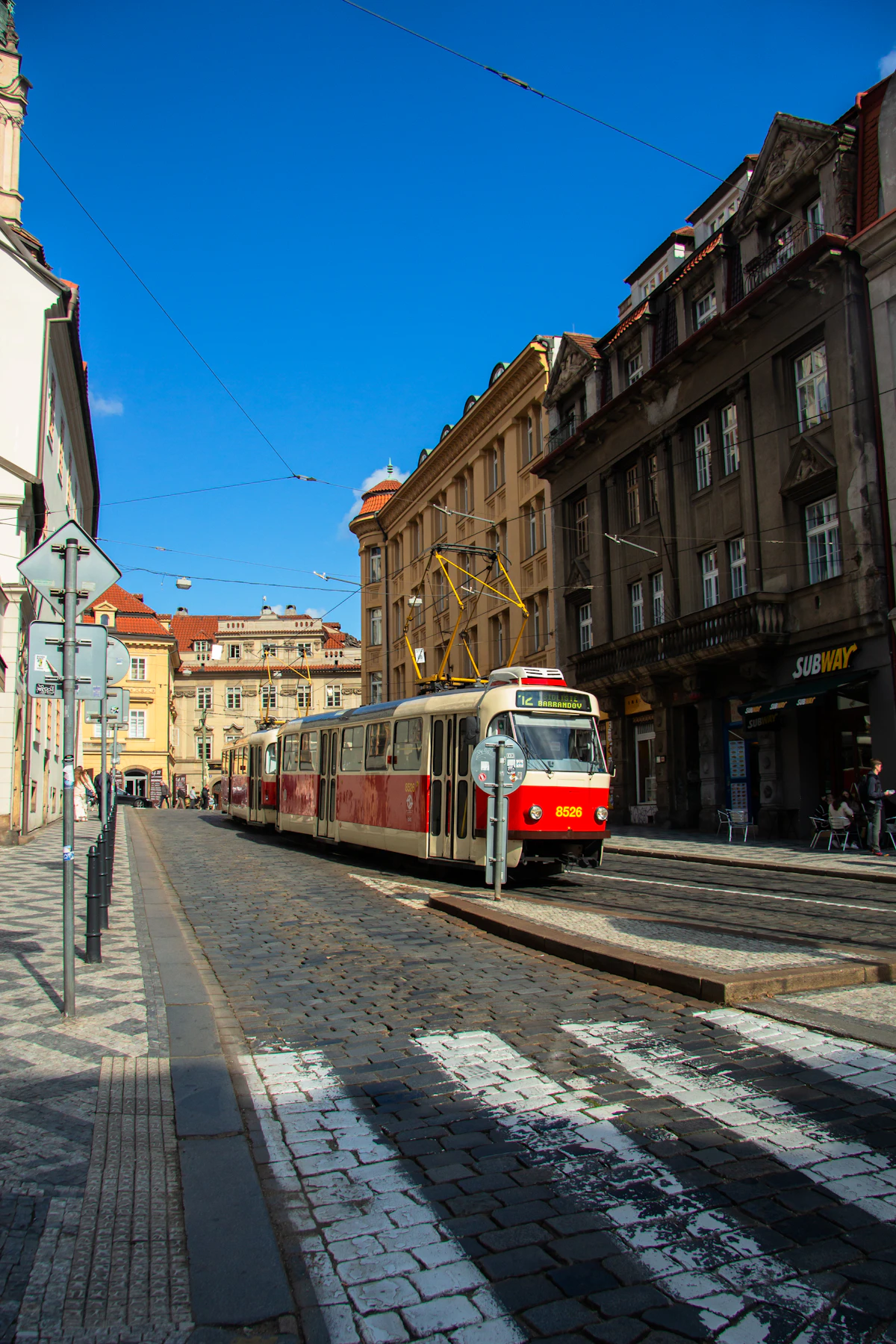
Getting Around Prague in 2026: Transport Guide for Travelers
How to use Prague's metro, trams, and buses as a tourist in 2026. Covers ticket prices, the Litacka app, taxi scam warnings, and getting to the airport.
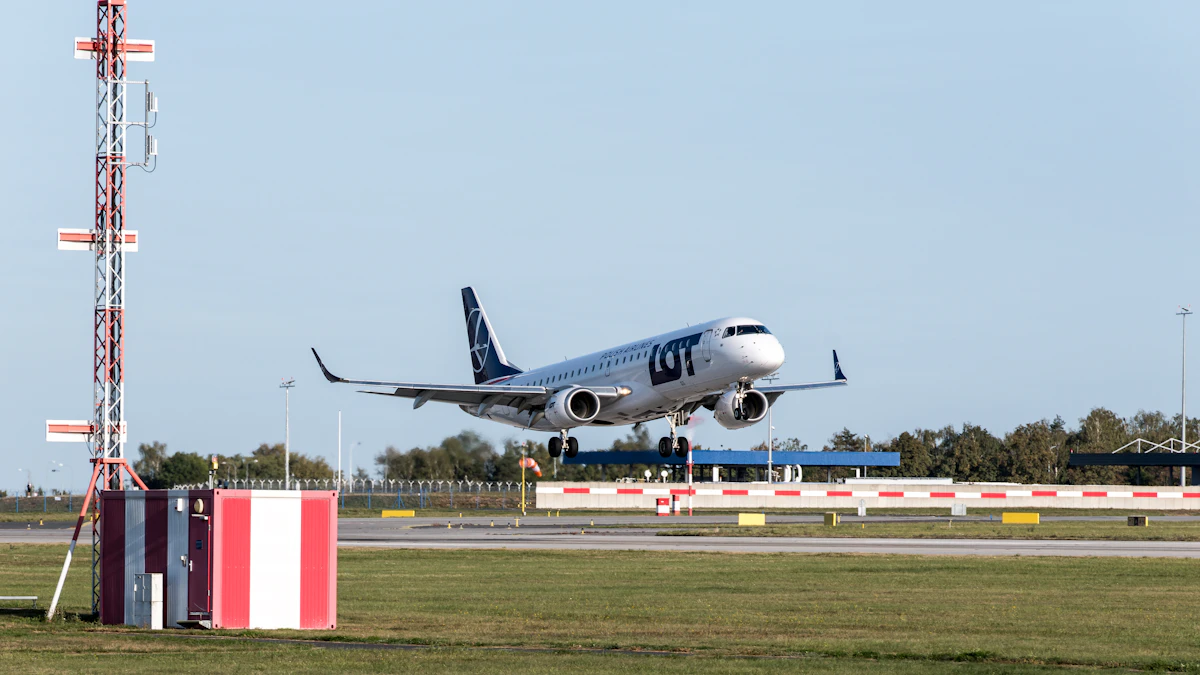
Prague Airport Guide: Arrivals, Transport, and Tips
Navigate Prague Airport like a pro. Compare bus, taxi, and rideshare options to the city center, plus tips on SIM cards, currency exchange, and scam avoidance.
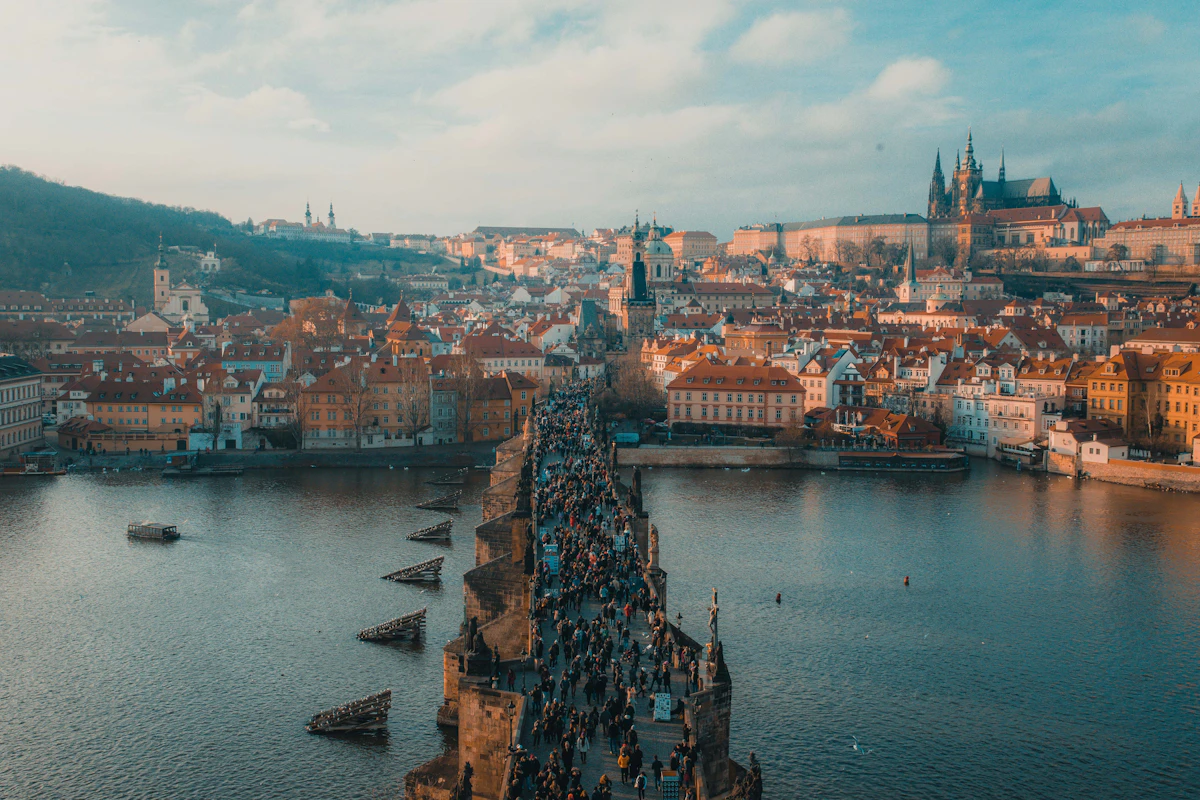
Where to Stay in Prague in 2026: Best Neighborhoods and Hotels
Where should you stay in Prague? Compare 6 neighborhoods by price, vibe, and access to attractions. Updated for 2026 with hotel picks for every budget.