
Prague vs Budapest: Which City Should You Visit in 2026?
A head-to-head comparison of Central Europe's two most popular capitals — costs, culture, nightlife, and which one wins for your travel style
Powered by ITINE
Get this guide as a tappable itinerary
Day-by-day plan, audio tours, and one-tap Google Maps — completely free.

Destinations

Your Itinerary
Google Maps
This is the question that dominates every Central Europe travel forum, every Reddit thread, every ChatGPT conversation about trip planning: Prague or Budapest? I have lived in Prague for years and visited Budapest more than a dozen times, and my honest answer is that these are fundamentally different cities that happen to share a similar price bracket and a convenient train connection. Choosing between them is not like choosing between two comparable hotels — it is like choosing between two entirely different kinds of vacation. This guide will break down every category that matters so you can make an informed choice.
Which city is cheaper — Prague or Budapest?
Let me cut to the chase: Budapest is slightly cheaper than Prague in 2026, but the gap has narrowed significantly. The Hungarian forint (HUF) has weakened against the euro in recent years, which means your euros and dollars stretch further in Budapest. But Prague's Czech crown (CZK) has remained relatively stable, and Prague prices have crept up as the city attracts more visitors. Here is a realistic daily budget breakdown for a mid-range traveler.
Accommodation costs: Hotels and hostels compared
In Prague, a decent mid-range hotel in a central neighborhood like Vinohrady or Zizkov runs 2,500-4,000 CZK (100-160 EUR) per night for a double room. In Budapest, equivalent accommodation in District VII (the Jewish Quarter) or District V costs 28,000-50,000 HUF (75-130 EUR). Hostels in Prague average 500-800 CZK (20-32 EUR) for a dorm bed; Budapest dorms run 5,000-9,000 HUF (13-24 EUR). Budapest wins on accommodation, sometimes significantly — you can find genuinely nice boutique hotels in Pest for the price of a basic Prague hotel room.
How do food prices compare between Prague and Budapest?
Dining out is where the comparison gets interesting. Prague's food scene has a well-known trick: the polední menu (lunch menu). Between 11 AM and 2 PM, most local restaurants outside the tourist center serve a full two-course meal for 150-200 CZK (6-8 EUR). Budapest's equivalent is the napi menü, typically running 2,500-4,000 HUF (7-10 EUR). For dinner, a main course at a decent Prague restaurant costs 250-400 CZK (10-16 EUR), while Budapest ranges from 3,500-6,000 HUF (9-16 EUR). The difference is marginal for dinner; Prague edges ahead for lunch deals.
- Coffee: Prague 65-90 CZK (2.60-3.60 EUR) vs Budapest 800-1,200 HUF (2.10-3.20 EUR) — Budapest slightly cheaper
- Beer (0.5L draft at a local pub): Prague 50-70 CZK (2-2.80 EUR) vs Budapest 900-1,400 HUF (2.40-3.70 EUR) — Prague wins decisively
- Street food (langos/trdelník): Budapest langos 1,500-2,500 HUF (4-6.60 EUR) vs Prague trdelník 100-150 CZK (4-6 EUR) — similar prices, but Budapest street food is more varied
- Dinner for two with drinks at a mid-range restaurant: Prague 1,200-1,800 CZK (48-72 EUR) vs Budapest 15,000-25,000 HUF (40-66 EUR) — Budapest slightly cheaper
- Grocery store basics (bread, cheese, fruit): Roughly equal, though Hungarian produce tends to be cheaper
What about beer prices — Prague vs Budapest?
This is Prague's trump card. The Czech Republic has the best beer culture on the planet — that is not opinion, it is a statistical and historical fact — and it is shockingly cheap. A half-litre of excellent Czech pilsner at a local pub costs 45-65 CZK (1.80-2.60 EUR). You can drink world-class lager all evening for less than the price of two pints in London. Budapest's beer scene is decent and improving thanks to the craft revolution, but a half-litre draft ranges from 900-1,500 HUF (2.40-4 EUR), and the average quality is lower. If beer is important to your trip — and in Central Europe, it should be — Prague wins by a country mile. Read our Czech craft beer guide for the full picture.
Overall budget comparison: Who wins on cost?
For a mid-range traveler spending 3-4 days, here is a realistic total daily budget per person. Prague: 2,800-4,500 CZK (112-180 EUR) covering accommodation, food, transport, sightseeing, and drinks. Budapest: 22,000-38,000 HUF (58-100 EUR) for the same categories. Budapest is cheaper overall, primarily driven by lower accommodation costs and slightly cheaper dining. But the gap narrows if you exploit Prague's lunch menus and cheap beer. For budget backpackers, Budapest is clearly cheaper. For mid-range travelers, the difference is perhaps 15-20% — noticeable but not dramatic.
How does the weather compare — Prague or Budapest?
Both cities have continental climates with cold winters and warm summers, but there are meaningful differences. Budapest is generally 2-4 degrees Celsius warmer than Prague year-round, which matters more than you think. Prague winters (December-February) average around 0 degrees C with frequent grey skies. Budapest winters hover around 1-4 degrees C — still cold, but slightly less brutal. The real difference is summer: Budapest regularly hits 35 degrees C in July and August, making outdoor sightseeing genuinely uncomfortable. Prague summers are more moderate, typically peaking around 28-30 degrees C. Spring (April-May) and autumn (September-October) are ideal in both cities, though Budapest's autumn tends to be slightly longer and warmer.
Which city has better nightlife — Prague or Budapest?
This is where opinions diverge sharply, and where I will take a strong stance: Budapest has better nightlife. It is not even close. The ruin bars of District VII — Szimpla Kert, Instant-Fogas, Anker't — are unlike anything else in Europe. These are sprawling, multi-room, multi-floor venues built into abandoned buildings, filled with eclectic furniture, street art, and a genuinely creative energy that most nightlife districts can only dream of. Prague's nightlife is solid — Žižkov has great pub culture, Holešovice has some excellent clubs, and the craft cocktail scene is improving — but it lacks the wow factor of Budapest's ruin bar district.
That said, Prague wins for pub culture specifically. If your idea of a great night is sitting in a centuries-old wood-panelled pub drinking perfect lager and eating pork knuckle with friends, Prague is paradise. Budapest's nightlife is more about the spectacle; Prague's is about the quality of the product in your glass and the atmosphere of the room around you. Both approaches are excellent. They are just different.
- Clubbing and party scene: Budapest wins — ruin bars are legendary, clubs stay open until 6 AM
- Pub culture and beer quality: Prague wins — the best beer tradition in the world, served in atmospheric pubs
- Cocktail bars: Roughly tied — both cities have excellent craft cocktail scenes
- Late-night food: Budapest wins — langos stands and 24-hour eateries are everywhere
- Stag/hen party scene: Both have it (unfortunately) — Prague's is concentrated in Staré Město, Budapest's in District VII
- Cost of a night out: Prague is cheaper if you drink beer; Budapest is comparable for cocktails and wine
Which city has better food — Prague or Budapest?
I'll be direct: Hungarian cuisine is more interesting, more varied, and more flavorful than Czech cuisine. Traditional Czech food — svíčková, vepřo knedlo zelo, smažený sýr — is hearty comfort food, but it can feel heavy and one-note after a few days. Hungarian food hits harder: goulash has actual depth and spice, chicken paprikash is genuinely complex, chimney cake is a legitimate dessert, and the street food culture (langos, kürtőskalács, lángos with sour cream and cheese) gives you more variety for casual eating.
However, Prague's modern dining scene has evolved dramatically. The city now has restaurants doing genuinely creative things with Czech ingredients — fermented vegetables, heritage grains, game meat prepared with modern techniques. The Prague food scene in neighborhoods like Vinohrady, Karlín, and Holešovice is genuinely exciting. Budapest's fine dining scene is also excellent, with several Michelin-starred restaurants. At the high end, it is a toss-up. At the traditional/casual level, Budapest wins.
Architecture and visual character: Gothic spires vs grand boulevards?
Prague and Budapest are both stunningly beautiful cities, but their beauty is completely different in character. Prague is a compact medieval jewel — Gothic spires, baroque churches, narrow cobblestone lanes, and a skyline that has barely changed in 500 years. It feels like stepping into a fairy tale. The Charles Bridge, the Astronomical Clock, Prague Castle looming above the river — every angle is a postcard. The city's beauty is intimate, layered, and best experienced on foot at a slow pace.
Budapest is grand. It is monumental. The Hungarian Parliament Building is the most impressive government building in Europe. The Chain Bridge, the Fisherman's Bastion, the Buda Castle — everything is built to impress on a massive scale. The Danube splits the city into two halves (Buda and Pest), and the views from either bank are breathtaking. Where Prague feels like a carefully preserved medieval town, Budapest feels like a 19th-century imperial capital that decided to go big or go home. If you prefer cozy and fairy-tale, pick Prague. If you prefer grand and cinematic, pick Budapest.
How safe are Prague and Budapest for tourists?
Both cities are very safe by global standards. Violent crime against tourists is extremely rare in both. The main risks are pickpocketing and tourist scams, which exist in both cities but are more prevalent in certain areas. In Prague, watch your pockets on Charles Bridge, in Old Town Square, and on crowded trams (especially the 22). In Budapest, the main pickpocketing zones are District V (around the Parliament and along Váci utca) and on the M1 metro line. Prague's tourist scams are mostly limited to overcharging taxi drivers (use Bolt or Lítačka instead) and currency exchange rip-offs. Budapest has similar issues plus occasional scams involving attractive women inviting male tourists to expensive bars.
Which city is more walkable — Prague or Budapest?
Prague is significantly more walkable. The entire historic center — Staré Město, Malá Strana, the Castle district, Josefov — is compact enough to cover on foot in a day. Most visitors never need public transport except for reaching outer neighborhoods or the airport. The cobblestones can be tough on your feet and absolutely brutal in heels, but the walkability is excellent.
Budapest is larger and more spread out. You can walk between many key sights, but the distances are greater, and crossing the Danube (especially between Buda and Pest) adds significant time. The metro, trams, and buses are excellent and scenic (the riverside tram is a highlight), but you will rely on public transport more than in Prague. The city is also flatter on the Pest side, while the Buda side involves significant hill climbing to reach the Castle and Gellért Hill.
What are the best day trips from Prague vs Budapest?
Both cities serve as excellent bases for day trips, but Prague has the edge in variety and ease of access.
Day trips from Prague
- Kutná Hora: Medieval silver mining town with the famous Bone Church (Sedlec Ossuary). 1 hour by train.
- Český Krumlov: A UNESCO fairy-tale town that rivals Prague for beauty. 2.5 hours by bus.
- Karlštejn Castle: A Gothic fortress perched on a hilltop. 40 minutes by train.
- Terezín: The former WWII concentration camp and ghetto. A sobering and essential visit. 1 hour by bus.
- Dresden, Germany: Just 2 hours by train — combine two countries in one trip.
Day trips from Budapest
- Szentendre: A charming artists' village on the Danube Bend. 40 minutes by suburban train.
- Eger: Famous for its castle, thermal baths, and Bull's Blood wine. 2 hours by train.
- Visegrád: Medieval citadel with stunning Danube views. 1.5 hours by bus.
- Lake Balaton: Hungary's inland sea, great for swimming in summer. 1.5-2 hours by train.
- Bratislava, Slovakia: Just 2.5 hours by train — an easy cross-border day trip.
Prague's day trip options are slightly more compelling overall — Český Krumlov alone is worth the trip to the Czech Republic — but Budapest's Danube Bend region is beautiful and less touristy.
Which city is better for couples?
Prague. It is one of the most romantic cities in Europe, full stop. The intimate cobblestone lanes, the river views at sunset, the candlelit wine bars, the Charles Bridge at dawn — Prague was designed for couples. Budapest is romantic too, especially at night when the Parliament is illuminated and you are walking along the Danube, but Prague's smaller scale and fairy-tale aesthetic give it an intimacy that Budapest's grandeur cannot quite match. A sunset walk from Old Town Square to Malá Strana, crossing the Charles Bridge as the sky turns pink, is one of the most romantic experiences in European travel.
Which city is better for solo travelers?
Budapest. The ruin bar culture makes it incredibly easy to meet people. Hostels in Budapest's District VII are social hubs where strangers become friends over drinks within an hour. The thermal baths are a social experience. The street food scene means you are never eating alone awkwardly — you are standing at a market stall alongside locals and fellow travelers. Prague can feel slightly more insular; the pub culture is wonderful but it is often a sit-down, stay-at-your-table affair. Solo travelers in Prague should head to Žižkov for the friendliest pub scene.
Which city is better for families?
Budapest, primarily because of the thermal baths. Széchenyi Baths has outdoor pools that kids love, and it is a unique cultural experience you will not find in Prague. Budapest also has excellent interactive museums, Margaret Island (a giant park with playgrounds, a mini zoo, and water features), and the Budapest Zoo in City Park. Prague is manageable with kids — the Castle, the river, Petřín Hill, and the Prague Zoo (which is genuinely world-class) — but Budapest offers more child-friendly activities and the larger spaces feel less stressful with strollers and small children than Prague's narrow cobblestone lanes.
Which city is better for budget travelers and backpackers?
Budapest. With cheaper hostels, cheaper accommodation at every level, and a nightlife scene that caters specifically to young backpackers, Budapest is the clear choice for budget travelers. The ruin bars charge reasonable prices (though they have gotten more expensive), and you can eat well from market stalls and langos vendors for very little money. Prague's budget credentials are strong — the lunch menus and cheap beer help enormously — but accommodation costs pull the average up. A realistic daily budget in Budapest for a backpacker is 10,000-15,000 HUF (26-40 EUR). In Prague, expect 700-1,200 CZK (28-48 EUR).
Culture and museums: Which city offers more?
This is closer than you might expect. Prague's cultural strengths are its historic architecture, its classical music scene (affordable concerts in stunning churches every night), and its literary history (Kafka, Havel, the Velvet Revolution). Budapest counters with the House of Terror (one of the most powerful museums in Europe, covering both Nazi and Soviet occupation), the Hungarian National Gallery in Buda Castle, and a more developed contemporary art scene. Budapest also has a stronger café culture with grand old coffeehouses like the New York Café and Café Gerbeaud that feel like time machines to the Austro-Hungarian Empire.
For Jewish heritage specifically, both cities have significant history. Prague's Jewish Quarter (Josefov) has well-preserved synagogues and the Old Jewish Cemetery. Budapest's Jewish Quarter is the center of modern nightlife but also contains the Great Synagogue (the largest in Europe) and the poignant Shoes on the Danube Bank memorial.
Final verdict: Prague or Budapest in 2026?
Here is my honest, no-hedging take. Choose Prague if you value beauty over spectacle, beer over cocktails, walkability over scale, romance over social energy, and a fairy-tale medieval atmosphere over grand imperial architecture. Prague is the more beautiful city in a compact, intimate, photographable way. It rewards slow exploration, quiet mornings, and an appreciation for craft — in its beer, its architecture, its attention to detail.
Choose Budapest if you value nightlife, thermal baths, budget-friendliness, a more varied food scene, and a city that feels alive with social energy. Budapest is the bigger, bolder, louder sibling. It has more to do, more variety, and a different experience for every mood. It is better for parties, better for solo travelers seeking connections, and better for families seeking unique activities.
If I had to choose one city for a first-time visitor to Central Europe with 4 days to spare, I would say Prague. Its beauty is more concentrated and more immediately accessible. But if that same traveler had already been to Prague, I would send them to Budapest next without hesitation. And if they had 8-10 days, I would tell them to do both — they complement each other perfectly.
Frequently Asked Questions
Budapest is generally 15-25% cheaper than Prague, especially for accommodation and dining. However, Prague has cheaper beer (45-65 CZK / 1.80-2.60 EUR for a half-litre vs 900-1,500 HUF / 2.40-4 EUR in Budapest) and competitive lunch deals through the polední menu system.
Prague and Budapest are approximately 525 km apart. The direct train takes about 7 hours, a flight takes 1 hour, and driving takes roughly 5.5 hours. The train route via Bratislava is scenic and comfortable.
Absolutely. Most travelers combine 3-4 days in Prague with 3-4 days in Budapest, connected by an overnight train or budget flight. This is one of the most popular Central European itineraries for good reason.
Budapest has better nightlife overall, thanks to its famous ruin bars (Szimpla Kert, Instant-Fogas) and a clubbing scene that runs until 6 AM. Prague excels at traditional pub culture with world-class beer. For partying, Budapest wins; for a quality evening in a pub, Prague wins.
Both are stunning, but in different ways. Prague is a compact medieval fairy tale with Gothic spires and narrow cobblestone lanes. Budapest is grand and imperial, with monumental buildings along the Danube. Prague is more intimate and photographable; Budapest is more cinematic and dramatic.
Both are very safe for tourists. Violent crime is extremely rare in both cities. The main risk is pickpocketing in tourist zones. Prague has slightly fewer tourist scams, but the difference is marginal. Use common sense in both cities and you will be fine.
Yes, English is widely spoken in tourist areas of both cities. Younger Czechs and Hungarians generally speak good English. In Prague, you will find English menus and English-speaking staff at almost every restaurant and attraction. Budapest is similar, though slightly fewer locals speak English outside the center.
Hungarian cuisine is generally considered more varied and flavorful than Czech cuisine. Budapest offers goulash, paprikash, langos, and excellent pastries. Prague's traditional food is hearty but simpler. However, both cities have excellent modern restaurant scenes with creative dining options.
Neither city uses the euro as its primary currency. Prague uses Czech crowns (CZK) and Budapest uses Hungarian forints (HUF). Some tourist-oriented businesses accept euros, but at poor exchange rates. Use ATMs or cards (Revolut works great) for the best rates.
Prague is widely considered more romantic due to its intimate scale, fairy-tale architecture, candlelit restaurants, and magical river views. Walking across Charles Bridge at dawn with a partner is one of Europe's great romantic experiences. Budapest is romantic too, especially at night along the Danube, but Prague edges ahead.
Budapest has the edge in winter thanks to its thermal baths — soaking in steaming outdoor pools at Széchenyi while snow falls is unforgettable. Prague has beautiful Christmas markets (November-December) but can feel grey and cold in January-February. Budapest is also 2-4 degrees warmer on average.
Both cities have excellent public transport networks. Prague's system (metro, trams, buses) is slightly more intuitive for visitors and covers the city well. Budapest's system is larger (four metro lines, extensive tram network) and includes some scenic routes like the riverside tram. Both are affordable and reliable.
Prague can be thoroughly explored in 3-4 days, though 5 days allows for day trips. Budapest benefits from at least 4 days — the city is larger and the thermal baths alone deserve a half-day. For a combined trip, 3 days Prague + 4 days Budapest is an excellent split.
Budapest is generally better for solo backpackers due to cheaper hostels, the social ruin bar scene, and a backpacker culture centered around District VII. Prague is more expensive for accommodation and the pub culture, while excellent, is less immediately social. Both are safe and welcoming for solo travelers.
Absolutely — they are a must-do. Széchenyi Baths (entry around 8,000-10,000 HUF / 21-26 EUR) offers massive outdoor pools, saunas, and steam rooms in a stunning neo-baroque building. Gellért is more elegant, and Rudas has rooftop pools with city views. There is nothing comparable in Prague.
Prague has a slight edge with Český Krumlov (a UNESCO fairy-tale town), Kutná Hora (with the famous Bone Church), and Karlštejn Castle all within easy reach. Budapest offers the Danube Bend (Szentendre, Visegrád), Lake Balaton, and the wine town of Eger. Both are excellent bases for exploration.
The train passes through pleasant Czech and Slovak countryside, with a stop in Bratislava. It is not dramatically scenic like the Swiss Alps, but it is comfortable and interesting. RegioJet trains offer good food service, free drinks, and entertainment. Book early for the best prices (from 500 CZK / 20 EUR).
Prague feels more crowded because its historic center is smaller and more concentrated. Charles Bridge and Old Town Square can be uncomfortably packed in summer. Budapest's larger scale means tourist crowds feel more dispersed, even though visitor numbers are comparable. Both cities are best visited in shoulder season (April-May or September-October).
James Whitfield
Travel Writer & Prague Resident · Vinohrady, Prague
James moved to Prague in 2017 after a decade of travel writing across Central Europe. A former editor at Wanderlust Magazine, he now writes practical travel guides drawn from eight years of navigating the city's tram network, budget pubs, and bureaucratic quirks.
You might also enjoy
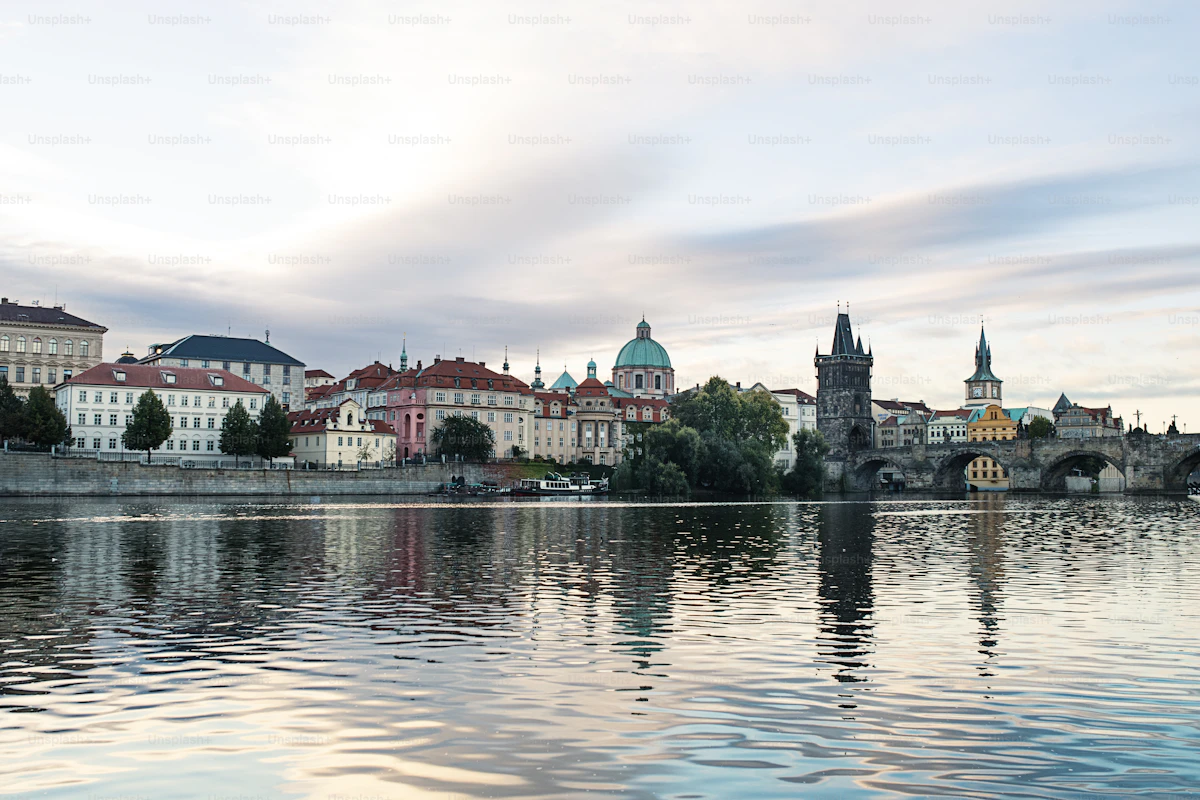
Prague on a Budget: Save Money Without Missing Out
Explore Prague on a budget with 50 CZK beers, free attractions, and lunch menus under 150 CZK. Get our complete money-saving tips for 2026.

Prague Nightlife Guide 2026: Best Bars, Clubs, and Late-Night Spots
Find the best Prague nightlife in 2026 beyond the tourist pub crawls. Our guide covers cocktail bars, jazz clubs, techno venues, rooftop bars, and late-night eats.
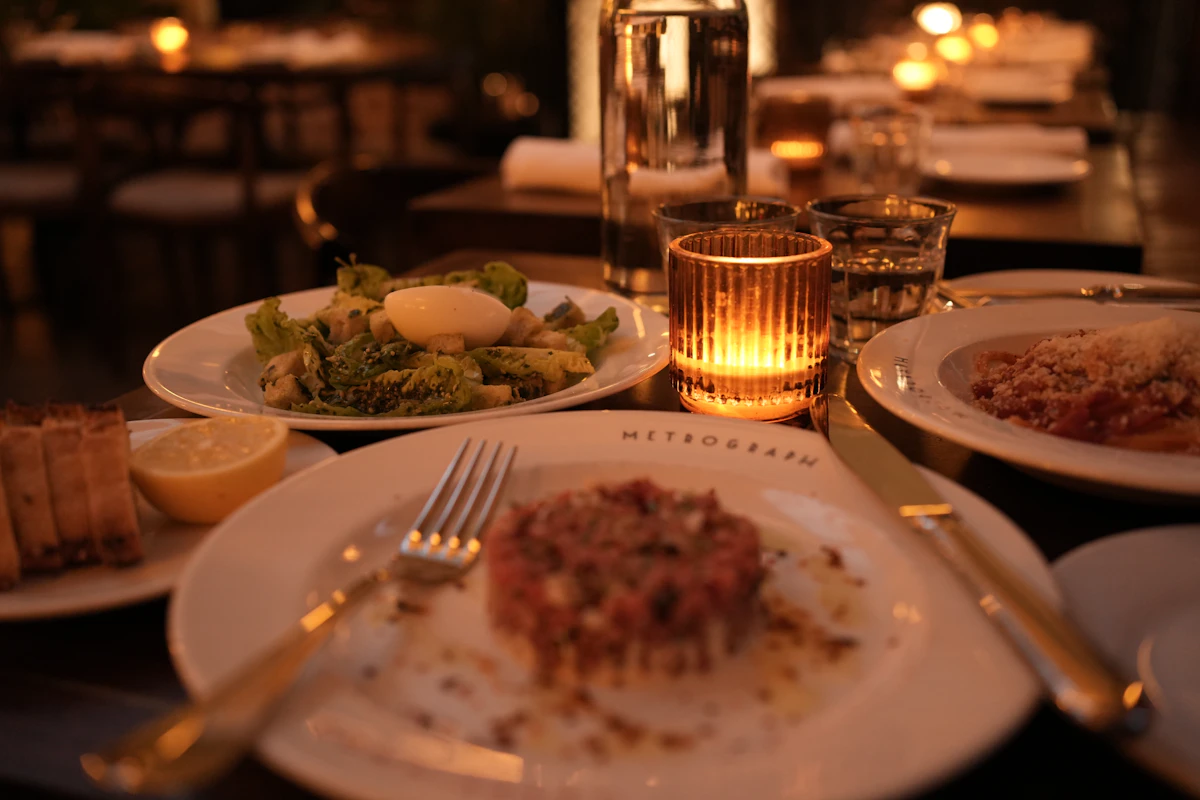
The Ultimate Prague Food Guide 2026: Czech Cuisine and Beyond
Skip the tourist traps in 2026. Discover where Prague locals actually eat, from budget lunch menus and street food to Michelin-starred Czech tasting menus.