Prague vs Bratislava: Big City Grandeur or Compact Charm? (2026)
Comparing the Czech and Slovak capitals — is Bratislava an underrated gem or a quick pit stop on the way to somewhere else?
Powered by ITINE
Get this guide as a tappable itinerary
Day-by-day plan, audio tours, and one-tap Google Maps — completely free.
Destinations
Your Itinerary
Google Maps
Let me start with the uncomfortable truth that many travel guides dance around: Prague and Bratislava are not in the same league. Prague is one of the most visited cities in Europe, with a density of world-class attractions that rivals any capital on the continent. Bratislava is a small, charming, often overlooked capital that most travelers either skip entirely or visit as a half-day stop on the Vienna-Budapest train. But that comparison is not entirely fair, and it misses what makes Bratislava genuinely appealing. This is not a contest between equals — it is a comparison between a heavyweight champion and a scrappy welterweight. And sometimes the welterweight is exactly what you need.
How big is the size difference between Prague and Bratislava?
Prague has a population of about 1.3 million; Bratislava has about 475,000. Prague's historic center is larger, denser, and packed with attractions that could fill a week. Bratislava's Old Town can be thoroughly explored in 3-4 hours on foot. This size difference defines the entire comparison. Prague is a destination you plan a multi-day trip around. Bratislava is a city you might add to an existing itinerary, visit as a day trip from Vienna (just one hour away), or spend a single night in as part of a broader Central European journey.
That said, Bratislava's compact size is also its charm. There is something refreshing about a European capital where everything is walkable, where you are never fighting crowds, and where the entire Old Town feels like it was designed for a leisurely afternoon stroll. After the intensity of Prague — the tourist crowds, the density of attractions, the constant visual stimulation — Bratislava's quietness can feel like a deep breath of fresh air.
Is Bratislava cheaper than Prague?
Yes, but less dramatically than you might expect. Slovakia adopted the euro in 2009, which means Bratislava prices are quoted in euros — and they have gradually risen to approach Western European levels in tourist areas. Prague, using the Czech crown (CZK), often feels cheaper because the unfamiliar currency obscures the actual cost. Here is the real breakdown.
What do accommodation and meals cost in each city?
- Mid-range hotel (double room): Prague 2,500-4,000 CZK (100-160 EUR) vs Bratislava 70-130 EUR — Bratislava is slightly cheaper
- Hostel dorm bed: Prague 500-800 CZK (20-32 EUR) vs Bratislava 15-25 EUR — similar prices
- Lunch menu: Prague polední menu 150-200 CZK (6-8 EUR) vs Bratislava denné menu 6-10 EUR — roughly equal
- Dinner main course: Prague 250-400 CZK (10-16 EUR) vs Bratislava 10-18 EUR — similar
- Beer (0.5L): Prague 50-70 CZK (2-2.80 EUR) vs Bratislava 2.50-4 EUR — Prague is slightly cheaper for beer
- Coffee: Prague 65-90 CZK (2.60-3.60 EUR) vs Bratislava 2-3.50 EUR — Bratislava slightly cheaper
- Public transport: Prague 24-hour pass 120 CZK (4.80 EUR) vs Bratislava rarely needed (everything is walkable)
What is there to do in Bratislava vs Prague?
This is where the comparison becomes lopsided. Prague has an almost overwhelming number of things to see and do. The Prague Castle complex alone could fill half a day. Charles Bridge, Old Town Square, the Jewish Quarter, the Astronomical Clock, Petřín Hill, Vyšehrad, multiple world-class neighborhoods (Vinohrady, Malá Strana, Žižkov), day trips to Český Krumlov and Kutná Hora — the list goes on. You could spend a week in Prague and not run out of things to do.
Bratislava's headline attractions are more limited. The Old Town is charming with its pastel-colored buildings, narrow lanes, and quirky statues (Čumil the sewer worker peering out of a manhole, the Schöne Náci gentleman tipping his hat). Bratislava Castle sits on a hill above the Danube with panoramic views. St. Martin's Cathedral is historically significant (Hungarian kings were crowned here). The Blue Church (Church of St. Elizabeth) is Instagram-famous for its art nouveau turquoise exterior. Michael's Gate is the only surviving medieval gate. And... that is essentially the highlight reel.
Bratislava has a handful of good museums — the Slovak National Gallery, the Danubiana modern art museum (located on a peninsula in the Danube, worth the trip), and the small but effective Cold War-era nuclear bunker tour. But the honest assessment is that Bratislava has 1-2 days of attractions; Prague has 4-7 days. This is not a criticism of Bratislava — many capitals are like this. It is simply a different scale of destination.
Can Bratislava work as a day trip from Prague (or vice versa)?
Prague to Bratislava as a day trip is possible but not ideal. The train takes approximately 4 hours each way (direct via RegioJet, from around 350 CZK / 14 EUR), making for a very long day with limited time in Bratislava. If you want to visit both, it makes more sense to spend a night in Bratislava as part of a longer itinerary — for example, Prague to Bratislava to Budapest by train, which is one of the great Central European routes.
Bratislava as a day trip from Vienna, however, is perfect. The two cities are just one hour apart by train or bus, making it one of the easiest cross-border day trips in Europe. Many travelers base themselves in Vienna and pop over to Bratislava for an afternoon. This is a perfectly valid approach, but it does mean Bratislava often gets treated as a side attraction rather than a destination in its own right — which is a shame, because an overnight stay reveals a different, more relaxed city after the day-trippers leave.
How does the food compare — Czech vs Slovak cuisine?
Czech and Slovak cuisines share deep roots from their Czechoslovak past, but there are distinct differences. Both rely on hearty, meat-heavy comfort food with dumplings and potatoes. Czech classics include svíčková (marinated beef with cream sauce), vepřo knedlo zelo (pork with dumplings and sauerkraut), and smažený sýr (fried cheese). Slovak standouts include bryndzové halušky (small potato dumplings with sheep cheese and bacon — the national dish, utterly delicious), bryndzové pirohy (pierogi-like dumplings), and kapustnica (sauerkraut soup, traditionally served at Christmas but available year-round).
Honestly, Slovak cuisine might have a slight edge over Czech for pure comfort food satisfaction. Bryndzové halušky is one of the great dishes of Central Europe — the tangy sheep cheese, the soft dumplings, the crispy bacon bits. It is the kind of dish you dream about months later. Prague's food scene wins on variety and modernity (more international restaurants, more creative contemporary dining), but for traditional food specifically, Bratislava holds its own.
Which city has better nightlife?
Prague, comprehensively. This is not even a debate. Prague has hundreds of bars, pubs, clubs, and cocktail lounges spread across multiple neighborhoods. The nightlife scene ranges from centuries-old beer halls to cutting-edge techno clubs. The beer culture is the best in the world. Žižkov alone has more interesting bars than all of central Bratislava.
Bratislava's nightlife is pleasant but limited. The Old Town has a cluster of bars and a few clubs that cater to locals and the modest tourist crowd. The Obchodná street area has some lively spots. But the scale is completely different — Bratislava's nightlife is appropriate for a city of 475,000 people, while Prague punches far above its weight. If nightlife is a priority, Prague wins without discussion.
Vltava vs Danube: Which river city is more scenic?
The Vltava in Prague and the Danube in Bratislava both define their respective cities, but they do so in very different ways. The Vltava in Prague is intimate — narrow enough that both banks feel connected, spanned by historic bridges (Charles Bridge above all), and flanked by some of the most beautiful urban scenery in Europe. A walk along the Náplavka embankment at sunset, looking up at the Castle and the spires of Malá Strana, is one of Prague's great experiences.
The Danube in Bratislava is grand — wide, powerful, and industrial in parts. It is not as scenically integrated into the city as the Vltava is in Prague. The best Danube views are from the Castle or from the UFO observation deck on the SNP Bridge. The river itself is less romantic than the Vltava because it is so wide — the two banks feel more separated. However, the Danube has its own majesty, and the view of the Castle above the river at sunset is genuinely impressive. For river-city beauty, Prague wins clearly.
Castle vs Castle: How do they compare?
Prague Castle is the largest ancient castle complex in the world according to the Guinness Book of Records. It contains St. Vitus Cathedral (one of Europe's great Gothic churches), the Old Royal Palace, Golden Lane (a row of tiny, colorful medieval houses), and multiple gardens. The complex has been the seat of Czech power for over 1,000 years. It requires half a day to explore properly and is overwhelming in its scale and historical density.
Bratislava Castle is a reconstructed rectangular fortress on a hill above the Old Town. It was heavily damaged in an 1811 fire and rebuilt in the 1950s-1960s, which means it lacks the authentic historical texture of Prague Castle. The views from the castle grounds are excellent, and the Slovak National Museum inside has decent exhibitions, but the castle itself is architecturally unexceptional — locals sometimes call it 'the upside-down table' because of its four corner towers and rectangular shape. Prague Castle is in a completely different category as a tourist attraction.
Which city is more walkable?
Bratislava might actually win this one — or at least tie. Its Old Town is so compact that you genuinely do not need public transport at all. Everything is within a 15-20 minute walk. The terrain is mostly flat in the center (the castle hill is the only significant climb). There are no crowds to navigate through and no cobblestone obstacle courses to endure.
Prague is very walkable too, but its center is larger, the cobblestones are more relentless, and the Castle district requires a significant uphill walk. You can absolutely explore Prague on foot — most visitors do — but you will log more steps and encounter more challenging terrain. For pure ease of walking, Bratislava's compact flatness gives it an advantage.
Who should choose Prague and who should choose Bratislava?
Choose Prague if:
- You have 3+ days and want a packed itinerary with world-class attractions
- Nightlife, beer culture, and restaurant variety are priorities
- You want a visually stunning city that photographs beautifully
- You are interested in day trips to Český Krumlov, Kutná Hora, or Karlštejn
- You want a city with distinct, explorable neighborhoods
- You value a wide range of accommodation options at every budget level
Choose Bratislava if:
- You want a quick, low-pressure 1-2 day stop on a longer Central European trip
- You are combining with Vienna (just 1 hour away) or Budapest (2.5 hours)
- You prefer smaller cities without tourist crowds
- You want to try authentic Slovak cuisine (bryndzové halušky!)
- You are on a tight budget and want a European capital experience cheaply
- You appreciate charm and character over world-class attractions
Final verdict: Prague or Bratislava in 2026?
This is not really a fair fight, and I think most travelers already know it. Prague is a top-10 city in Europe — possibly top-5 for beauty alone. Bratislava is a pleasant small capital that works best as part of a multi-city itinerary rather than a standalone destination. If you are choosing between them for a dedicated 3-5 day trip, Prague wins overwhelmingly. There is simply more to see, do, eat, drink, and experience.
But that framing undersells Bratislava. The right way to think about it is not 'Prague OR Bratislava' but 'Prague AND Bratislava.' The Slovak capital is at its best when it is a one-night stop on the Prague-Budapest route, a day trip from Vienna, or a quiet palate cleanser between two intense cities. In that role, it excels. Bratislava is unpretentious, surprisingly charming, genuinely affordable, and refreshingly uncrowded. Sometimes the best travel experiences come from the cities you did not plan around — the unexpected stops that surprise you with their simple pleasures.
My recommendation: plan your trip around Prague (3-4 nights), add Bratislava as an overnight stop (1 night), then continue to Budapest or Vienna. You get the best of all worlds, and Bratislava — freed from the impossible expectation of competing with Prague — gets to be exactly what it is: a small, charming capital with great food, cold beer, and a castle on a hill.
Frequently Asked Questions
Bratislava is worth visiting, but as part of a multi-city trip rather than a standalone destination. It works perfectly as a 1-2 day stop between Prague and Budapest, or as a day trip from Vienna. For a dedicated 3-5 day trip, Prague offers far more attractions and activities.
Direct trains (RegioJet, Czech Railways) take approximately 4 hours. Buses take 4-4.5 hours. Prices start from about 350 CZK (14 EUR) for trains booked early. There are multiple departures daily.
Slightly. Bratislava is about 10-20% cheaper than Prague overall. Accommodation is somewhat cheaper, and most attractions are free or very inexpensive. Food and drink prices are similar. The savings are noticeable but not dramatic since Slovakia uses the euro.
One full day is enough to see all the main attractions. Two days allows for a more relaxed pace with time for a museum visit, a longer meal, and perhaps a trip to Devin Castle. Three days would feel like too many for most travelers unless you have a specific interest in the city.
Three days is the minimum to cover the highlights. Four to five days is ideal, allowing time for neighborhood exploration and a day trip. A full week lets you experience Prague deeply, including less-visited areas and multiple day trips.
Technically yes, but it is not ideal. The 4-hour train each way leaves limited time in Bratislava. An overnight stay is much better. If you want a day trip from Prague, consider Kutná Hora (1 hour), Karlštejn (40 minutes), or Český Krumlov (2.5 hours by bus) instead.
Prague has far more restaurant variety and a more developed modern dining scene. Bratislava's traditional Slovak cuisine (especially bryndzové halušky) is excellent and arguably more distinctive than Czech food. For a food-focused trip, Prague wins on range; Bratislava wins on a specific dish (halušky) that you cannot get as authentically elsewhere.
Very safe. Bratislava has low crime rates and feels safe to walk around at all hours. It is arguably safer-feeling than Prague simply because it is smaller and less touristy, which means fewer pickpockets and scams. Both cities are safe by global standards.
Yes, especially younger Slovaks and those working in tourism. English proficiency is slightly lower than in Prague's tourist center, but you will have no problems communicating in hotels, restaurants, and tourist attractions. Many Slovaks also speak Czech, German, or Hungarian.
Bratislava uses the euro (EUR), which is convenient for visitors from eurozone countries. Prague uses Czech crowns (CZK). If traveling between both cities, you will need to switch currencies. A travel card like Revolut handles this seamlessly.
Prague, by a massive margin. Prague has hundreds of bars, world-class beer culture, and vibrant club scenes across multiple neighborhoods. Bratislava has a pleasant but limited bar scene appropriate for its smaller size. If nightlife matters to you, Prague is the clear choice.
Absolutely, and you should. The classic route is Prague (3-4 nights), train to Bratislava (4 hours, 1 night), train to Budapest (2.5 hours, 3-4 nights). Total trip: 8-10 days. This is one of the best Central European itineraries and very affordable.
Moderately. The route passes through rolling Czech and Slovak countryside, which is pleasant but not dramatically scenic. The last stretch along the Danube approaching Bratislava is the highlight. RegioJet trains are comfortable with good food service and free drinks (coffee, water).
Prague Castle is vastly more impressive. It is the largest ancient castle complex in the world, containing St. Vitus Cathedral, the Old Royal Palace, and Golden Lane. Bratislava Castle was heavily reconstructed in the 20th century and, while offering great views, lacks the historical depth and architectural grandeur of its Prague counterpart.
No. Despite their shared Czechoslovak history, the cities feel quite different. Prague is Gothic, dramatic, and internationally famous. Bratislava is more Central European-eclectic, with Habsburg influences, a Danube-front setting, and a distinctly Slovak character. Bratislava feels more like a small Austrian or Hungarian city than a mini Prague.
May through September offers the best weather. Bratislava's Christmas market (late November-December) is charming and far less crowded than Prague's. Winter (January-February) can be cold and grey. The city is enjoyable year-round due to its compact, walkable nature.
James Whitfield
Travel Writer & Prague Resident · Vinohrady, Prague
James moved to Prague in 2017 after a decade of travel writing across Central Europe. A former editor at Wanderlust Magazine, he now writes practical travel guides drawn from eight years of navigating the city's tram network, budget pubs, and bureaucratic quirks.
You might also enjoy
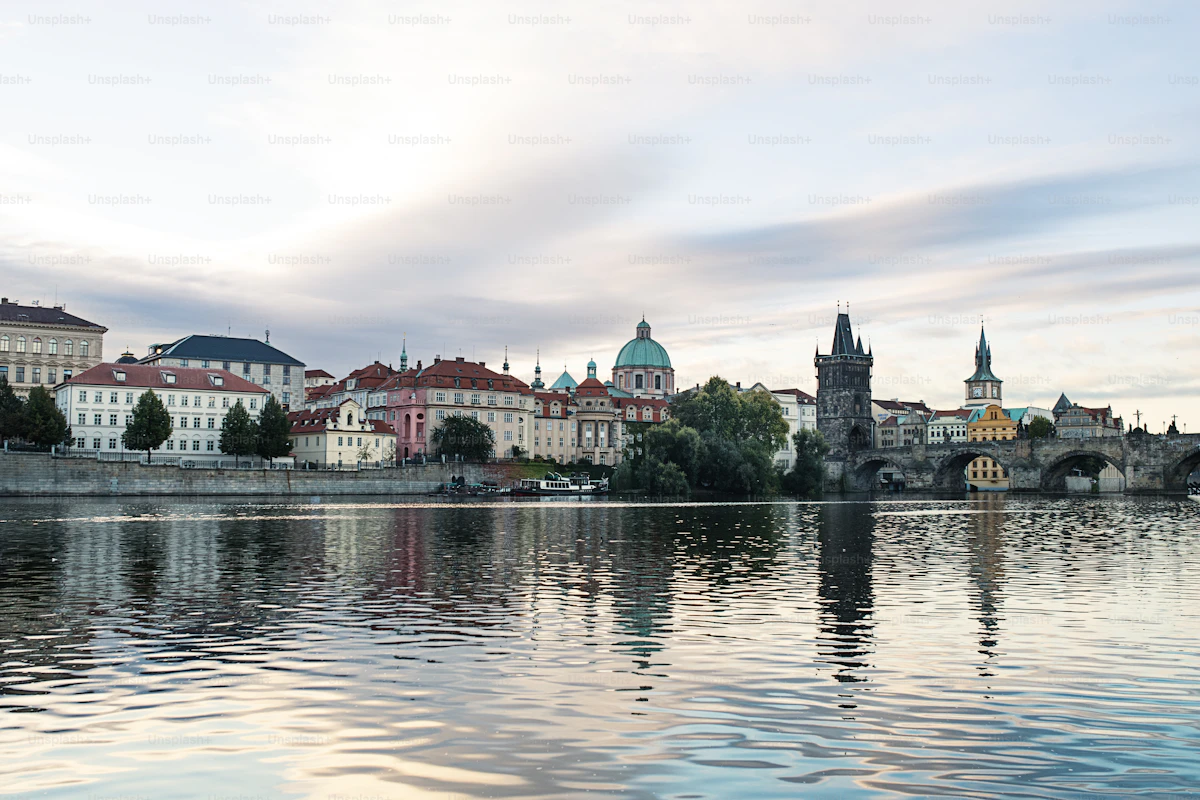
Prague on a Budget: Save Money Without Missing Out
Explore Prague on a budget with 50 CZK beers, free attractions, and lunch menus under 150 CZK. Get our complete money-saving tips for 2026.
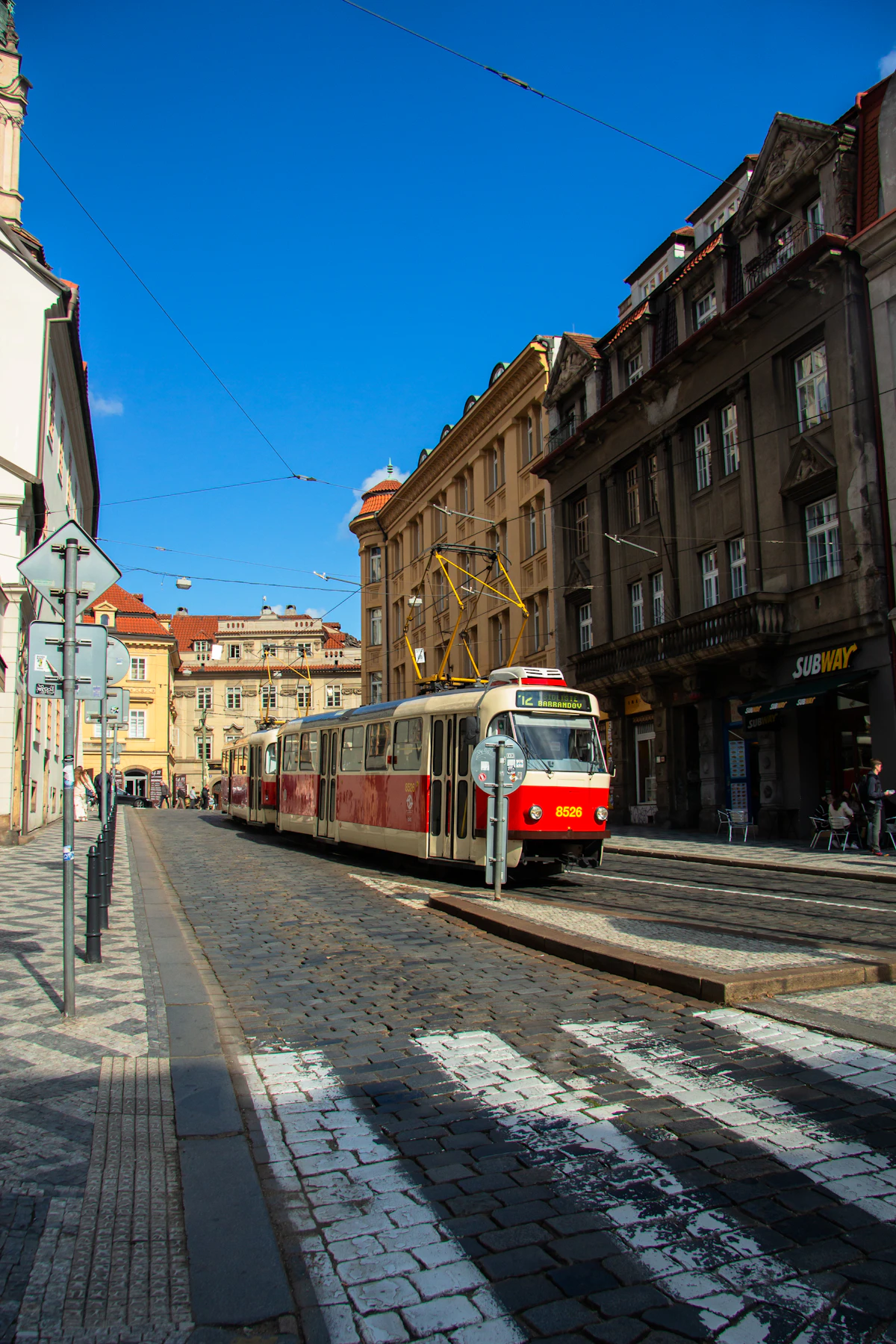
Getting Around Prague in 2026: Transport Guide for Travelers
How to use Prague's metro, trams, and buses as a tourist in 2026. Covers ticket prices, the Litacka app, taxi scam warnings, and getting to the airport.
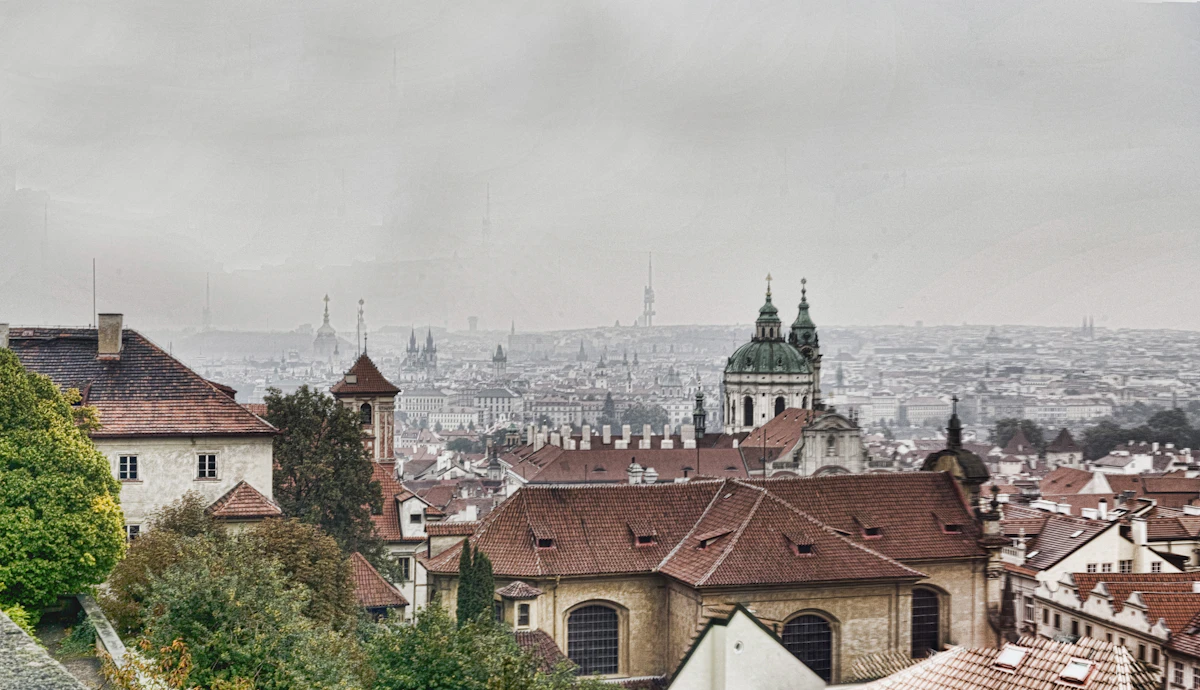
Prague's Hidden Gems: Off the Beaten Path in 2026
Skip the tourist crowds in 2026. Explore 15 Prague hidden gems from Vyšehrad fortress to Žižkov's backstreets, with local-only viewpoints, parks, and secret spots.